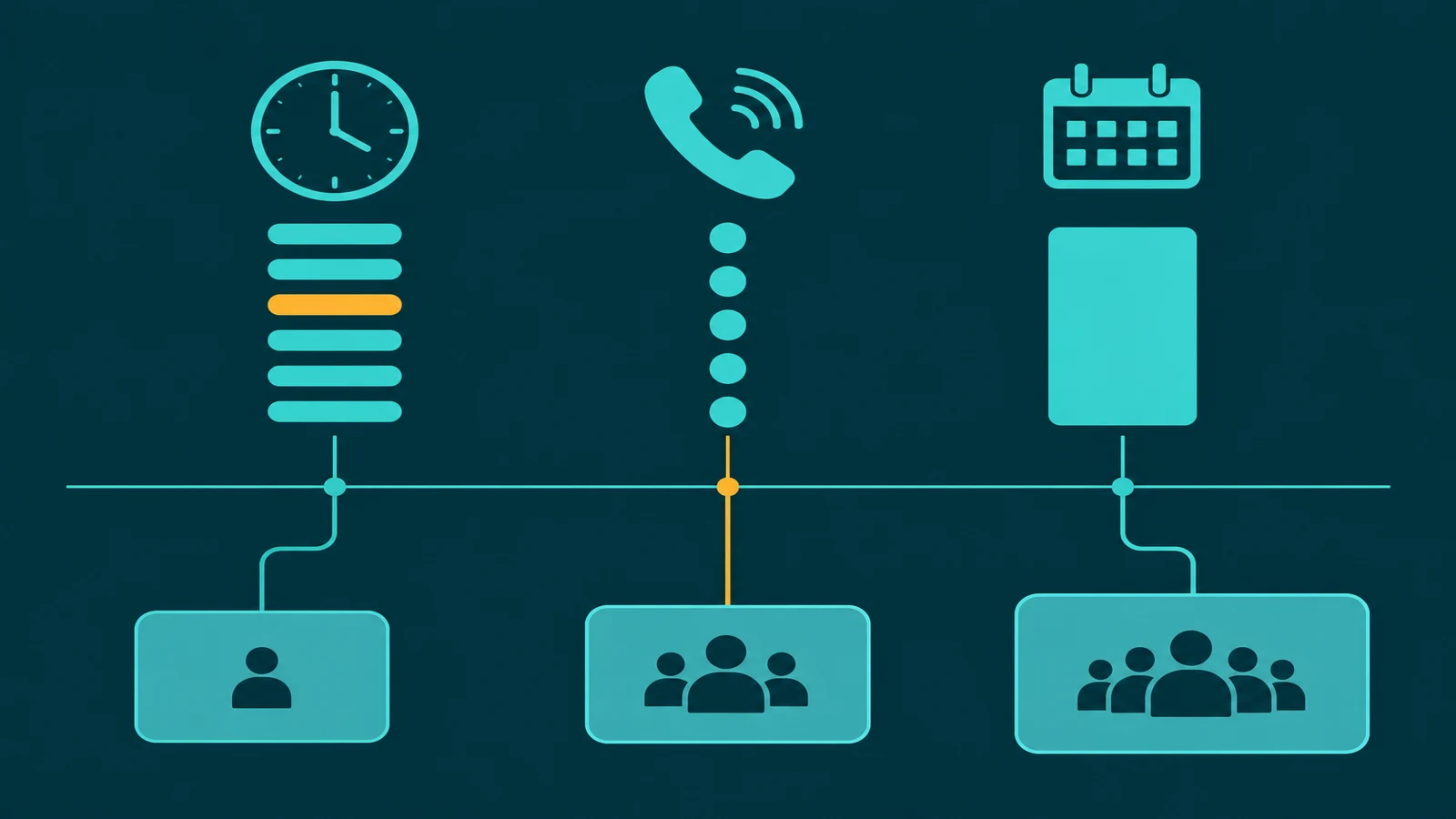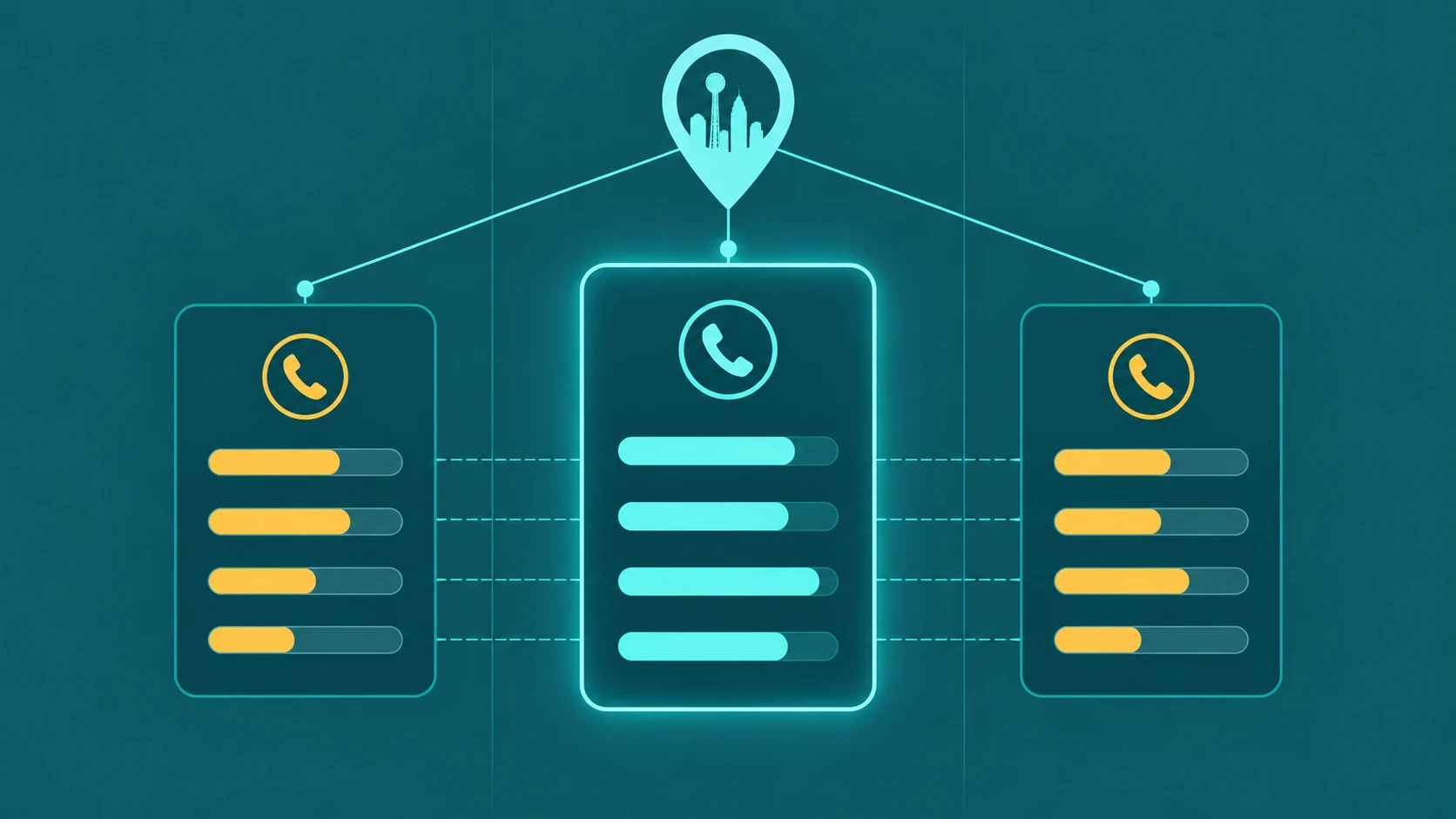

Business VoIP systems in Dallas TX serve a market defined by growth, distribution, and competition. The DFW metro adds more new businesses each year than most US metros, relocating companies from other states bring phone infrastructure decisions with them, and established businesses are steadily replacing legacy PBX with cloud systems that work across the distributed DFW geography.
This guide covers how business VoIP systems work in the Dallas TX context — what configurations are available, what local factors shape the decision, how to evaluate providers, and what features matter most for DFW operations.
Key point: Business VoIP systems for Dallas TX businesses succeed or fail on four criteria: local DFW number coverage, porting reliability from incumbent Texas carriers, SIP trunk capacity for call volume spikes, and provider infrastructure proximity to the metro. Feature parity is largely uniform across reputable providers — these differentiators are where real decisions are made.
Business VoIP system configurations for Dallas TX
Hosted cloud VoIP (most common)
The provider hosts the PBX in the cloud. Dallas businesses connect via softphone apps, IP desk phones, or mobile apps. No on-premise hardware required. Features include extensions, auto-attendant, IVR, call queues, call recording, business SMS, voicemail, and mobile apps. This is the dominant configuration for Dallas businesses from 2-person operations to enterprises with hundreds of seats.
SIP trunking for existing PBX
Businesses with a functioning on-premise PBX — Avaya, Cisco, NEC, or similar — can use SIP trunking to replace legacy analog or ISDN telephone lines with SIP channels over internet. The existing PBX stays in place; the provider handles PSTN connectivity and DFW number inventory. This extends the useful life of the PBX investment while reducing monthly line costs. See how SIP trunking works and how to plan SIP trunk capacity for depth on this configuration.
UCaaS (voice + collaboration)
UCaaS bundles voice with video conferencing, team messaging, and sometimes contact center features on a single platform and license. Higher per-seat cost than standalone cloud VoIP; appropriate for businesses replacing multiple separate tools (Zoom, Slack, a phone system) with one unified platform. For businesses that only need a better phone system, standalone cloud VoIP typically delivers more value at lower cost.
DFW-specific VoIP factors
SIP trunk resellers and local providers
The Dallas market includes a mix of national cloud providers, regional Texas-based carriers, and SIP trunk resellers who white-label infrastructure from larger carriers. Resellers can offer competitive pricing and localized support relationships, but quality varies significantly depending on the underlying carrier infrastructure they use. When evaluating a reseller, ask which carrier infrastructure the SIP trunking is built on and what happens to your service if the reseller relationship with that carrier changes.
Local answering services and VoIP integration
Dallas has a substantial local answering service market — businesses that want live human answering after hours or during overflow. Cloud VoIP systems integrate with local answering services by routing overflow or after-hours calls to the answering service's number through the VoIP call routing rules. This hybrid approach — cloud VoIP for primary call handling, local answering service for overflow — is common for professional services firms, medical practices, and service businesses that cannot afford missed calls.
Business telephone in Dallas: legacy carrier landscape
The incumbent carriers in Dallas for business telephone have historically been AT&T (wireline and fiber), Spectrum Business (cable), and Frontier (DSL and fiber in some areas). Each has specific porting procedures and timelines that affect VoIP migrations:
- AT&T: Largest incumbent in DFW. Port timelines for AT&T Business numbers are typically 10–20 business days. AT&T's porting process requires a Letter of Authorization (LOA) and account verification. Errors in the LOA are a common cause of port delays.
- Spectrum Business: Generally straightforward porting process. Timeline typically 7–14 business days. Spectrum Business accounts require the exact account number and PIN as it appears on the bill.
- Frontier: Smaller footprint in DFW. Port timelines similar to Spectrum at 7–14 business days. Frontier has reduced its DFW presence in recent years as AT&T Fiber has expanded.
Provider infrastructure near Dallas
VoIP call quality is affected by the latency between your network and the provider's media server infrastructure. A provider with a point of presence in Dallas or in nearby Texas markets (Austin, Houston) delivers lower audio latency than one routing media through distant infrastructure. Ask providers directly about their nearest media server or PoP location before committing. For a broader comparison of all phone system types available in DFW — including on-premise and hosted PBX options — see Dallas phone systems.
Features that matter most for Dallas TX businesses
| Feature | Why it matters for DFW |
|---|---|
| Local number inventory | 214/469/972/945 coverage; local presence with DFW customers |
| Mobile apps | Essential for DFW's distributed workforce across a 9,000 sq mi metro |
| Call recording | Standard in DFW's professional services, healthcare, and financial sectors |
| Auto-attendant / IVR | Routes callers across multi-location DFW operations without a receptionist |
| Business SMS | Expected by Dallas customers for follow-ups, confirmations, and support |
| Weather failover | Multi-region redundancy for DFW ice storms and severe weather events |
How to choose between VoIP providers in Dallas TX
Most Dallas businesses narrowing to 2–3 cloud VoIP finalists will find feature sets are similar. The decision comes down to:
- Local number availability. Confirm the specific area code you need is available today — not on a wait list.
- Porting process from your current carrier. Ask for the specific process for porting from AT&T Business, Spectrum Business, or Frontier — whichever you use — and get a timeline commitment in writing before signing.
- Support quality. Submit a test support inquiry before signing. Fast response and competent answers are a reliable signal of operational quality. A provider with good infrastructure and poor support creates a different kind of risk than one with great support and mediocre infrastructure.
- Contract terms. For a first engagement, month-to-month is preferable to a 1- or 2-year lock-in. Once you have validated the platform, annual terms may offer cost savings worth the commitment.
- Infrastructure proximity. Ask where the nearest media server is to DFW. This is a vendor-differentiating question — a provider confident in their infrastructure answers it directly.