Dallas-Fort Worth businesses evaluating VoIP phone solutions in 2026 face a crowded market — national cloud providers, regional Texas carriers, resellers, and white-label platforms all compete for the same customers. The differences between them are not always obvious from a pricing page, and the wrong choice has real consequences: a provider with poor SIP trunking infrastructure fails under call volume spikes; a provider without Dallas area code inventory leaves your business without the local number presence your customers expect.
This guide focuses specifically on what distinguishes VoIP phone solutions for Dallas TX businesses — how to read between the lines of provider claims, what DFW-specific factors matter, and how to compare solutions on the criteria that actually affect your day-to-day operations.
Key point: For DFW businesses, the decisive VoIP evaluation criteria are: local number inventory (214/469/972/945), SIP trunk capacity and failover behavior, unlimited domestic calling terms, porting reliability from AT&T/Spectrum/Frontier, and whether the provider's infrastructure has points of presence near Dallas — not the location of the provider's sales office.
What "business VoIP phone solutions" actually means in practice
The term covers a range of configurations:
- Hosted PBX / cloud VoIP. The provider hosts and manages the PBX in the cloud. Your business connects via SIP-enabled devices — softphone apps, IP desk phones, or browser-based dialers. No on-premise hardware beyond network equipment. This is the dominant solution for Dallas businesses today.
- SIP trunking. The provider delivers SIP channels to your existing on-premise PBX. You manage the PBX; the provider handles the PSTN connection and number inventory. Preferred by businesses with existing PBX investments they want to keep.
- Hybrid (SBC + cloud). A Session Border Controller on your premises connects to cloud infrastructure. Used by enterprises with complex security or compliance requirements that pure cloud does not satisfy.
- UCaaS bundles. Voice is delivered as part of a broader Unified Communications platform that includes video, messaging, and collaboration tools on one license. Higher per-seat cost; justified when replacing multiple separate tools.
Most Dallas small and mid-size businesses need hosted PBX / cloud VoIP. The other configurations are solutions to specific constraints that most businesses do not have.
DFW-specific evaluation criteria
Local number inventory and area code coverage
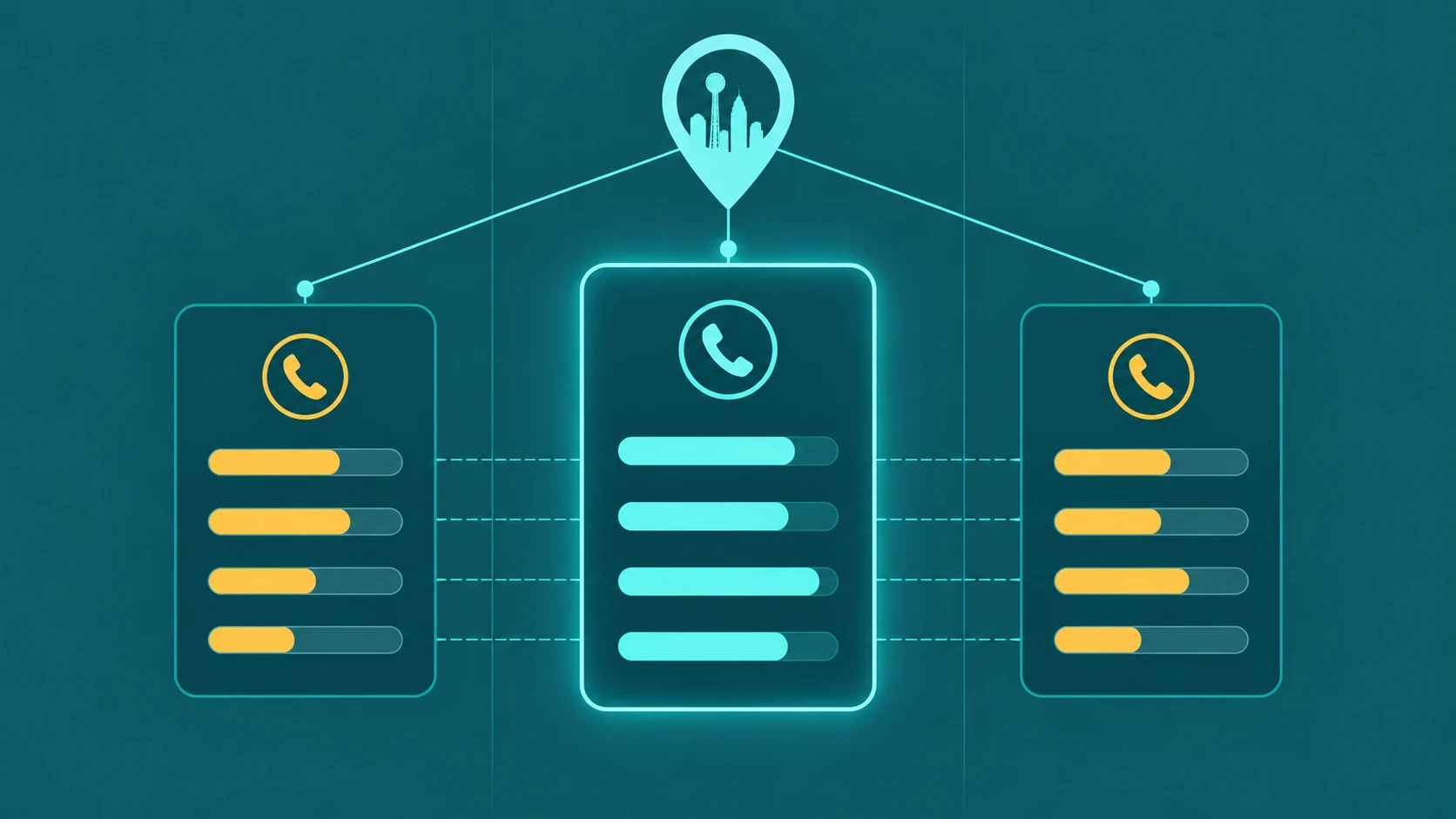
Dallas businesses typically need numbers in 214, 469, 972, or 945. The 214 area code — the original Dallas code, active since 1947 — has prestige value for central Dallas operations and limited availability. Ask prospective providers:
- Can you provision a 214 number today, or is there a wait list?
- Can you provision numbers in all four DFW area codes?
- Can I port my existing Dallas numbers from my current carrier before my first bill?
Porting from major Texas carriers
Many Dallas businesses have existing numbers with AT&T, Spectrum Business, or Frontier. Number porting — transferring your existing number to a new provider — is a standard process but varies in execution quality by provider. A botched port leaves your business unreachable on its primary number during the failure window. Ask for the provider's documented porting process for AT&T Business and Spectrum Business numbers specifically, and for their typical porting timeline and error rate.
SIP trunk capacity and scaling
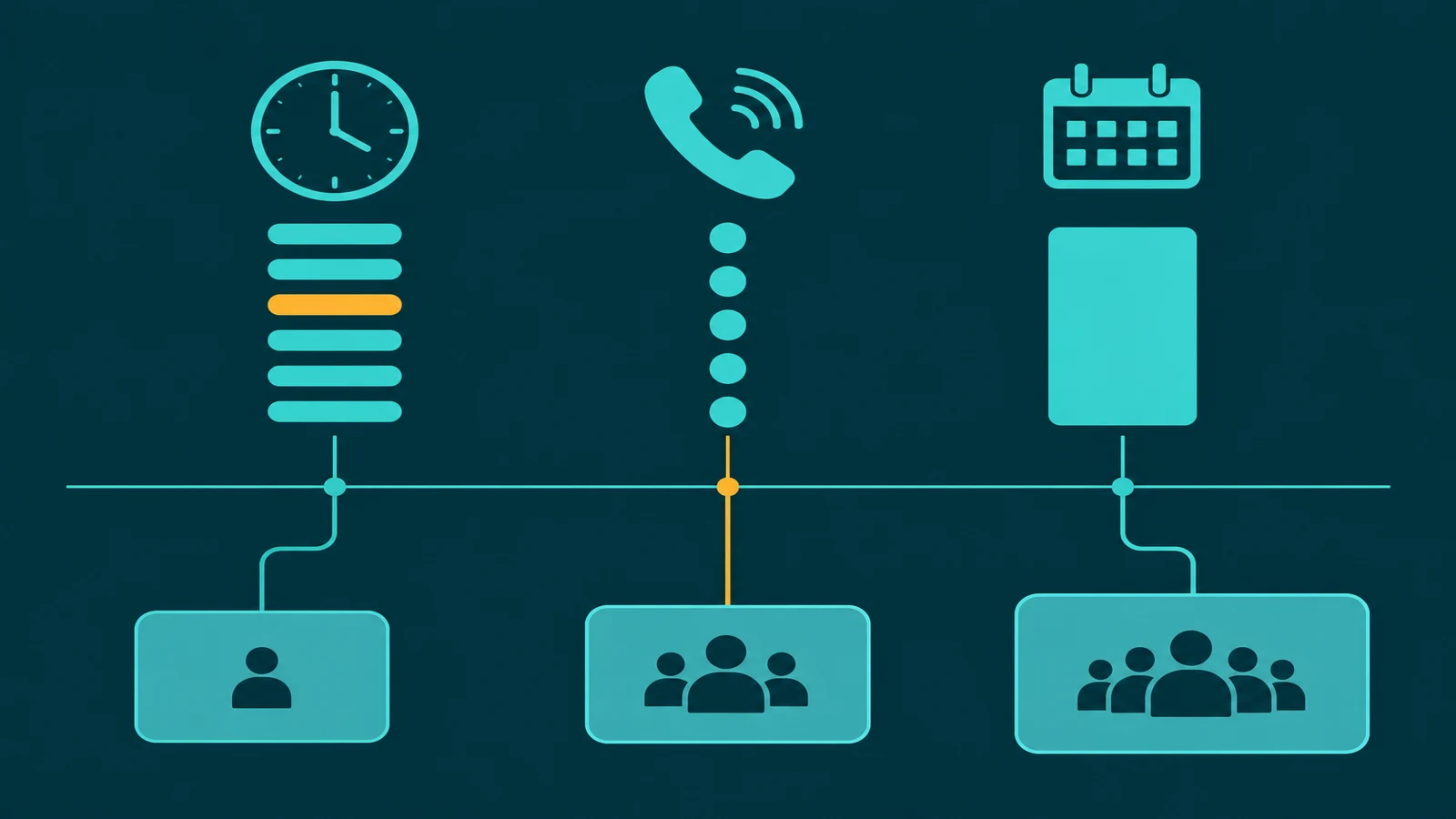
Cloud VoIP providers allocate concurrent call capacity through SIP channels (trunks). A business with 20 staff but only 5 SIP channels experiences busy signals the moment 6 calls attempt simultaneously. Verify:
- Does the provider offer unlimited concurrent channels, or is there a cap?
- How quickly can channel capacity be increased if call volume spikes?
- What happens to inbound calls when capacity is exceeded — busy tone, queue, or overflow routing?
Infrastructure proximity to DFW
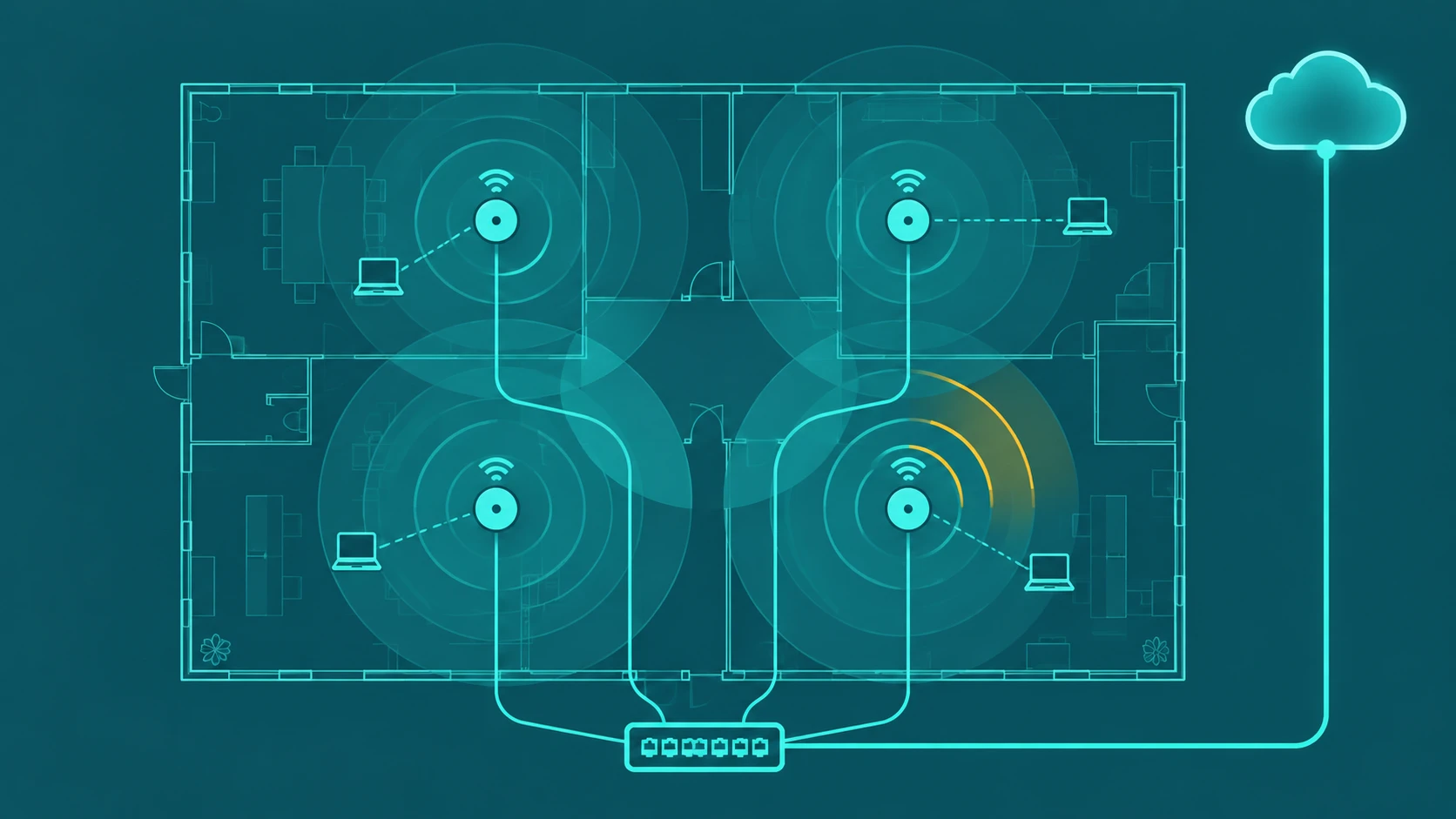
VoIP call quality is sensitive to latency between your network and the provider's nearest voice infrastructure. A provider with data centers in Dallas or a nearby region (Austin, Houston) will consistently deliver lower latency than one routing calls through infrastructure in a distant region. Ask where the provider's nearest media server or point of presence is located. Many providers publish this for enterprise customers but not on public pricing pages.
Uptime and failover for DFW weather events
Dallas businesses operate in a region prone to severe weather — ice storms (notably the February 2021 event), severe thunderstorms, and occasional tornado events. A VoIP provider with single-region infrastructure fails when that region's internet connectivity is disrupted. Evaluate:
- Does the provider have geographically redundant media infrastructure?
- What is the failover routing behavior when a primary data center is unreachable?
- Does the mobile app switch automatically to cellular when office internet fails?
Comparing VoIP solution tiers for Dallas businesses
| Solution type | Best for | Monthly cost range | Key limitation |
|---|---|---|---|
| Hosted cloud VoIP | 1–200 seat businesses | $18–$45/seat | Dependent on internet quality |
| SIP trunking | Businesses with existing PBX | $10–$25/channel | Requires existing PBX investment |
| UCaaS bundle | Teams replacing video + voice | $30–$65/seat | Higher cost; may include unused features |
| Hybrid SBC | Enterprise compliance use cases | $5,000+ setup + monthly | Implementation complexity |
Features Dallas businesses use most
Based on DFW business profile — professional services, healthcare, real estate, logistics, technology — the most-used VoIP features are:
- Auto-attendant / IVR. Routes callers to the right department without a receptionist. Essential for any business with multiple departments or locations across the metro.
- Call recording. Required for compliance in financial services and healthcare; used for training and dispute documentation across most professional services.
- Mobile apps. DFW's distributed work environment — teams spread across Plano, Irving, Fort Worth, and home offices — makes mobile VoIP apps non-negotiable rather than optional.
- Business SMS. Texting from the business number, not personal phones. Increasingly expected by Dallas customers for appointment confirmations, delivery updates, and follow-up communication.
- Call analytics. Volume by time of day, average handle time, missed call rate — used by growing businesses to right-size staffing and identify call routing inefficiencies.
For more on what local businesses in the Dallas area specifically look for, see VoIP phone systems in Dallas and the hands-on overview of VoIP phones for Dallas businesses. If you're comparing providers across all Dallas-area communication platforms — including older PBX options — the Dallas phone systems guide covers the full landscape. For businesses that have expanded or are considering locations in other Texas metros, see also business VoIP systems in Dallas TX.
Questions to ask before signing with any Dallas VoIP provider
- What is your nearest media server location to the Dallas metro?
- Can you port existing AT&T or Spectrum Business numbers before activating service?
- Is concurrent call capacity unlimited, or is there a channel cap at my plan tier?
- What is your uptime SLA and what is the compensation if you miss it?
- Does your mobile app maintain call quality on cellular when office internet fails?
- Do you have Texas-based support staff or a dedicated Dallas account team?
- What are the contract terms — monthly or annual lock-in?