NCLI comes up often enough in wholesale VoIP pricing conversations that it's worth being clear about where it fits, and where it doesn't. For call center outbound specifically, the short answer is that NCLI is rarely the right choice. Understanding why comes down to what NCLI actually does to a call, and what call center traffic needs from the recipient's side of the line.
What NCLI means
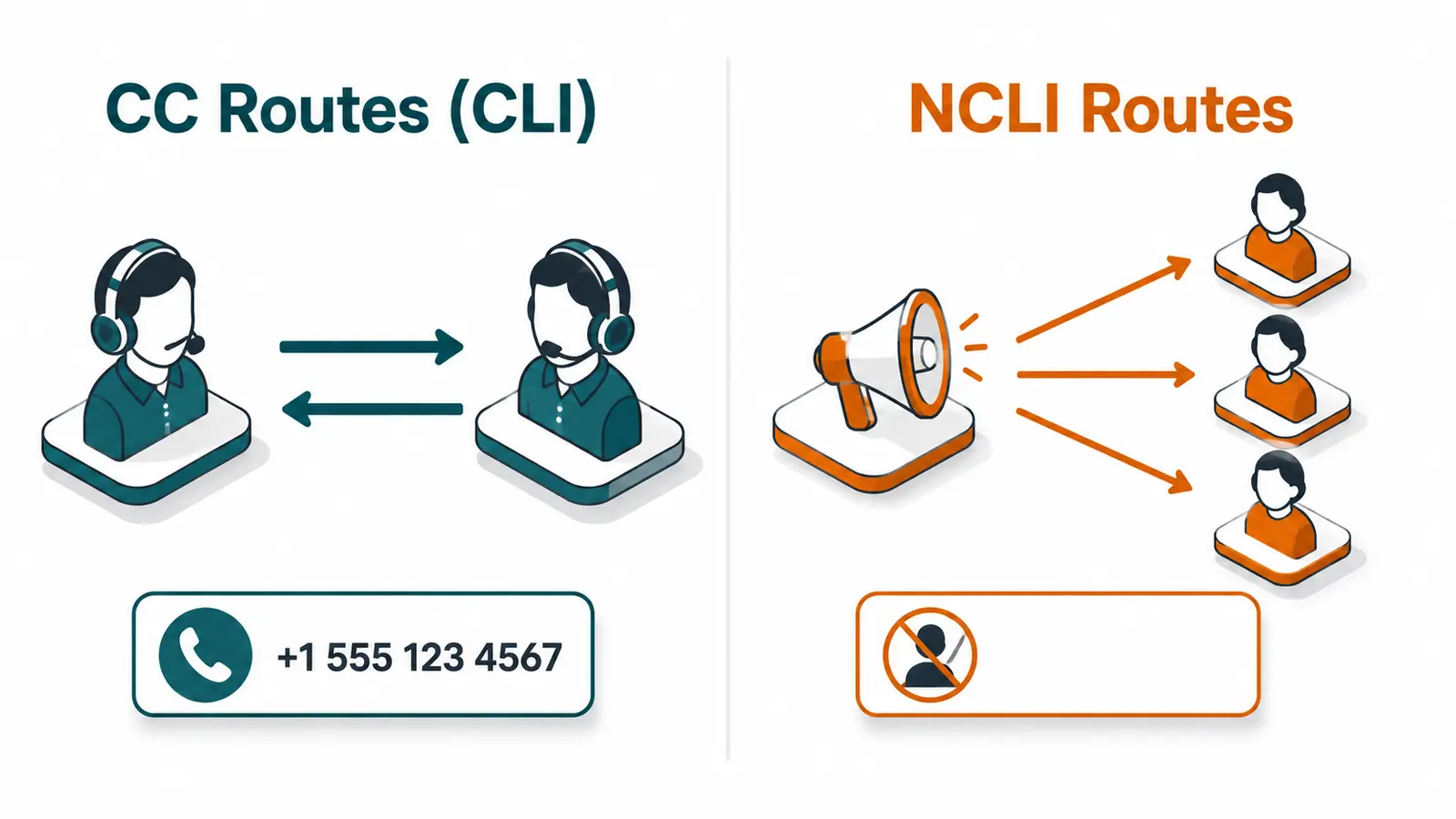
NCLI stands for Non-CLI, meaning the calling line identification is not preserved as a genuine, callable number. Depending on the route, that can mean the caller ID is stripped, replaced with a generic or non-dialable number, or otherwise not representative of a real line that would ring back if called. NCLI routes typically exist because they can be priced more aggressively than CLI routes — there's less overhead in maintaining a pool of legitimate, ownership-verified numbers — and for certain traffic types, the recipient never needs a working callback number anyway.
Why call center outbound needs CLI, not NCLI
Call center dialing is fundamentally about live, two-way conversation: an agent needs to talk to the person who answers. That creates a few requirements NCLI can't satisfy.
Recipients are less likely to answer a call showing no caller ID, an obviously fake number, or a number that doesn't match the caller's actual origin. Answer rate is the core economic driver for a call center campaign, so anything that suppresses answer rate works directly against the reason the campaign exists.
There's also a compliance dimension. Outbound calling to consumers is subject to increasing regulatory expectations that the presented caller ID be legitimate and traceable back to the calling party — not spoofed, not randomized, not disconnected from a real line. Call centers making outbound sales, collections, or service calls are exactly the traffic type regulators and carriers are watching most closely for exactly this reason.
And practically, if a recipient misses the call or wants to call back, a working CLI number means they can. An NCLI number that doesn't ring back is a dead end — a missed connection that a legitimate CLI route would have recovered.
Where NCLI does fit
NCLI isn't a bad product across the board — it fits a different traffic type. Bulk, one-way, informational traffic where the recipient isn't expected to call back and where caller ID authenticity isn't the deciding factor in whether the message lands is a reasonable use case for NCLI pricing. Some automated notification traffic and certain wholesale transit arrangements fall into that category. The distinguishing question is always whether the traffic depends on a live, answered, two-way conversation with a real person who might reasonably want to call back — call center outbound almost always does, which is why NCLI rarely shows up as the routing choice for that traffic.
| Traffic type | Typical routing | Why |
|---|---|---|
| Call center / dialer outbound | CLI (CC routes) | Needs answer rate, callback capability, compliance-legitimate CLI |
| Bulk informational / one-way traffic | NCLI | Recipient not expected to answer live or call back |
The caller ID authentication angle
There's a regulatory reason NCLI has become an even worse fit for live outbound than a pure answer-rate argument suggests. Under the FCC's STIR/SHAKEN framework, an originating carrier signs each call with an attestation level that reflects how well it verified the caller's identity and their right to use the presented number. The strongest level, A (full attestation), requires the provider to confirm both — which is only possible when a legitimate, owned CLI is being presented in the first place. Strip or randomize the caller ID, as NCLI routes do, and there is nothing for the signing chain to fully attest to; the call is far more likely to arrive with low attestation and be labeled "spam likely" on the recipient's handset.
So the damage from NCLI on live outbound compounds: the recipient sees a number they don't recognize (or none at all), the call may carry weak attestation that triggers a spam label, and there's no working number to call back. Each of those independently suppresses the answered-connection rate a campaign exists to produce. For the mechanics of how attestation is assigned and why it affects trust, see what is STIR/SHAKEN. As always, confirm the specific caller ID rules that apply to your calling program with qualified legal counsel.
What this means when you're sourcing routes
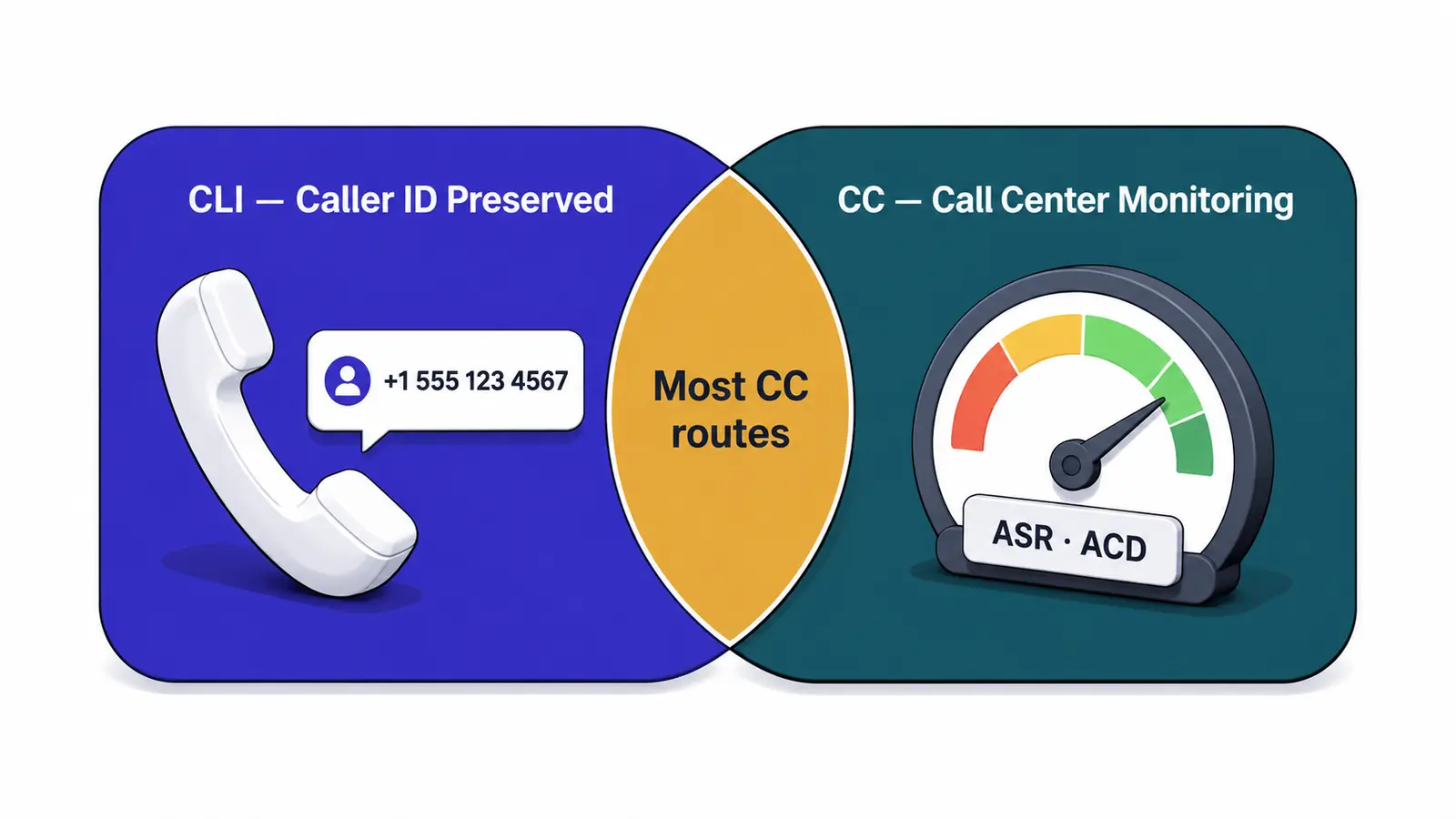
If a provider offers you NCLI pricing for call center dialer traffic because it looks cheaper on paper, that's a signal to ask more questions before committing volume. Lower headline pricing on a route that suppresses answer rate can end up being more expensive in practice, since the entire point of a call center campaign is converting attempts into held, answered conversations. CC routes, being CLI-based with call-center-specific monitoring layered on top, are built around that requirement directly. For the closely related distinction between caller-ID handling and call-center monitoring, see CC routes vs. CLI routes, and for a plain-English definition of the category, what are CC routes.