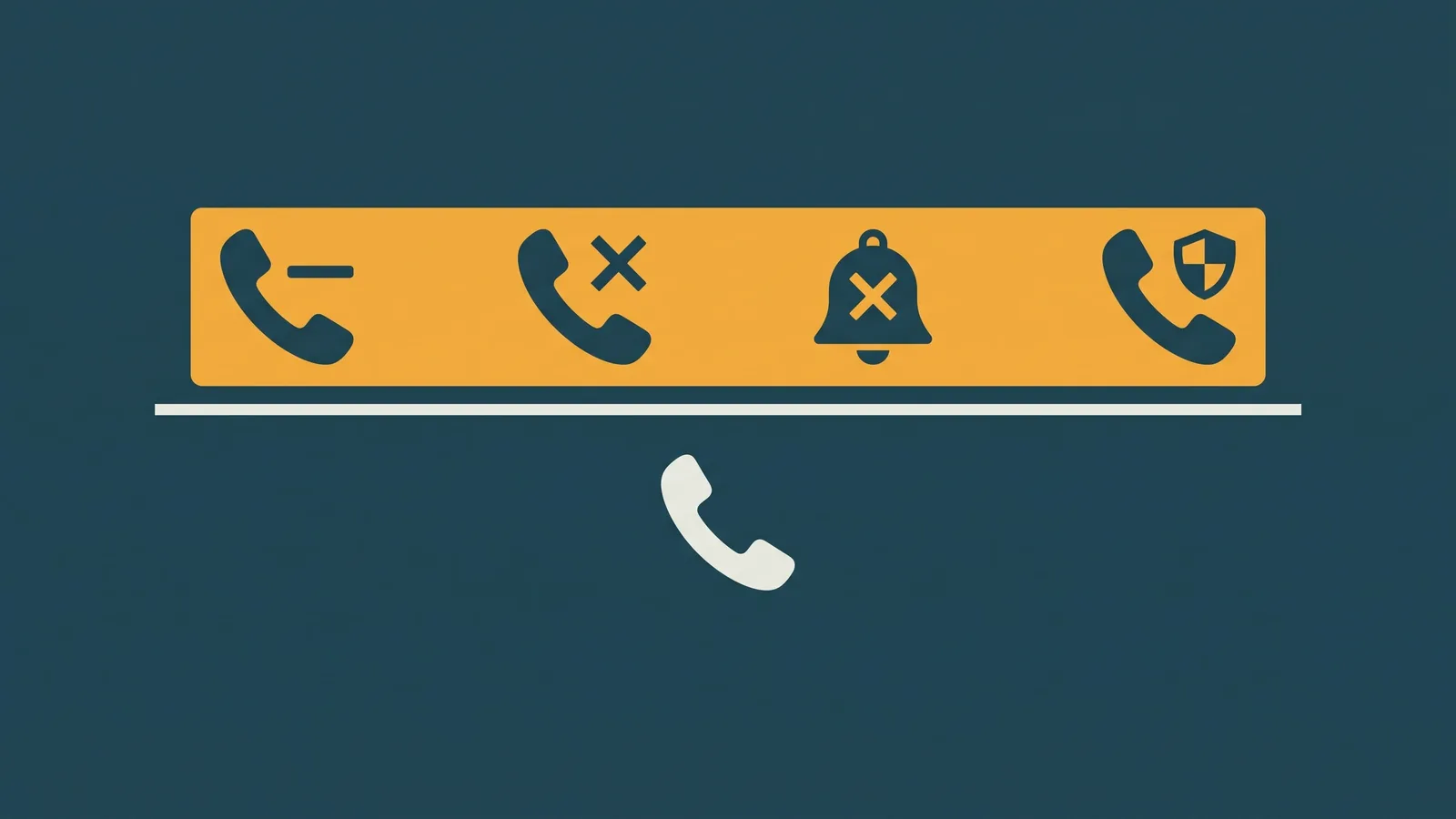
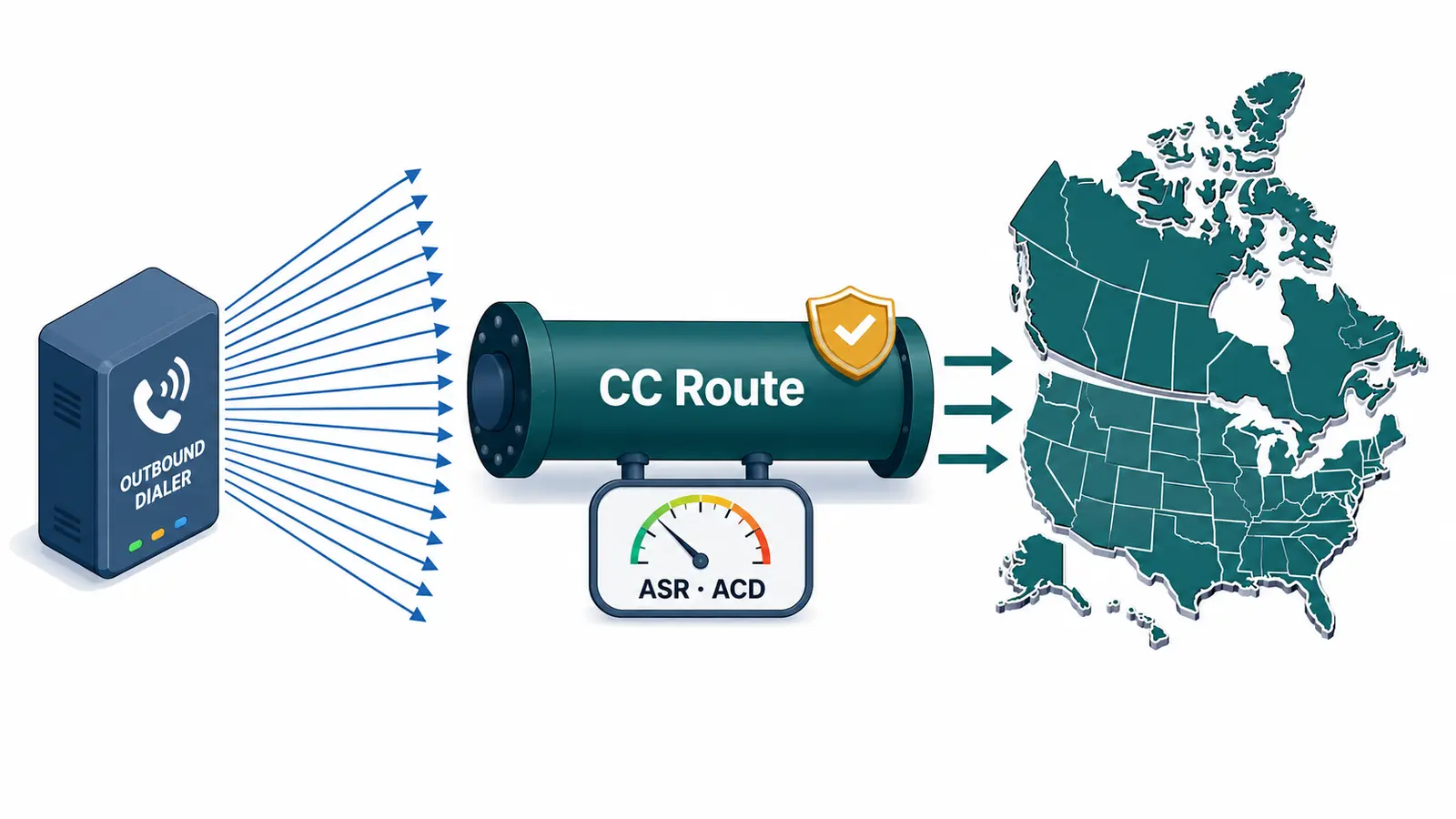
What are CC routes? CC routes (call center routes) are wholesale voice termination services engineered specifically for call center and dialer traffic. Unlike generic VoIP termination, CC routes are provisioned for high calls-per-second (CPS) attempt rates and low average call duration (ACD), continuously monitored per-route for answer-seizure ratio (ASR), and priced around bulk outbound minute volume. Available for USA and Canada destinations.
"CC routes" is shorthand for call center routes: wholesale voice termination built around the way call centers and dialer campaigns actually generate traffic, rather than around the average retail or enterprise calling pattern. If you run outbound campaigns through a predictive or progressive dialer, the routes you need are not the same product as generic termination, even though both move a call from your switch to a destination number.
What makes call center traffic different
Most termination is priced and provisioned around an "average" call: moderate call volume, calls placed one at a time or in small bursts, and call durations that run a few minutes. Call center traffic breaks that assumption in three specific ways.
First, attempt rate. A predictive dialer doesn't place one call and wait for it to finish before placing the next. It dials ahead of agent availability, attempting many calls per second so that by the time an agent is free, a live answer is already on the line. That attempt rate is measured in calls per second (CPS), and it's a different capacity requirement than concurrency alone.
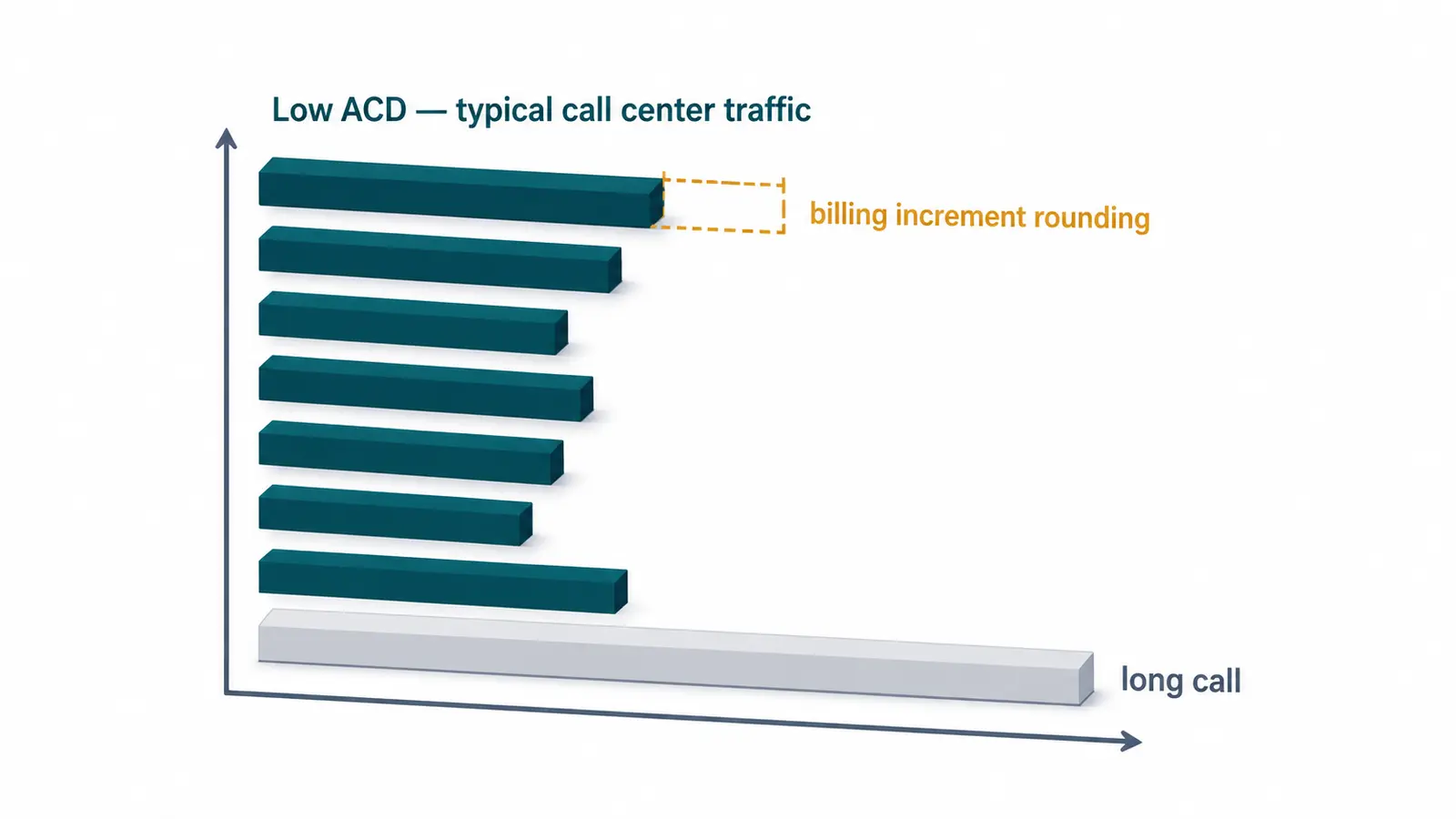
Second, call duration. A large share of dialer attempts end in no answer, voicemail, or a call that's dropped seconds after connect because the dialer over-attempted. The calls that do connect and get handled by an agent tend to be short relative to, say, a technical support call or a long-form sales conversation. Average call duration (ACD) runs low, and that's the normal shape of the traffic, not a problem to be fixed.
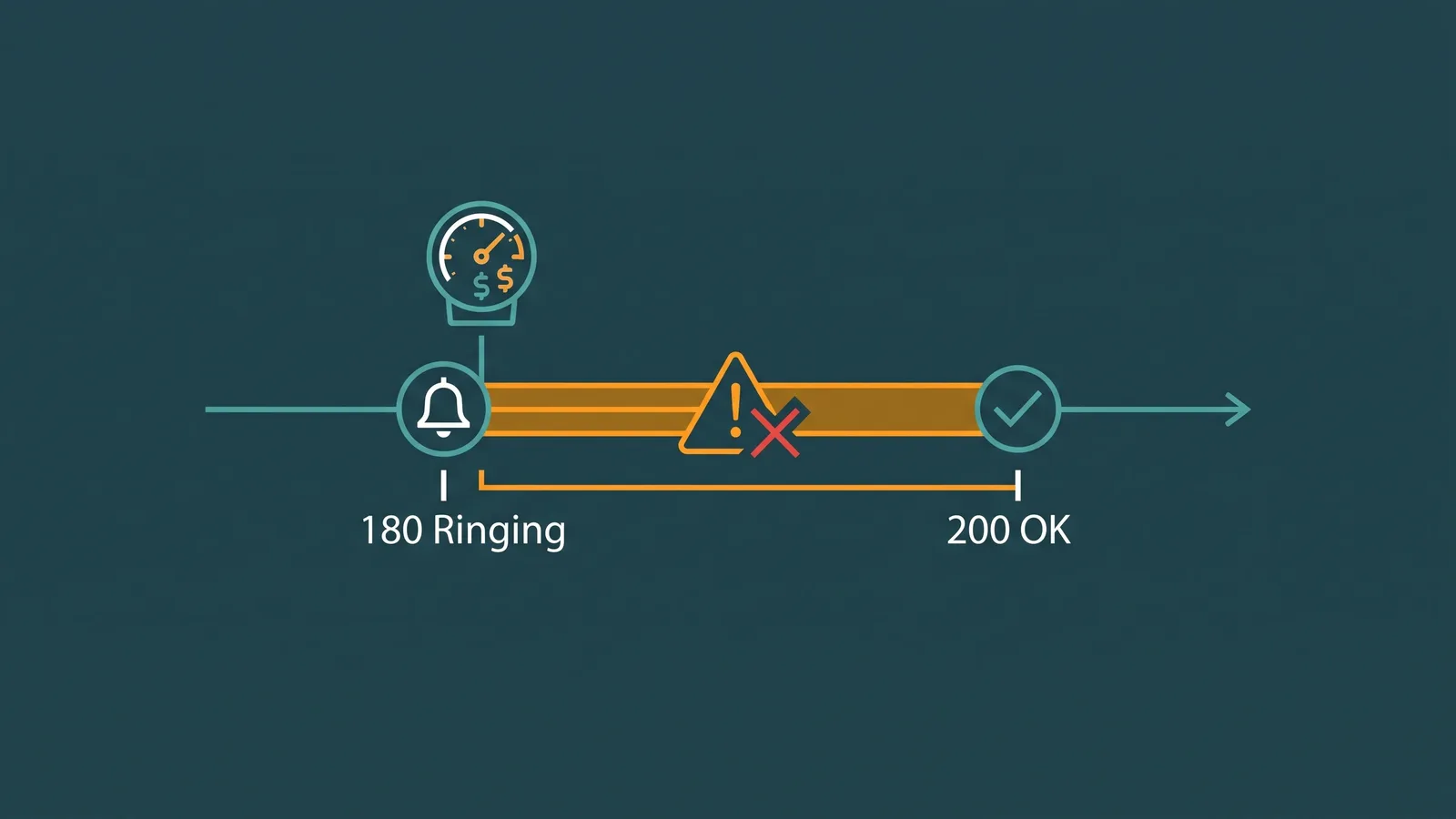
Third, answer rate is the whole business model. A call center's revenue is directly tied to how many attempts turn into a live, held connection. A route that quietly degrades — drops ASR by a few points, adds post-dial delay, or starts failing silently on certain area codes — doesn't just annoy a caller. It removes revenue from a campaign in a way that's hard to see until someone pulls the reports.
Why generic termination struggles with this pattern
A route optimized for average traffic is usually chosen and monitored around price and general uptime. It isn't necessarily built to hold up under a sudden CPS spike when a campaign starts, or to get flagged the moment ASR drifts on a specific destination. CC routes exist because that gap matters at scale: a route that's fine for occasional low-volume calling can behave very differently once a dialer is hammering it with hundreds of attempts a minute.
In practice, "CC routes" means the same termination infrastructure — SIP trunking to carriers who terminate calls to the PSTN — but selected and monitored with call center economics in mind. That includes tracking ASR and ACD per route on an ongoing basis, provisioning for high CPS and high concurrency rather than just average load, and pricing built around bulk outbound minutes instead of single-line retail calling.
Scope: USA and Canada only
CC routes, as a product category, are available for USA and Canada destinations. That's not an arbitrary limitation — it reflects where the bulk of predictive-dialer call center traffic actually terminates, and where route quality can realistically be monitored and tuned at the level call center economics require. For outbound or inbound termination to other countries, that's standard A-Z termination: worldwide coverage, not tuned specifically for dialer attempt patterns.
If your call center only dials domestically, CC routes are the right product. If you run a mixed campaign — US and Canada outbound plus some international destinations — you'd typically pair CC routes for the North American leg with A-Z termination for everything else.
What CC routes are not
A CC route is a termination route, not a dialer. It doesn't include Vicidial, GoAutoDial, or any Asterisk-based dialer software — those are platforms you run yourself, and CC routes connect to them over standard SIP trunking. It's also not a DID product or a hosted PBX. It's specifically the termination leg: getting your dialer's outbound attempts to the destination carrier reliably, at the attempt rate and call pattern call center traffic actually produces.
What you still run alongside CC routes
Because a CC route is only the termination leg, it's worth being clear about the pieces that sit around it — a common point of confusion for teams sourcing routes for the first time. You supply the dialer: a predictive dialer that dials ahead of agent availability, or a progressive dialer that dials closer to a fixed ratio per agent. The dialer connects to the CC routes provider over SIP trunking, which is the signaling layer that sets up and tears down each call. Features like answering machine detection live in the dialer, not the route. The two capacity numbers that describe how your traffic hits the route — attempt velocity and call length — are covered in CPS and ACD.
Understanding that split matters for both troubleshooting and buying. If answer rate drops, the cause could be the route (a degrading path, weak attestation) or the dialer configuration (over-aggressive pacing, poor list quality) — and knowing which layer owns which behavior is what lets you diagnose it instead of blaming the wrong vendor.
Frequently asked questions
To go deeper on the technical and commercial dimensions of CC routes: see how CC routes work end to end, how CC routes compare to CLI routes, how NCLI routes differ, what CPS (calls per second) means for dialer capacity, how ACD (average call duration) affects route quality and pricing, and what to look for when choosing a CC routes provider. For pricing structure, see how CC routes pricing works. Or explore CC routes directly.