A business phone disaster recovery plan is a documented procedure that defines who takes action, which backup communication channels activate, and how the organization confirms full recovery when its primary phone system fails. It is distinct from VoIP failover technology — failover is the automated mechanism that reroutes calls; a DR plan is the human process that surrounds it, covering roles, decision triggers, alternate channels, supplier contacts, testing schedules, and post-incident documentation.
A dead phone system is immediately visible to customers. Email and web channels can queue; a caller who reaches a disconnected number or endless ringing has no such patience. Voice is synchronous — customers call now, not later — which is why the Recovery Time Objective (RTO) for inbound phone is typically shorter than for most data systems. Many businesses target fewer than 15–30 minutes for critical inbound lines.
This guide walks through every component of a practical business phone DR plan and ends with a checklist you can adapt for your organization. For the technical layer that underpins it, see the companion guide on VoIP failover and backup call routing.
Why phone DR is different from general IT disaster recovery
General IT DR focuses heavily on data: backup copies, recovery point objectives (RPOs), and restoring systems to a known-good state. Voice DR has a different character:
- Voice is synchronous. Calls happen in real time. There is no inbox that queues missed voice attempts for later delivery. A caller who cannot reach you is gone.
- RTO dominates. The time to restore inbound calling is the key metric. 15–30 minutes is achievable with pre-configured failover; zero minutes requires active-active architecture where both paths carry live traffic simultaneously.
- RPO applies differently. Calls themselves do not "persist" the way data does, so RPO is less relevant for live routing. However, RPO applies directly to call recordings, voicemails, and contact history stored in your platform — these need separate consideration.
- The recovery tool may be the failed system. If your phone system is down, you cannot call your team to coordinate recovery using that same system. Out-of-band communication (mobile phones, personal email) must be documented in advance.
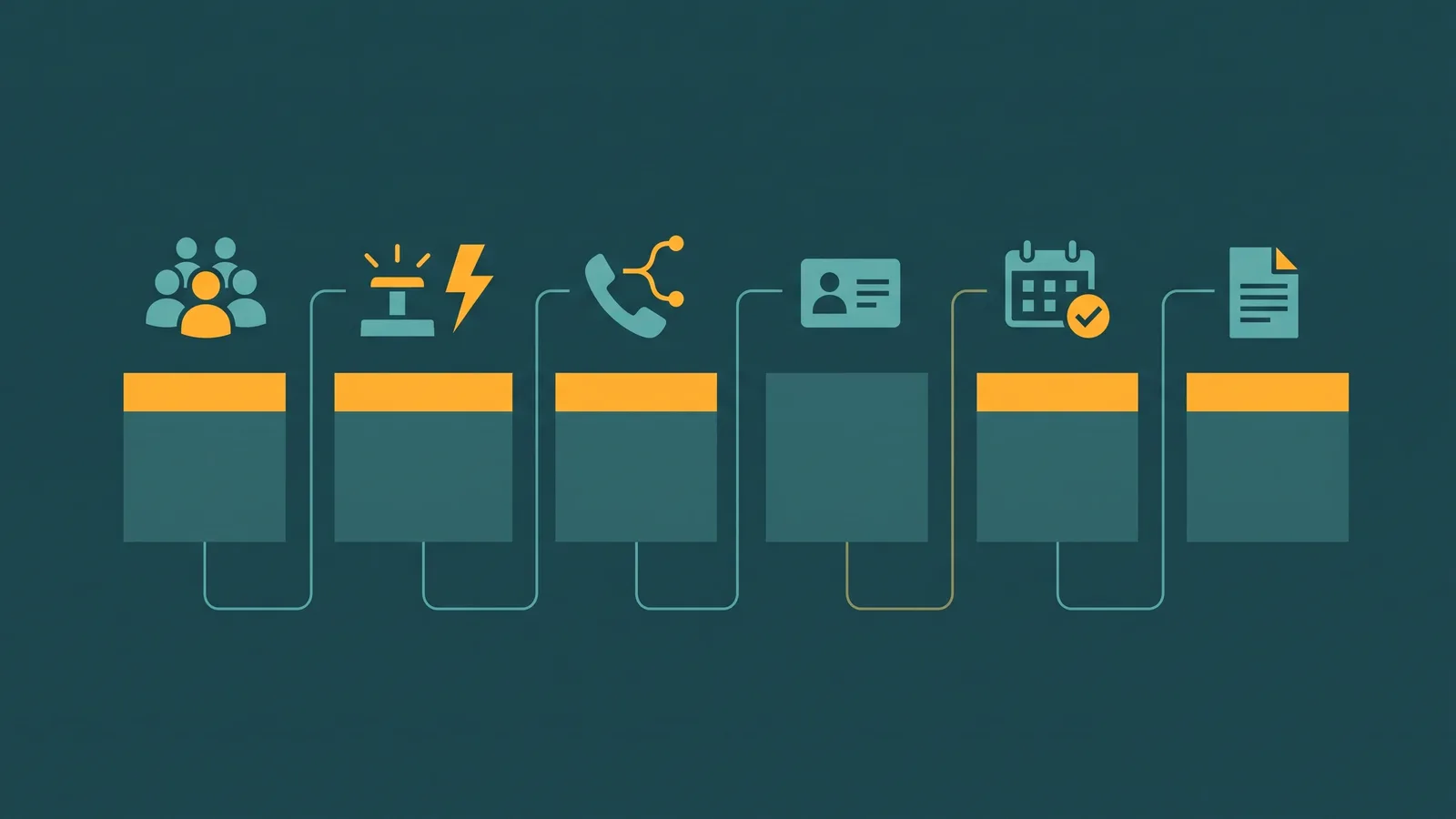
Plan component 1: People
Every phone DR plan needs named humans, not just role titles. People leave; titles stay. Document both.
DR coordinator
Assign a primary DR coordinator and a backup. Both must have direct mobile numbers and personal email addresses documented offline. The DR coordinator is responsible for declaring an outage, initiating the call tree, and authorizing alternate channel activation.
Call tree
A call tree defines who notifies whom when an outage is declared. Because the phone system itself may be down, the call tree must use out-of-band communication: mobile numbers and personal email addresses, not business email addresses that route through systems that depend on the failing infrastructure. Map it explicitly: coordinator calls A and B; A calls C and D; B calls E and F.
Escalation path to provider support
Document your primary VoIP/SIP provider's emergency support contact — not the general support number, but the severity-1 escalation line that many providers maintain separately. Include your account number, contract reference, and the SLA response time you are entitled to. Store this offline: printed, or in a shared drive that does not depend on the failing system.
Plan component 2: Trigger conditions
A plan that says "activate when the phone system is down" is not actionable. Define thresholds that determine when to declare a phone outage and which response level to invoke.
Outage declaration triggers
- Primary SIP trunk down for more than X minutes (set your threshold — common values are 3–5 minutes for critical inbound lines)
- Cloud PBX platform unavailable per the provider's public status page
- Internet link failure at the primary site
- Physical hardware failure on an on-premise PBX
Partial vs full outage
Distinguish between a partial outage (some DIDs or extensions are down) and a full outage (no inbound calls are being received). Each may warrant a different response. A partial outage affecting only one department might be handled by internal rerouting without activating backup carrier trunks; a full outage requires the complete DR procedure.
Monitoring and detection
A DR plan assumes someone detects the outage. Define how that happens: provider status page alerts, SIP registration monitoring, or a synthetic inbound call test that fires an alert if it fails to connect. Plans that rely on a customer calling to report "your phone is down" have an unacceptably long detection window.
Plan component 3: Alternate channels
When primary calling fails, customers still need to reach you. Pre-configure and document each alternate channel before an outage occurs — not during it.
Mobile numbers for key staff
Identify which staff members' mobile numbers should be published temporarily during an outage. Update the IVR greeting, website contact page, and any automated email signatures to direct callers to these numbers. Define in advance who is authorized to make this change and how quickly it must happen after an outage declaration.
Backup SIP provider
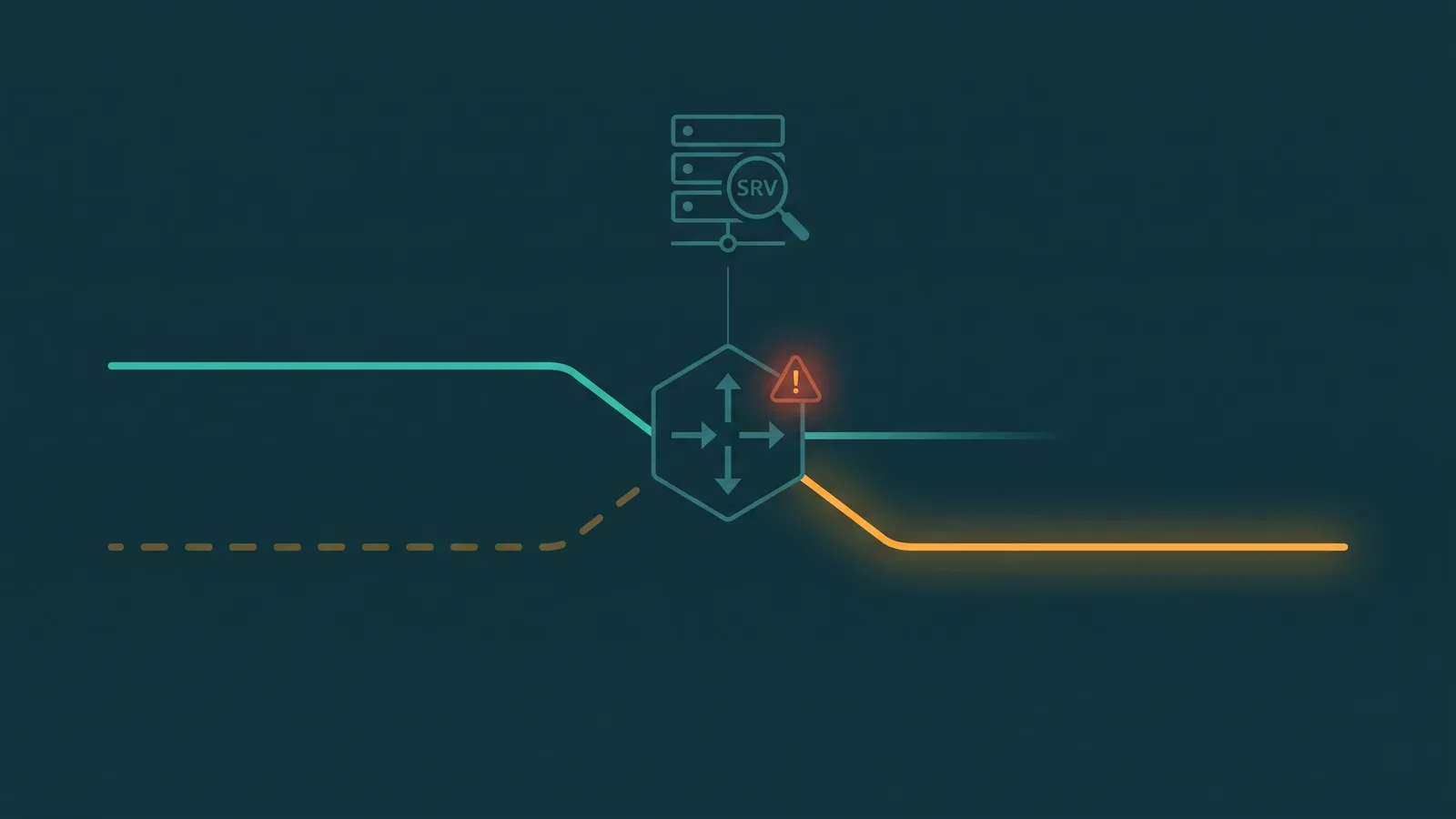
A pre-provisioned second SIP carrier trunk — ideally connected via a separate internet circuit — is the fastest way to restore inbound calling. If the backup trunk is already registered and your DIDs are pre-configured to fail over to it, activation can be near-automatic. See the VoIP failover guide for how DNS-based and SIP OPTIONS-based detection works in practice.
Carrier-level DID forwarding
Most carriers offer portal-accessible DID forwarding: forward your business number to a mobile or POTS line directly at the carrier level, bypassing your entire platform. This works even if your PBX, SIP trunk, and internet connection are all down simultaneously, because the forward executes in the carrier's own network. Confirm this capability with your carrier, test it once, and document the exact steps to activate it.
SMS from business numbers
If your business numbers support SMS, outbound SMS messaging to customers may still function during a voice outage. Prepare a pre-written SMS notification template — something customers can actually act on — and identify who is authorized to send it. An SMS blast directing customers to a mobile number or alternate channel can significantly reduce inbound volume pressure during recovery.
Web and chat
Update the website's contact page and any live chat widget to indicate a voice outage and provide the alternate contact method. This reduces frustrated callers who reach a disconnected number and assume the business is closed.
Plan component 4: Supplier contacts
Every provider that touches your phone infrastructure needs a dedicated entry in the DR plan. For each supplier, document:
- Account number — required to authenticate on any support call
- Emergency / severity-1 support number — the number you call when production is down, not the general support queue
- Status page URL — so you can confirm whether the provider has acknowledged the outage
- SLA response time — the contractual response window for a severity-1 incident
- Key contacts — if you have an account manager or technical account manager, their direct number
Suppliers to cover: primary VoIP/SIP provider, internet provider(s), backup/secondary SIP provider if one exists, and any hardware maintenance vendor if you operate on-premise equipment. Store this section offline — printed or in a document stored outside the systems that may be failing.
Plan component 5: Testing schedule
A DR plan that has never been tested is a hypothesis. Voice systems change: trunks expire, configurations drift, contact lists become stale. Testing is not optional.
Full failover test (annually)
Simulate a primary trunk failure and confirm that inbound calls route correctly via the backup path. Measure the actual time from failure to restored inbound routing and record it as your observed RTO. Compare against your RTO target. Any gap needs remediation before the next test.
Tabletop exercise (quarterly)
Walk the DR team through a scenario without actually triggering failover. Walk each step of the call tree, the outage declaration process, and the alternate channel activation sequence. Tabletop exercises surface process gaps — someone left the company, a contact number changed, a step was ambiguous — at no risk to live systems.
Component testing (monthly)
Confirm that backup trunks are still registered and active even if they are not carrying live traffic. A backup SIP trunk that was provisioned but has since expired or been deregistered will not answer when called. Monthly registration checks take minutes and prevent the worst possible DR outcome: activating a backup that does not work.
Documenting test results
Record date tested, who ran the test, observed RTO, issues found, and any remediation steps taken. This documentation is useful both for improving the plan and for demonstrating due diligence if a real outage is later reviewed by customers, auditors, or insurers.
Plan component 6: Recovery evidence and post-incident review
After a real outage, documentation serves two purposes: it closes the incident formally, and it is the raw material for improving the plan so it works better next time.
Incident timeline
Capture the precise timestamps: when the outage was detected, when the incident was declared, when the call tree was activated, when each alternate channel went live, and when primary service was restored. The gap between "outage detected" and "incident declared" is often where the most time is lost.
Root cause
Document the root cause to the level your provider can confirm. For provider-caused outages, request a formal Reason for Outage (RFO) document. RFOs are standard practice for serious incidents; a provider that cannot produce one after a significant outage is a provider worth scrutinizing.
Plan update
Every real outage reveals something the plan did not anticipate. Update the plan within two weeks of the incident, while details are fresh. Plans that are updated only at annual review intervals become stale quickly and fail when needed most.
RTO and RPO targets specific to voice
| What you are recovering | Realistic RTO | Notes |
|---|---|---|
| Inbound call routing | 15–30 minutes with pre-configured failover; 0 minutes requires active-active | Depends on whether backup trunk is pre-provisioned and whether DID forwarding can be activated quickly |
| Outbound calling | Same as inbound if using same backup trunk; slightly longer if PSTN forwarding only | Carrier-level DID forwarding typically covers inbound only |
| Voicemail messages | Recoverable when platform restores (cloud); may require separate backup (on-premise) | For cloud platforms, confirm where voicemail audio files are stored and whether they are included in the provider's own DR |
| Call recordings | Most cloud platforms retain recordings independently of call routing | Confirm data retention policy and storage location with your provider; recordings stored on-premise require a separate backup strategy |
| Contact history / CRM data | Depends entirely on your CRM DR plan, not phone DR | Voice DR and CRM DR are separate plans; coordinate them at the integration points |
Business phone DR plan checklist
People
- Primary DR coordinator named with mobile number and personal email documented offline
- Backup DR coordinator named with the same out-of-band contact details
- Full call tree documented showing who notifies whom using mobile and personal email only
- Escalation path to provider severity-1 support documented with account number and SLA reference
Trigger definitions
- Specific threshold defined for declaring a primary SIP trunk outage (e.g., down for 5 minutes)
- Provider status page URL documented for fast outage confirmation
- Partial outage response defined separately from full outage response
- Detection mechanism in place (monitoring alert, synthetic call test) — not dependent on customer reports
Alternate channels
- Key staff mobile numbers identified and pre-approved for temporary publication
- IVR greeting update procedure documented (who does it, how fast)
- Website contact page update procedure documented
- Backup SIP trunk pre-provisioned and registration confirmed within last 30 days
- Carrier-level DID forwarding tested and activation steps documented
- SMS notification template written and authorized sender identified
Supplier contacts
- Primary VoIP/SIP provider: account number, severity-1 support number, status page, SLA terms
- Internet provider(s): account number, outage support number, circuit ID(s)
- Secondary SIP provider (if applicable): same documentation
- Hardware maintenance vendor (if on-premise): same documentation
- All supplier contact documentation stored offline or in a system independent of failing infrastructure
Testing schedule
- Annual full failover test scheduled with results documented (date, observed RTO, issues, remediation)
- Quarterly tabletop exercise scheduled with scenario and participants defined
- Monthly backup trunk registration check completed and logged
- Carrier-level DID forwarding activation tested at least once since last provider change
Recovery documentation
- Post-incident timeline template ready (detected, declared, alternate channels active, primary restored)
- RFO request process defined for provider-caused outages
- Plan update deadline set (within two weeks of any real outage)
- Plan version-controlled with last-reviewed date visible on the document
EaseDial Business Phone
Need redundant SIP trunking and carrier-level failover? Talk to EaseDial about your reliability requirements.
How a phone DR plan relates to broader IT DR
A phone DR plan does not replace your organization's broader IT DR or business continuity plan — it integrates with it. The integration points to coordinate:
- If a power outage takes down both your internet and your on-premise PBX, the phone DR plan and the power/internet DR plan need to sequence correctly. Know which step comes first.
- If your CRM is also down, agents using backup calling channels will have no customer history. Document the degraded-mode operating procedure — what agents say and do when they cannot pull up account information.
- If remote workers are affected by a local ISP outage, the individual-level redundancy plan (cellular backup, mobile hotspot) interacts with the organizational phone DR plan. See the remote business phone system guide for the infrastructure considerations.
Cloud phone systems and DR
Businesses that have moved to a cloud phone system often assume DR is "the provider's problem." This is partly true: cloud providers operate redundant infrastructure, and platform-level failures are their responsibility to resolve. But it is not fully true:
- Your internet connection is not the provider's responsibility. If your office internet goes down, a cloud phone system goes dark regardless of how redundant the provider's data centers are.
- Your SIP trunk or carrier connection is a separate failure point from the cloud platform itself.
- Remote workers have individual internet dependencies. A cloud platform being fully operational does not help a remote agent whose home ISP is down.
- Provider outages do happen. Even well-resourced cloud platforms experience incidents. Having a plan for "our cloud provider is down" is still necessary.
The DR plan for a cloud phone system focuses more on connectivity redundancy and less on hardware replacement — but the people, triggers, alternate channels, and testing requirements are identical.
Frequently asked questions
Making the plan operational
A business phone disaster recovery plan is not a technical document — it is an operational one. The technology (backup trunks, carrier forwarding, cloud redundancy) creates the possibility of fast recovery; the plan creates the certainty. Without defined triggers, named people, pre-configured alternate channels, and a regular testing cadence, fast technology failover still produces slow, chaotic responses when a real outage hits.
Start with the checklist above. Assign owners to each section. Test the plan before you need it. Update it every time something changes in your phone infrastructure or team. A phone DR plan that was written once and never revisited is worth little more than no plan at all.
For the technical layer that this plan depends on, see the full guide to VoIP failover and backup call routing. For the broader infrastructure considerations around distributed teams, see the guide to remote business phone system setup.