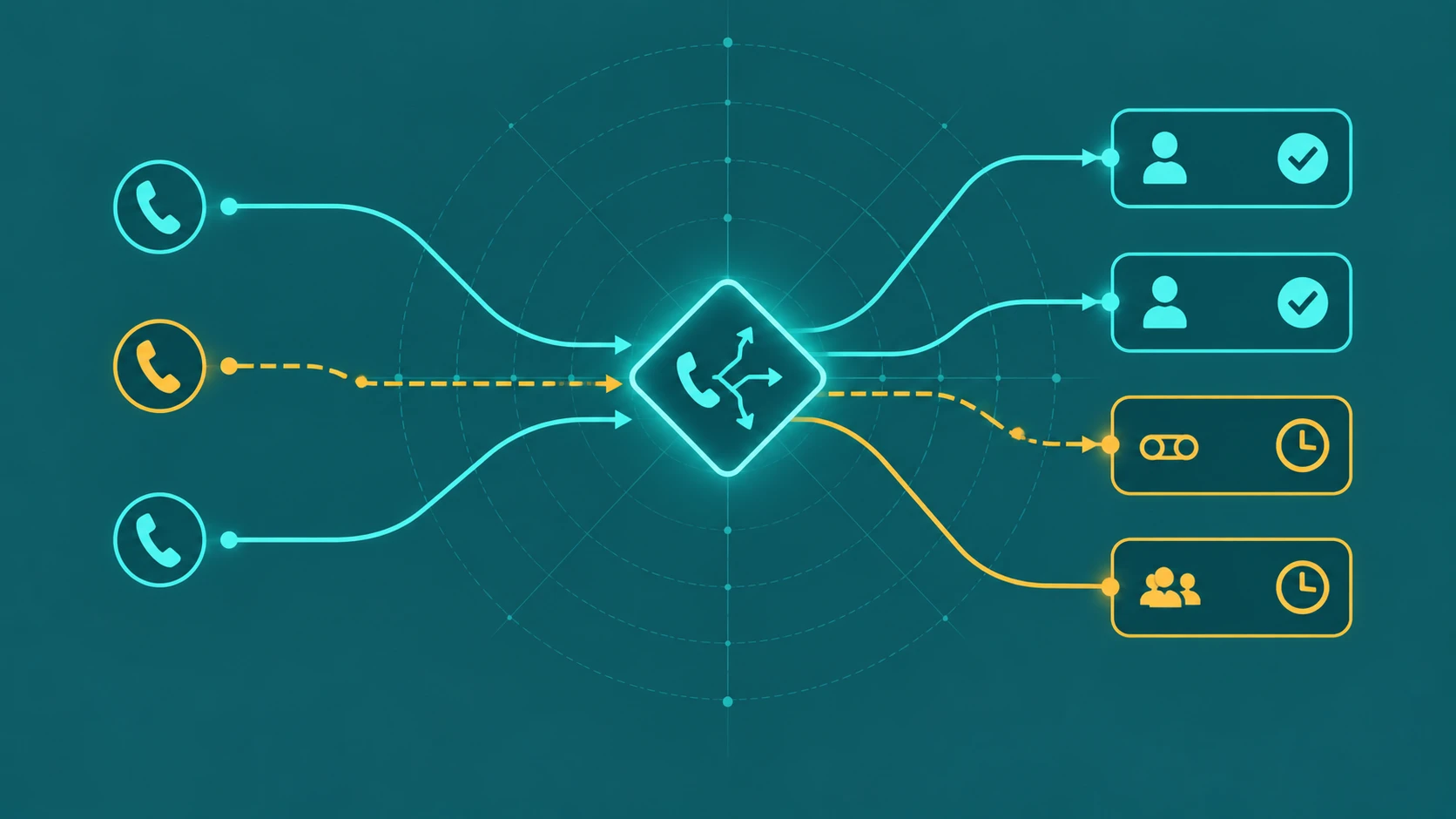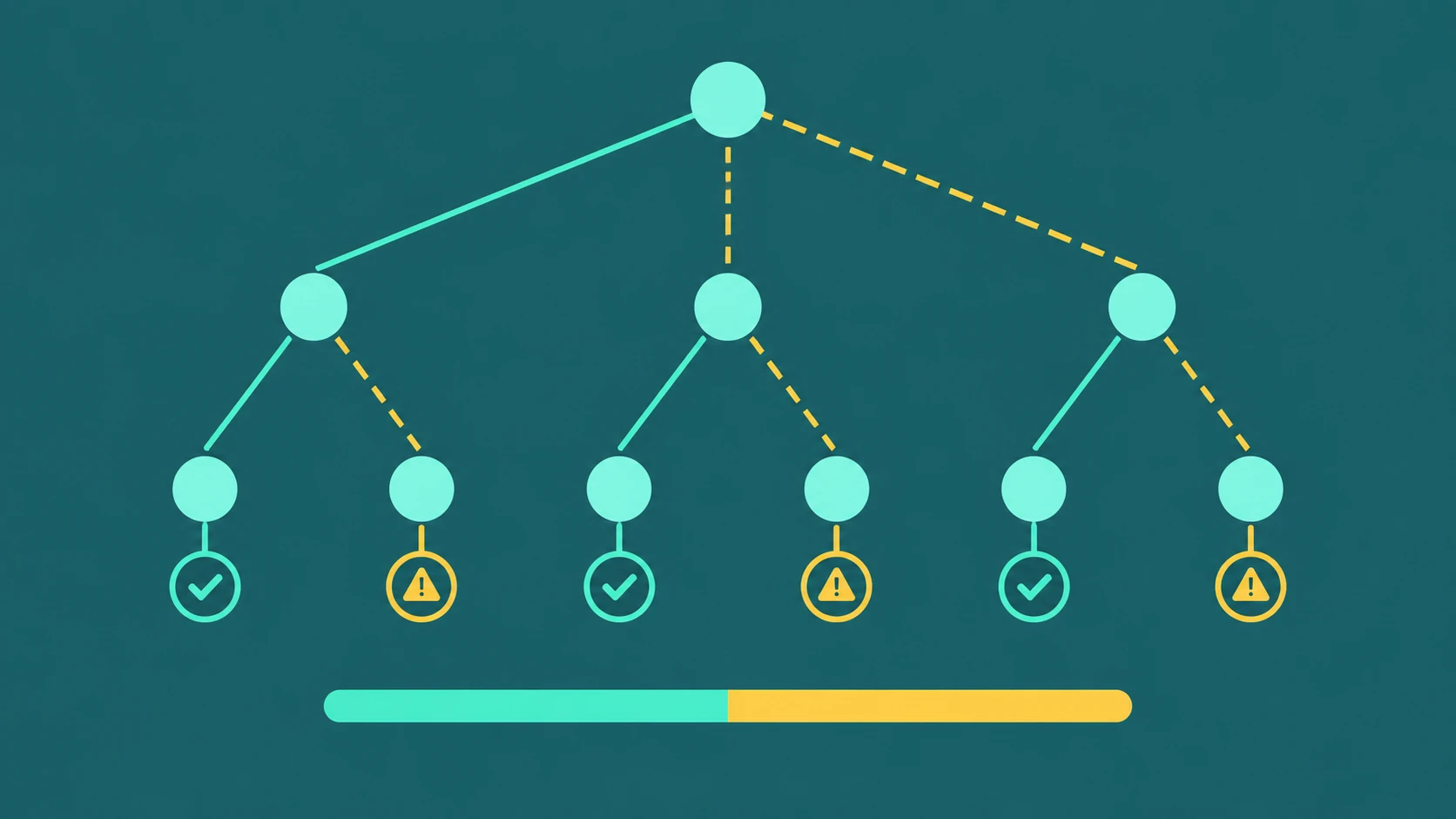
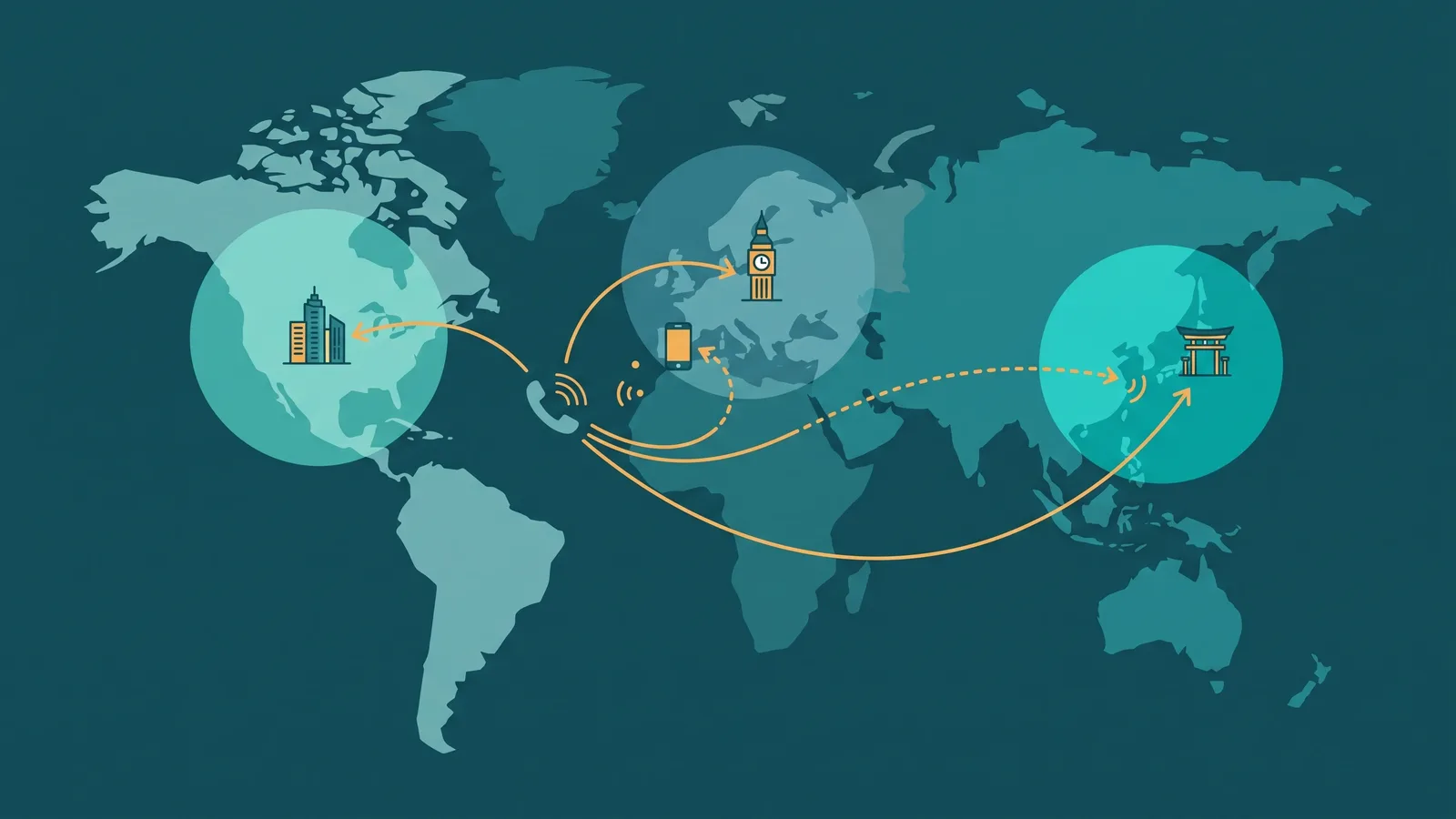
Every contact center eventually faces the same question: should a caller from California be handled differently than a caller from Germany? The answer is almost always yes — different language, different compliance requirements, different business hours, different regional team. Geographic call routing is the practice of using location-derived signals to determine which queue, agent, or site handles an inbound call. The challenge is that "geographic" is not a single signal. It is at least five distinct signals — each with different accuracy characteristics, different privacy implications, and different use cases. Confusing them is the most common mistake organizations make when designing geographic routing rules.
Definition: Geographic call routing is a strategy that directs inbound calls to different agents, queues, or sites based on location-derived information — either the caller's physical location, the number they dialed, their declared region, or their address on file. The routing signal can be inferred from the caller's phone number prefix (ANI), identified by the number they dialed (DNIS), collected via IVR self-selection, estimated from an IP address for web-initiated calls, or pulled from a CRM record. Each signal has distinct accuracy limits, and selecting the right signal for each use case is the core design decision in geographic routing.
The Five Geographic Routing Signals
The phrase "route by geography" can mean any of five fundamentally different things depending on what data the routing engine is actually reading. Understanding each signal separately — including where it breaks down — is essential before building routing rules.
1. Area Code / ANI Prefix
The most common geographic routing signal is the caller's area code — the first three digits of the Automatic Number Identification (ANI) string delivered with each inbound call. The North American Numbering Plan (NANP) originally assigned area codes to geographic regions, so a 212 prefix indicated a Manhattan caller, a 415 indicated San Francisco, and so on. Routing rules built on area code prefixes remain widely used for language and regional matching.
The critical limitation: area codes no longer reliably indicate physical location. The Local Number Portability Administration (LNPA) has permitted free number porting since 1996. A caller with a 212 New York area code may be physically located in Texas — they simply chose not to change their number when they moved. An estimated 30–40% of mobile numbers in the US have been ported at least once. For SMS campaigns and call routing systems that assume area code equals current location, this mismatch introduces persistent, silent errors.
Area code routing is still useful when the business purpose does not require knowing the caller's current physical location. If you are routing Spanish-speaking callers to a bilingual queue, and most callers with Puerto Rico area codes (787, 939) prefer Spanish, the prefix is a reasonable proxy — even if some of those callers have since relocated. If you are routing based on state compliance requirements where it matters whether the caller is currently in California, area code alone is insufficient.
2. DNIS (Dialed Number Identification Service)
DNIS is the number the caller dialed — the destination number, not the caller's number. Organizations publish separate regional phone numbers: a UK number for European callers, a US toll-free number for North American callers, an APAC number for Asia-Pacific callers. Each number routes directly to the regional team. This is the most reliable geographic routing signal available.
DNIS-based routing is reliable because it does not require inferring location — the caller has already self-identified their intended region by choosing which number to dial. A caller who dials the UK number intends to reach the UK team, regardless of where they are physically sitting. The routing reflects caller intent, not inferred geography.
DNIS routing requires organizations to publish and maintain distinct DID numbers for each geographic segment, which adds a provisioning and management overhead. It also works only when callers know which number to dial — a requirement that depends on clear external signaling (website regional selectors, regional marketing materials). For inbound traffic arriving at a single main number, DNIS cannot differentiate geographic origin.
3. Declared Location (IVR Self-Selection)
An IVR can ask callers to identify their region before routing: "For English, press 1. For Spanish, press 2. For calls regarding our European operations, press 3." The caller's keypress or voice response drives the routing decision. This approach is reliable for language matching because the caller is explicitly stating their preference, not having a preference inferred.
The limitation is friction. Every additional IVR step increases the probability that a caller hangs up before reaching an agent. For callers with high intent — they need help with a specific issue — the IVR step is tolerable. For callers with low patience or calling from a mobile with poor audio, it is a barrier. IVR self-selection also does not prevent callers from selecting incorrectly, intentionally or accidentally — a Spanish-speaking caller who mistakenly presses 1 for English will reach an English-language queue.
Declared location works best as a supplementary signal when DNIS or CRM data is unavailable, or as a language preference prompt layered on top of a geographic pre-filter.
4. IP-Based Geolocation (Web Click-to-Call)
When a caller initiates a call through a web browser widget — a click-to-call button on a website — the platform can capture the caller's IP address and pass it through a geolocation database to estimate their physical location. This country or region estimate can then drive routing decisions before the call connects.
IP geolocation accuracy varies substantially and has two significant failure modes. First, VPN users appear in a different city or country than their actual location — a caller physically in London using a US VPN server will appear to be in the United States. Second, carrier-grade NAT (CGN) aggregates large numbers of mobile users behind a single IP address at a carrier facility, meaning the geolocated "location" may be hundreds of miles from where any individual caller actually is.
IP geolocation is useful as a best-effort signal for low-stakes routing decisions — for example, pre-selecting a default language in the web widget interface. It should not be the sole signal for compliance-critical routing decisions where the caller's actual jurisdiction matters, because the false location rate for mobile and VPN users is high enough to produce meaningful misroutes.
5. CRM-Stored Address
When a caller authenticates — either through an IVR account lookup by phone number or account code, or through a portal-initiated click-to-call where the session carries an account token — the system can query the CRM for the caller's billing or service address. This provides the most stable, most accurate geographic indicator available.
CRM address data reflects where the customer's account is located, which for compliance-driven use cases (state-specific financial regulations, healthcare jurisdiction, utility service territory) is precisely the relevant data point. Unlike IP geolocation, a CRM address does not change when the caller moves to a different network. Unlike an area code, it is not affected by number portability.
The requirement is CRM integration — the routing engine must be able to query the CRM in real time before the call connects, which adds architectural complexity. For portals and authenticated web sessions, the account context can be passed directly in the call initiation payload, eliminating the lookup latency. For IVR-based authentication, the lookup adds a second or two of processing time before routing fires.
Common Use Cases for Geographic Routing
Geographic routing solves distinct problems depending on the business context. The use case determines which signal is appropriate and which failure modes matter most.
Language Matching
Routing callers to agents who speak their language is the most common geographic routing application. Area code prefixes serve as a reasonable proxy — callers with Puerto Rico area codes or Mexico country codes are statistically more likely to prefer Spanish. IVR self-selection provides a more reliable signal when language preference cannot be inferred from the number. For multilingual contact centers, language routing is often the highest-impact routing dimension because mismatches create the worst caller experience: an agent who cannot communicate with the caller.
Regional Compliance
Financial services and healthcare businesses face state- or country-specific regulations that require agents to be trained or licensed for the jurisdictions in which they operate. A California insurance call requires an agent licensed in California. A GDPR-scope call from an EU resident may require handling under specific data-processing procedures. For compliance-driven routing, CRM address data is the appropriate signal — not area code, which is portable, and not IP, which is imprecise.
Time Zone Management
Routing a caller to the regional team currently within business hours prevents callers from reaching queues that have closed for the day in one time zone when another region's team is still available. A call arriving at 5:30 PM Eastern for a US East Coast team that closed at 5:00 PM can be redirected to the US West Coast team still open until 8:00 PM Pacific. This use case overlaps with time-based routing — geographic routing identifies the region, time-based routing evaluates whether that region's team is available.
Field Service and Local Team Routing
Field service businesses — utilities, home services, property management — assign service territories to regional teams. A customer calling about a service appointment in their zip code needs to reach the team responsible for that territory, not the national call center. DNIS (separate regional numbers) or CRM service address data are the appropriate signals here.
International Distribution
Organizations with call centers across multiple countries use DNIS routing to direct callers from different countries to regional centers. This minimizes audio latency on VoIP calls (callers in APAC connecting to a European call center over long-distance SIP paths introduce perceptible delay), reduces international carrier costs, and ensures calls land with agents who share the caller's language and cultural context.
Number Portability and Why Area Codes Are Unreliable for Location
The NANP originally treated area codes as geographic identifiers. The 212 area code meant Manhattan. The 415 area code meant San Francisco. This correspondence held in the era of landlines, when numbers were physically tied to central office equipment in a specific location.
Number portability changed this permanently. Since the LNPA began operations in 1996, subscribers in the US can port their number to any carrier in any state without surrendering their original area code. Mobile phones accelerated this — a caller who grew up in New York with a 212 number, moved to Texas, and never changed their mobile number retains the 212 area code despite having no geographic connection to New York. An estimated 30–40% of mobile numbers in the US have been ported at least once.
For organizations routing by area code, this creates a persistent mismatch between the area code the routing rule matches and the caller's actual location. The mismatch is not detectable from the routing layer — the area code still arrives as 212, and the routing rule fires on 212 without any indication that the caller is not in New York.
This does not make area code routing worthless — it makes it a proxy rather than a definitive signal. Area code routing works for use cases where a probabilistic match is acceptable (language preference routing, for example) and fails for use cases where jurisdictional accuracy is required (compliance routing). The routing design should explicitly account for which category applies.
Emergency Call Exclusions: E911 Bypasses Contact Center Routing
Geographic routing rules apply to calls handled by the contact center. Emergency calls are categorically excluded from this routing and must never be processed through contact center routing logic. This is a regulatory requirement, not a configuration option.
In the United States, E911 calls are routed through a completely separate infrastructure: the Public Switched Telephone Network (PSTN) emergency routing system, which uses Automatic Location Identification (ALI), Emergency Location Identification Numbers (ELIN), and PIDF-LO location objects to deliver caller location to the appropriate Public Safety Answering Point (PSAP). The FCC requires VoIP service providers to ensure that 911 calls reach a PSAP with location information — not a contact center queue.
VoIP and UCaaS platforms must be configured so that calls to 911 bypass all contact center routing — no IVR, no queue, no geographic routing rule — and connect directly to emergency services. This configuration is mandatory. A geographic routing rule that intercepts a 911 call and routes it to a regional agent queue is not a misconfiguration that produces suboptimal results; it is a life-safety failure and a regulatory violation.
For businesses deploying contact center geographic routing rules, the correct approach is to verify that 911 is on the emergency bypass list and to test the bypass periodically. Contact center routing engines that accept wildcard destination patterns must be audited to confirm that the 911 pattern does not match any routing rule.
Privacy and Compliance Considerations
Different geographic signals carry different privacy implications, and the regulatory treatment varies by jurisdiction and by how the data is used.
DNIS-based routing carries the lowest privacy risk. No location inference is performed — the caller's own dialing choice determines the routing, and no personal data about the caller's whereabouts is collected or stored. DNIS routing is appropriate across all jurisdictions without special privacy controls.
Area code routing uses publicly transmitted caller ID data. ANI is transmitted as part of normal call signaling and is not considered private in the way that location tracking is. However, logging ANI data alongside routing decisions creates a call record that, combined with other data, may constitute personal data under GDPR for EU callers.
IP geolocation is where privacy considerations become most acute. In the EU under GDPR, IP addresses are generally considered personal data (or can constitute personal data when linkable to an individual). Processing an IP address to infer a caller's location, then routing based on that inference, may require a lawful basis under Article 6 GDPR — legitimate interest is the most common basis, but it requires a documented assessment. Under the California Consumer Privacy Act (CCPA), IP-derived geolocation data is classified as sensitive personal information when it is precise (city-level or finer). Businesses routing EU or California callers via IP geolocation should review their privacy notices and data processing agreements to ensure IP-to-location processing is covered.
CRM address routing uses stored personal data that the customer has already provided. The processing is generally covered by the existing contract or service agreement, but routing decisions based on that data should be documented as part of the data processing record.
Combining Geographic Routing with Other Strategies
Geographic routing is rarely the only routing dimension in a real contact center. It is one layer in a multi-rule call routing strategy, and understanding how it fits with other routing types determines whether it performs as designed.
A common priority stack places geographic routing first in the evaluation order, followed by time-based routing, followed by skills-based routing:
- Geographic layer — identifies the relevant region, language group, or compliance zone for the caller. Determines which pool of agents or which site is eligible to handle the call.
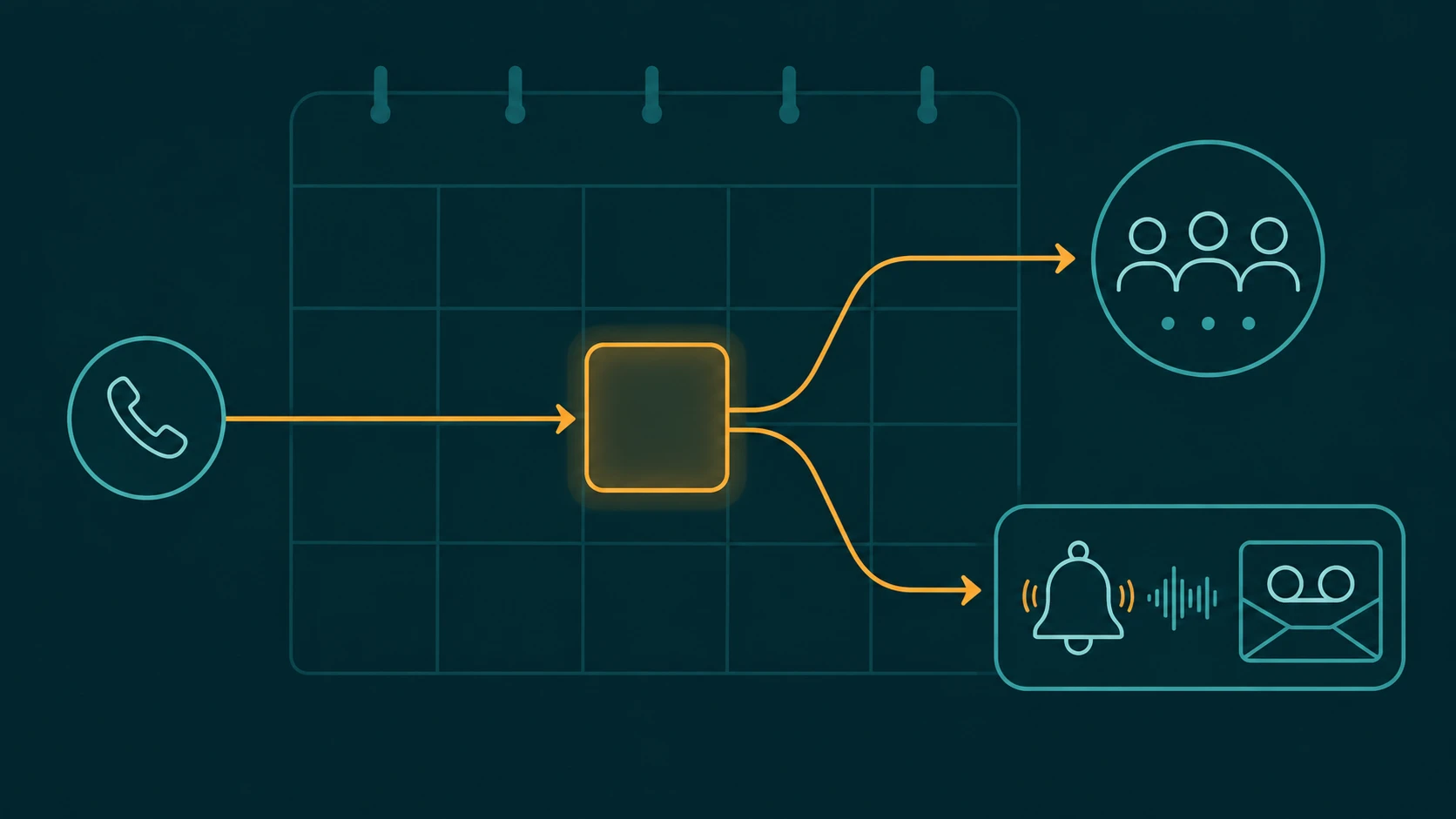
- Time-based layer — evaluates whether the identified regional team is currently within operating hours. If the California billing team is available, the call enters that queue. If they are closed, the call routes to overflow or voicemail capture.
- Skills-based layer — within the eligible agent pool, matches the call to the agent best suited to handle the specific call type. A California billing call within business hours routes to CA-compliant billing agents, prioritized by skills proficiency.
A concrete example: a caller dials the main billing number from an account with a California CRM address at 5:30 PM Pacific. The geographic layer identifies the caller as California-jurisdiction. The time-based layer confirms that the CA billing team's 9 AM–5 PM Pacific window has closed. The overflow rule routes the call to voicemail with a callback-scheduled prompt rather than to the after-hours national queue, because the CA-specific compliance requirement means the national team cannot handle this call type.
Geographic routing that is not layered with time-based fallback commonly produces the worst outcome: calls reach a regional queue that is empty because the regional team has left for the day, creating a silent wait or immediate disconnect. Always define what happens to a geographic route when the target team is unavailable.