Service reception is the first point of contact between a caller and your organization. Whether handled by a live receptionist, a cloud IVR, a virtual receptionist service, or some combination, it sets the tone for every customer interaction that follows. A service reception that puts callers on hold for three minutes communicates something. A reception that greets callers by name, routes them accurately in under 10 seconds, and never sends them to voicemail unless specifically requested communicates something very different.
This guide covers how service reception works across different delivery models — live, virtual, automated, and hybrid — what to evaluate when choosing an approach, and how phone system configuration determines reception quality before any human answers.
Key point: Service reception quality is determined more by call routing design than by the person or system answering. A well-designed IVR that routes accurately in under 15 seconds outperforms a live receptionist who must manually transfer every call. The two are complementary — the question is which layers are right for your call volume and caller expectations.
What service reception actually covers
Service reception encompasses:
- Answering inbound calls on the main business number
- Greeting callers with a professional welcome message
- Identifying the caller's need and routing to the correct person or department
- Managing hold, transfer, and queue behavior when the destination is unavailable
- Handling after-hours calls with appropriate routing or voicemail
- Taking messages, scheduling callbacks, or capturing lead information when staff are unavailable
Different delivery models handle these tasks differently. Most businesses use a layered approach — automated reception for initial greeting and routing, live staff or virtual receptionists for specific call types or overflow.
Service reception delivery models
In-house live receptionist
A dedicated employee who answers the main business line, screens calls, and manually routes them. This model delivers the most personalized caller experience — a skilled receptionist can recognize repeat callers, handle complex routing requests, and exercise judgment in ambiguous situations. The limitations: salary and benefits cost (typically $35,000–$55,000 annually), coverage gaps during lunch, breaks, illness, and PTO, and a single point of failure when call volume spikes.
In-house live receptionists make sense for businesses where caller experience is a primary differentiator and call volume is moderate enough that one person can handle it without queue backlog.
Virtual receptionist service
Third-party answering service companies provide live receptionists who answer calls on behalf of your business under your business name, following a script you provide. Calls that require information or decisions beyond the script are transferred to your staff or sent to voicemail. Virtual receptionists are available 24/7, cover gaps in your in-house coverage, and cost a fraction of a dedicated employee — typically $200–$600/month for moderate call volumes.
The limitation: virtual receptionists follow scripts. Complex caller requests, customers who want a real conversation, or calls that require nuanced judgment will expose the scripted nature of the interaction. For straightforward intake and routing, they work very well.
Automated IVR (Interactive Voice Response)
An IVR answers every call immediately, plays a greeting, presents menu options, and routes the caller based on their keypress or voice input. There is no wait time at the reception layer — the system never has breaks, sick days, or lunch. For businesses with clear, predictable call types, IVR handles reception more consistently than any live model.
The design of the IVR menu is everything. A menu with too many options, poorly worded prompts, or routing logic that does not match caller mental models produces frustration. A menu designed around caller intent — not internal org chart structure — reduces friction. See our guide to how IVR systems work for the full design framework, and multi-level IVR for handling complex routing trees.
Hospitality phone system reception
Hotels and hospitality businesses have distinct reception requirements: room-to-room extension dialing, wake-up call scheduling, concierge routing, room service routing, and front-desk call priority management. Hospitality phone systems include these features natively. Cloud VoIP systems for hospitality typically integrate with Property Management Systems (PMS) to automate guest name display, check-in/check-out status, and do-not-disturb management.
Hybrid model
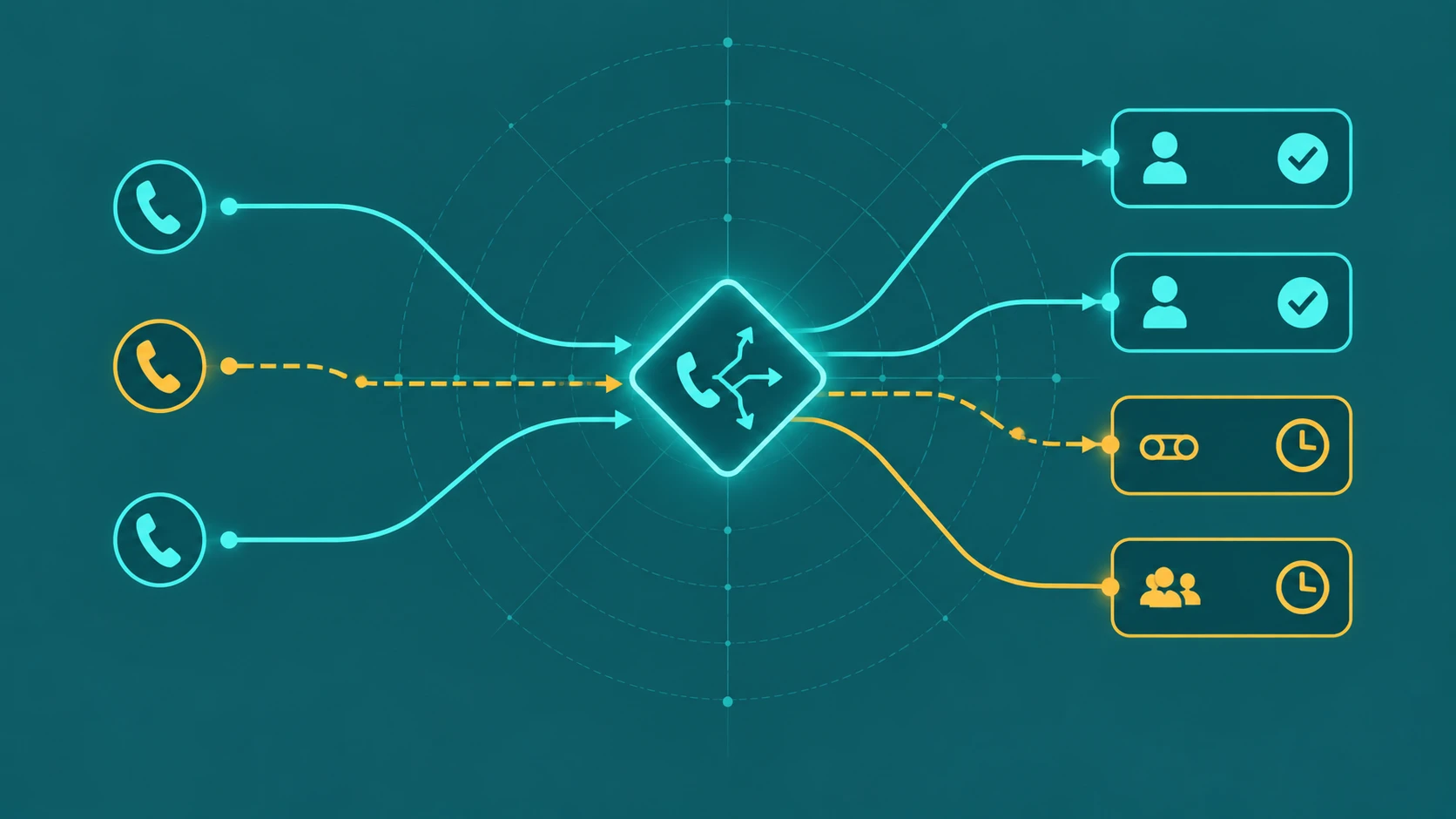
Most businesses that think carefully about reception land on a hybrid: an IVR handles initial greeting and routing for clear-intent callers ("press 2 for billing"), and live reception (in-house or virtual) handles overflow, complex calls, and cases where the IVR cannot route. The IVR reduces live reception volume by handling the easy, high-volume calls; live staff handle the rest with more time and attention per call.
How cloud voice service enables service reception
The underlying phone system determines what reception options are even available. A cloud VoIP platform with a full-featured auto-attendant gives you:
- A professional greeting that plays immediately on every inbound call — no ring-and-wait experience
- Menu routing to any extension, department group, or external number
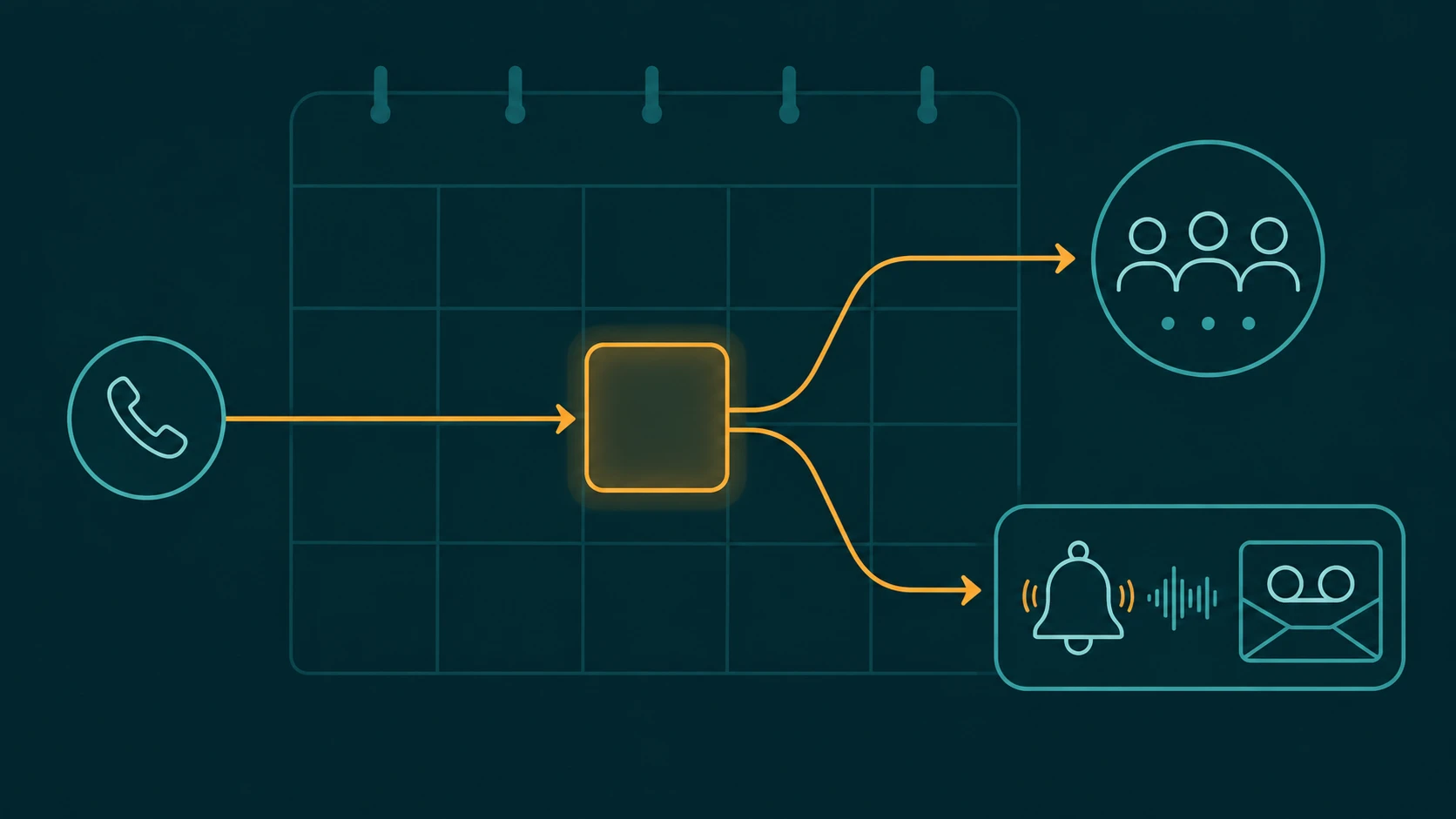
- Business hours rules that switch routing behavior automatically after hours
- Holiday schedules that activate custom greetings and routing on specific dates
- Queue management for high-volume periods — callers hear hold music and estimated wait time rather than a busy signal
- Overflow routing when all agents in a group are busy — calls go to voicemail, another group, or an external answering service
The cloud voice service is the infrastructure layer. How you configure it determines the reception experience. A poorly configured auto-attendant on a good platform is worse than a well-configured one on a basic platform.
What does processing IVR mean — and why it matters for reception
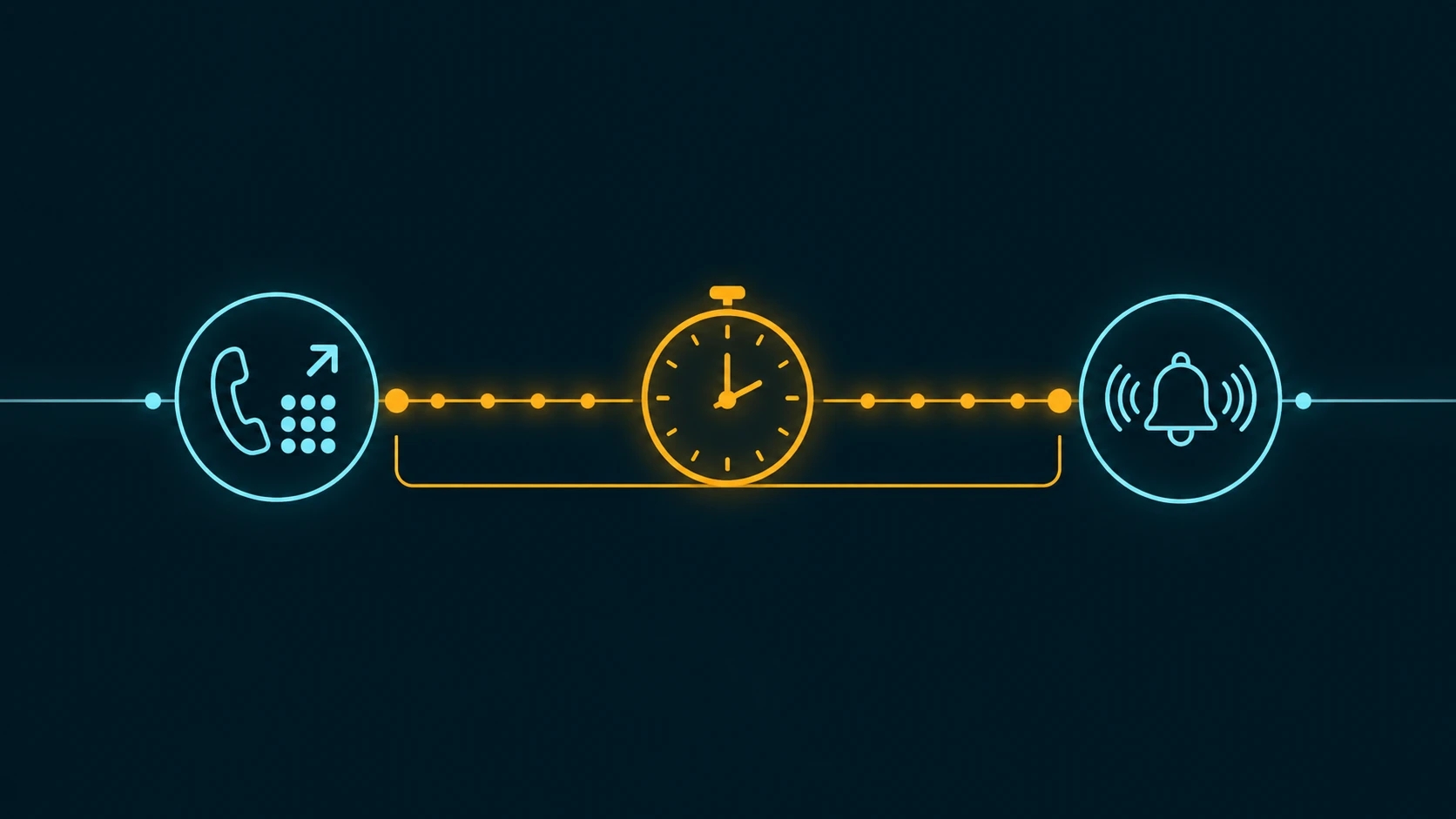
"Processing IVR" refers to the moment between when a caller completes their menu selection and when the system executes the routing action — connecting to the destination, playing a secondary menu, or initiating a callback. In a well-designed IVR, this processing is imperceptible (sub-second). In a poorly designed or overloaded system, processing delays — even 2–3 seconds of dead air after a keypress — feel like errors and prompt callers to hang up or press additional keys.
For reception quality, IVR processing speed matters as much as menu design. Cloud IVR systems running on modern infrastructure process digit inputs near-instantly. Older on-premise IVR systems may show processing delays under load. If your callers frequently press menu keys multiple times or hang up before reaching a destination, audit IVR processing latency before redesigning the menu.
Reception quality metrics worth tracking
| Metric | What it measures | Target |
|---|---|---|
| Answer rate | % of inbound calls answered (not abandoned) | >95% |
| Time to answer | Seconds from ring to greeting | <3 rings / <15 seconds |
| First-call routing accuracy | % of calls reaching the correct destination without re-routing | >90% |
| Abandon rate | % of callers who hang up before reaching a destination | <5% |
| After-hours coverage rate | % of after-hours calls with a useful resolution (voicemail captured, callback scheduled) | 100% |
Frequently asked questions
What is the difference between a virtual receptionist and an IVR auto-attendant?
A virtual receptionist is a live human — an agent at an outsourced answering service company — who answers calls under your business name and routes them according to a script you provide. An IVR auto-attendant is an automated system that plays a pre-recorded greeting, presents menu options, and routes calls based on caller input without a live person involved. Virtual receptionists handle complex calls and exercise judgment; IVR auto-attendants handle high volumes consistently with zero wait time. Most businesses use both: IVR for initial routing on predictable call types, virtual receptionist for overflow and complex inquiries.
How should I design a reception IVR menu for the best caller experience?
Design the menu around caller intent, not your internal org chart. Start by identifying the top 3–4 reasons callers contact you — these become your menu options. Keep the menu to 4–5 options maximum; longer menus increase hang-ups. Order options by call volume (most common first). Avoid jargon and internal department names callers do not know. Always offer a "press 0 for the operator" option. Test the menu by having someone unfamiliar with your business call in and try to reach each destination — their experience will reveal design problems your team cannot see.
Does a hospitality phone system differ significantly from a standard business VoIP system?
Yes. Hospitality phone systems include features specific to hotel operations: room-to-room dialing by room number, PMS integration for guest name display and check-in/check-out status, wake-up call scheduling with escalation (call back if no answer), guest do-not-disturb management, room service and housekeeping routing queues, and guest bill integration for in-room call charges. Standard business VoIP systems do not include these features natively and cannot substitute for a purpose-built hospitality system in a hotel context.
How can a small business create a professional reception experience without hiring a receptionist?
Three elements create a professional small business reception experience without dedicated headcount: (1) A cloud VoIP auto-attendant with a professionally recorded greeting and clear menu — callers hear a professional organization immediately, not a phone ringing to a cell. (2) Time-based routing that switches automatically after hours — after-hours callers reach a relevant voicemail with a specific callback commitment, not dead air. (3) A business SMS line on the same number — callers who prefer not to leave voicemail can text instead. This three-layer setup handles the majority of reception scenarios for a small business at a fraction of the cost of dedicated headcount.
What about email as a reception channel?
For businesses that receive significant inbound email volume alongside phone calls, email answering services follow similar principles to phone answering — tiered response models, agent vs. automation handling, and SLA management. Omnichannel organizations often route both phone and email inquiries through a unified agent workspace to prevent channel silos.