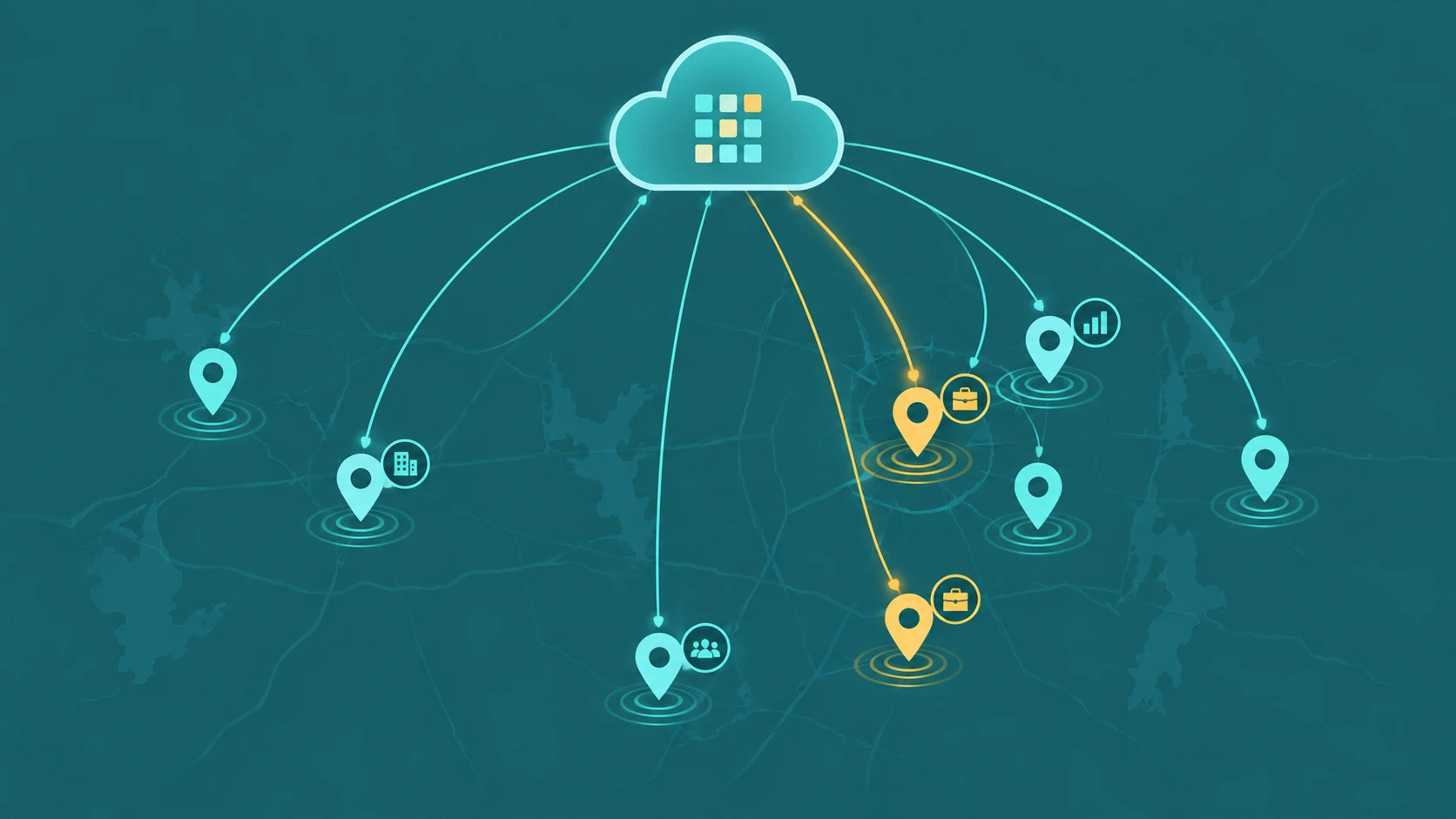
The Dallas-Fort Worth metro is one of the most business-dense markets in the United States — home to more Fortune 500 headquarters than any other metro except New York City, and growing at a pace that consistently attracts companies from other states. For businesses operating in DFW, a reliable VoIP phone system is not just an IT purchase; it is the infrastructure that connects your team, serves local customers, and presents your organization professionally in a highly competitive market.
This guide covers what Dallas businesses should know when evaluating VoIP phone systems — including local number coverage, provider infrastructure in the region, Texas regulatory context, and what to look for when the stakes of getting it wrong are real customer relationships.
Key point: For Dallas businesses, the most important VoIP considerations are local number availability in 214, 469, 972, and 945 area codes; provider reliability in the DFW carrier network; and feature parity for distributed teams across the metro — not the physical location of the provider's office.
Dallas area codes and local number coverage
Dallas-Fort Worth uses four active area codes:
- 214 — Original Dallas area code, still carries strong local brand recognition for Dallas proper
- 972 — Suburbs including Plano, Irving, Garland, Mesquite, and DFW Airport area
- 469 — Overlay for 972; covers the same geographic area
- 945 — Newest overlay, introduced in 2021 to address number exhaustion
A local number with a DFW area code increases answer rates from local callers and signals to customers that your business operates in the market. VoIP providers can provision numbers in any of these area codes — confirm availability of your preferred area code before committing to a provider. Some providers have better inventory in specific area codes than others.
Why VoIP is the standard choice for Dallas businesses
Dallas has excellent broadband infrastructure — dense fiber coverage in central Dallas, Plano, Frisco, Irving, and most of the major business corridors — which makes VoIP a reliable primary phone system for most businesses in the metro. The same cloud phone infrastructure that works for a company in Manhattan or Seattle works equally well in DFW.
Legacy PBX systems still installed in older DFW office buildings present a specific problem: when companies move offices — and Dallas businesses relocate frequently in a growing market — they often cannot take their legacy phone hardware with them. Cloud VoIP systems are location-independent by design. Your phone system moves with your team, not with your office wiring.
VoIP in a distributed DFW team
The DFW metro sprawls across roughly 9,000 square miles. A business headquartered in downtown Dallas may have staff in Plano, Fort Worth, Irving, and working from home across several suburbs. Legacy phone systems designed around a single office create friction for distributed teams. VoIP phone systems are built for exactly this environment: each team member uses the same system, same number presence, and same features regardless of whether they are in the office, at a client site, or working remotely.
For companies with offices in both Dallas and Fort Worth, a single VoIP platform eliminates the need to manage separate phone systems for each location. Calls transfer smoothly between locations, and each site can have its own local number while sharing a common extension directory and call routing infrastructure. For a broader comparison of all phone system types available to Dallas businesses — including on-premise, hosted PBX, and SIP trunking — see Dallas phone systems.
Texas regulatory context for business VoIP
Texas-specific regulations affect some VoIP considerations for Dallas businesses:
E911 requirements. The Texas Commission on State Emergency Communications (CSEC) oversees 911 service requirements. VoIP providers operating in Texas must register with CSEC and ensure their subscribers have 911 access. For businesses with remote workers across Texas, E911 location accuracy — ensuring that emergency dispatch receives the correct physical address for the caller — requires configuring registered locations in your VoIP portal for each remote employee.
CPNI (Customer Proprietary Network Information). Federal CPNI rules apply to VoIP providers nationwide. Texas does not add state-specific CPNI requirements beyond federal rules, but businesses in regulated industries (healthcare, legal, financial) operating in Texas should confirm how their VoIP provider handles call record data in compliance with any applicable state or industry regulations.
Texas Sales Tax. VoIP services are generally subject to Texas state sales tax as a telecommunications service. This varies by service type and provider; confirm with your provider how state and local taxes are applied to your bill.
What Dallas businesses should evaluate in a VoIP system
Local number availability
Confirm the provider can provision numbers in the DFW area codes you need — particularly 214 if local Dallas brand presence matters to your customers. Ask whether these numbers are available immediately or require a wait.
Number porting from legacy carriers
If your business has established Dallas numbers with AT&T, Spectrum Business, or another Texas carrier, porting those numbers to a new VoIP provider is critical. Ask specifically about the provider's experience porting numbers from major Texas carriers, typical porting timelines (usually 2–4 weeks), and what happens if a port fails partway through.
Uptime and redundancy
Dallas businesses operate in a region that occasionally experiences severe weather — ice storms, tornadoes — that can affect local network infrastructure. A VoIP provider with multi-region failover routes calls through backup infrastructure when local connectivity is disrupted. Confirm the provider's uptime SLA (look for 99.99% or better) and how calls are handled when internet connectivity at a primary location fails.
Feature set for DFW operations
Standard features any Dallas business should expect: auto-attendant with custom greetings, extensions for all staff, call recording, business SMS, mobile apps for remote workers, and voicemail-to-email. For customer-facing teams, call queues and IVR routing are equally important. A full overview of what to expect is in our guide to what a business phone system includes.
Healthcare VoIP in Dallas
Dallas is a major healthcare hub — home to large health systems, medical schools, and a dense network of specialty practices. Healthcare VoIP requires HIPAA-compliant call handling: encrypted transmission, secure voicemail storage, and Business Associate Agreements (BAAs) from the provider. Not all VoIP providers offer BAAs; this must be confirmed before a healthcare organization signs with any provider.
VoIP vs traditional business phone service in Dallas
Evaluating providers is a distinct step from evaluating systems. For a guide focused on the business phone service landscape in DFW — providers, pricing, porting, and support quality — see business phone service in Dallas. If you are also choosing physical phones for a Dallas office, VoIP phones for Dallas businesses covers device types, area code considerations, and hardware selection.
| Factor | Legacy Landline (AT&T, Spectrum) | Cloud VoIP |
|---|---|---|
| Hardware required | PBX + wired desk phones | None — any device |
| Remote workers | Requires separate setup | Full parity on mobile/laptop |
| Office relocation | Re-wiring + hardware move | No change needed |
| Adding users | Hardware + technician visit | Add via portal in minutes |
| Monthly cost (10 users) | $400–$700+ | $150–$350 |