What is dispatchable location, and why does it differ from standard caller ID?
A dispatchable location is a validated street address delivered to a 911 dispatch center (PSAP) that includes not just a street address but also any additional identifiers — floor, suite, room, or apartment number — needed to direct first responders to the exact location of the caller. Standard caller ID only associates a phone number with a billing address. For remote workers using VoIP softphones, that billing address may be a corporate headquarters in a different city. Dispatchable location corrects that gap by requiring an accurate, current, caller-specific location to be registered with the carrier and transmitted when a 911 call is placed. This is the core distinction enforced by RAY BAUM's Act.
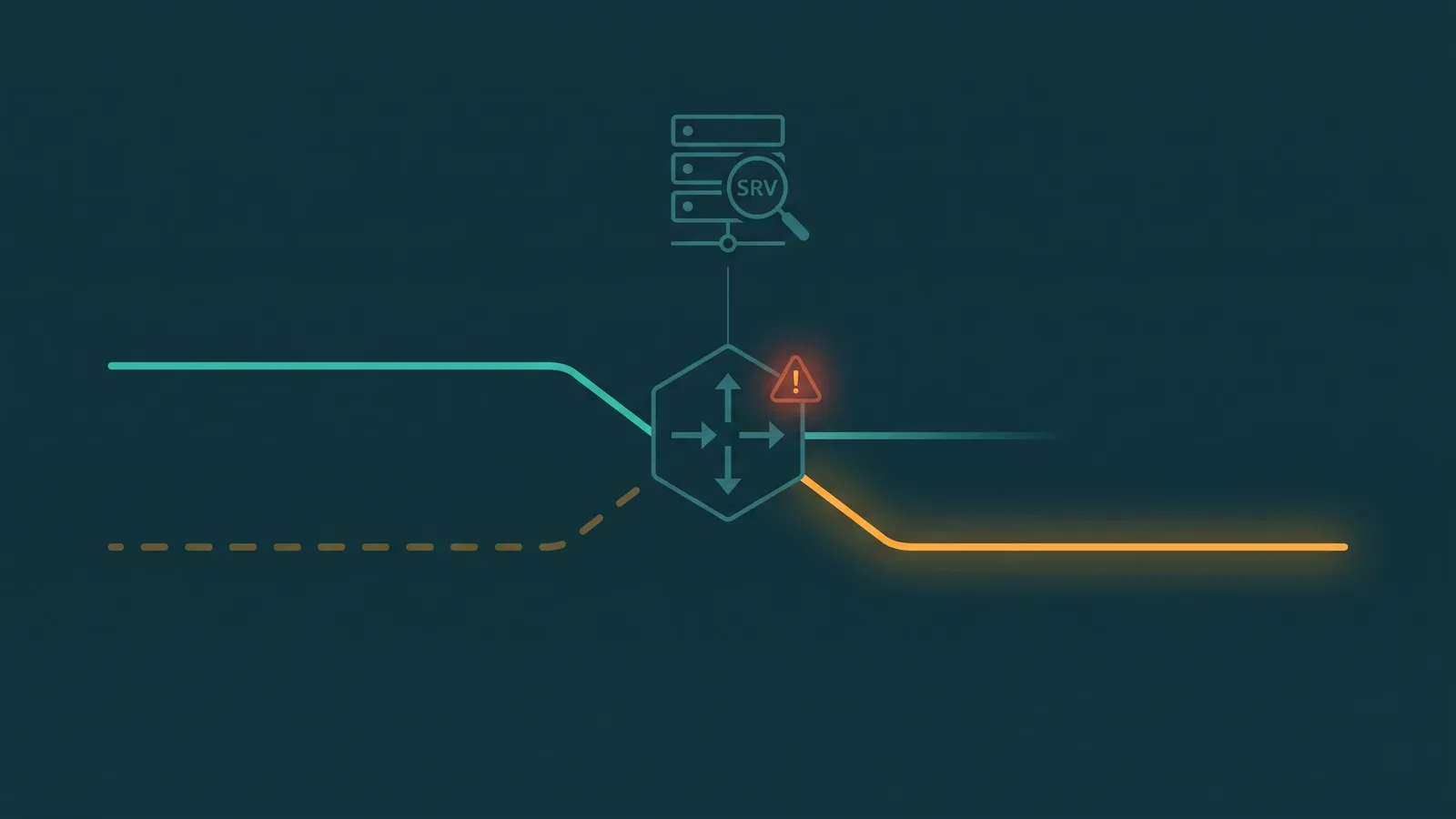
When a remote employee dials 911 from a VoIP softphone, two things can go wrong: the call may be routed to the wrong PSAP (the dispatch center serving the corporate office instead of the employee's home), and the address delivered to dispatch may be entirely incorrect. For a business with a distributed workforce, these are not edge cases — they are the default outcome without deliberate configuration.
This guide explains the FCC regulatory framework that governs E911 for VoIP — including Kari's Law and RAY BAUM's Act — how the dispatchable location requirement applies to nomadic workers, and what businesses need to do to stay compliant. For background on how remote work phone infrastructure is set up, see remote business phone system setup.
What is E911 and why does VoIP create a problem?
How E911 works on traditional phone lines
E911 (Enhanced 911) is the system that automatically delivers a caller's location to a PSAP without requiring the caller to state their address. On a traditional PSTN (Public Switched Telephone Network) line, the phone number is tied to a physical address in the ALI (Automatic Location Identification) database. When a 911 call arrives at the PSAP, the dispatcher's screen displays the address associated with that number — automatically, in seconds. This works reliably because a landline number corresponds to a fixed physical location that rarely changes.
Why VoIP breaks the model
VoIP calls travel over the internet. A virtual phone number assigned to a VoIP account can be used from any internet connection anywhere in the world. The number alone tells dispatch nothing about where the caller actually is. A remote employee with a company DID assigned to a New York area code may be working from home in Austin. Their softphone number, registered to a corporate account, may point to the Manhattan office in the ALI database. If they call 911, the call routes to the Manhattan PSAP — and that dispatcher cannot help someone in Austin.
This is not a theoretical failure. It is a structural consequence of how VoIP numbers work. The FCC has addressed it through two separate but complementary rules: Kari's Law and RAY BAUM's Act.
Kari's Law: direct 911 dialing and on-site notification
The origin of the rule
Kari's Law is named after Kari Hunt, who was killed in a hotel room in 2013 while her daughter repeatedly dialed 911 from the room phone — not knowing that the hotel's phone system required dialing 9 for an outside line first. The call never connected. The legislation that followed required that 911 always be directly dialable from any business phone system.
What Kari's Law requires (47 CFR §9.16)
Effective February 16, 2020, Kari's Law applies to all multi-line telephone systems (MLTS) — any system with two or more lines, including business PBX systems, hosted cloud phone systems, hotel systems, hospitals, and universities. The two key requirements are:
- Direct 911 dialing: Users must be able to reach 911 by dialing 9-1-1 without any prefix, access code, or additional step. Requiring "9 + 911" or any other prefix to reach an outside line before dialing 911 is prohibited.
- On-site notification: When any user on the MLTS dials 911, the system must simultaneously send a notification to a central on-site location — such as a lobby desk, security station, or front desk — so that on-site personnel are aware a 911 call has been placed and can direct first responders when they arrive.
The FCC has authority to enforce Kari's Law, with potential fines for manufacturers, importers, sellers, and operators of non-compliant MLTS systems. Businesses should confirm with their VoIP or UCaaS provider that their system is configured to meet both requirements.
What Kari's Law does not cover
Kari's Law addresses dialing access and on-site notification. It does not address the accuracy of the location information delivered to the PSAP. That is covered separately by RAY BAUM's Act.
RAY BAUM's Act: dispatchable location for VoIP
The location accuracy problem
RAY BAUM's Act (Section 506 of the Consolidated Appropriations Act of 2018, implemented by FCC Orders 19-72 and 19-76, codified at 47 CFR Part 9) specifically targets the location accuracy problem for VoIP and mobile 911. Its central requirement is that 911 calls must be accompanied by a "dispatchable location" — not just a street address, but the specific location within a building sufficient to direct first responders. In a multi-floor or multi-unit building, that means floor, suite, room, or apartment number in addition to the street address.
The FCC defines dispatchable location as: "A location delivered to the PSAP with a 911 call that consists of the validated street address of the calling party, plus additional information such as suite, apartment or similar information necessary to adequately identify the location of the calling party."
Effective dates by VoIP type
- Fixed VoIP (office at a known address, effective January 6, 2021): Providers of fixed interconnected VoIP service must transmit dispatchable location with every 911 call. This includes building, floor, and room if applicable — not just the street address.
- Non-fixed/nomadic VoIP (softphones that move with the user, effective January 6, 2022): Providers must collect and transmit a dispatchable location for nomadic VoIP users. Because a nomadic user's location changes, the system must either collect the user's current location at call time or maintain an updated registered address that reflects where the user is working.
Why nomadic VoIP is the hard case
A DID number assigned to a nomadic softphone user cannot be permanently associated with a single fixed location. A remote employee working from home on Monday, a client site on Tuesday, and a coffee shop on Wednesday technically has three different locations that need to be tracked. The FCC's solution is to require that the user's registered E911 address be kept current — and that the system prompt users to update it when their location changes.
Why caller ID alone is insufficient for remote workers
The failure mode is straightforward:
- A remote employee's DID is provisioned on the company's VoIP account. The ALI database entry for that DID points to the corporate billing address — typically the company's registered office.
- The employee works from home. When they dial 911, the call may route to the PSAP serving the corporate office zip code, not the employee's home zip code.
- Even if the call routes to the correct PSAP, the address displayed on the dispatcher's screen is the corporate office — not the employee's actual location.
- With a softphone on a laptop, the situation worsens. The number may travel to co-working spaces, hotels, and client sites. The "registered" address may reflect wherever the account was set up months ago.
Caller ID passes a number. That number maps to whatever address was last registered — which for most VoIP accounts was entered at setup and never updated. This is the structural gap RAY BAUM's Act is designed to close.
What changes when workers move locations
Fixed remote workers
An employee who works exclusively from a home office has a known, fixed address. The correct approach is to register a dispatchable location for their DID that reflects their home address, including apartment or unit number if applicable. This address should be updated any time the employee moves permanently.
Nomadic workers
Workers who move between locations — home office, co-working space, hotel, client site — are the most challenging case. Most compliant VoIP platforms handle this by prompting users to confirm or update their E911 address when they connect from a new location. Common implementations include:
- A login prompt in the softphone asking the user to confirm their current location before the session activates
- A self-service portal where users can update their registered E911 address at any time
- An admin dashboard where IT can update addresses for specific users centrally
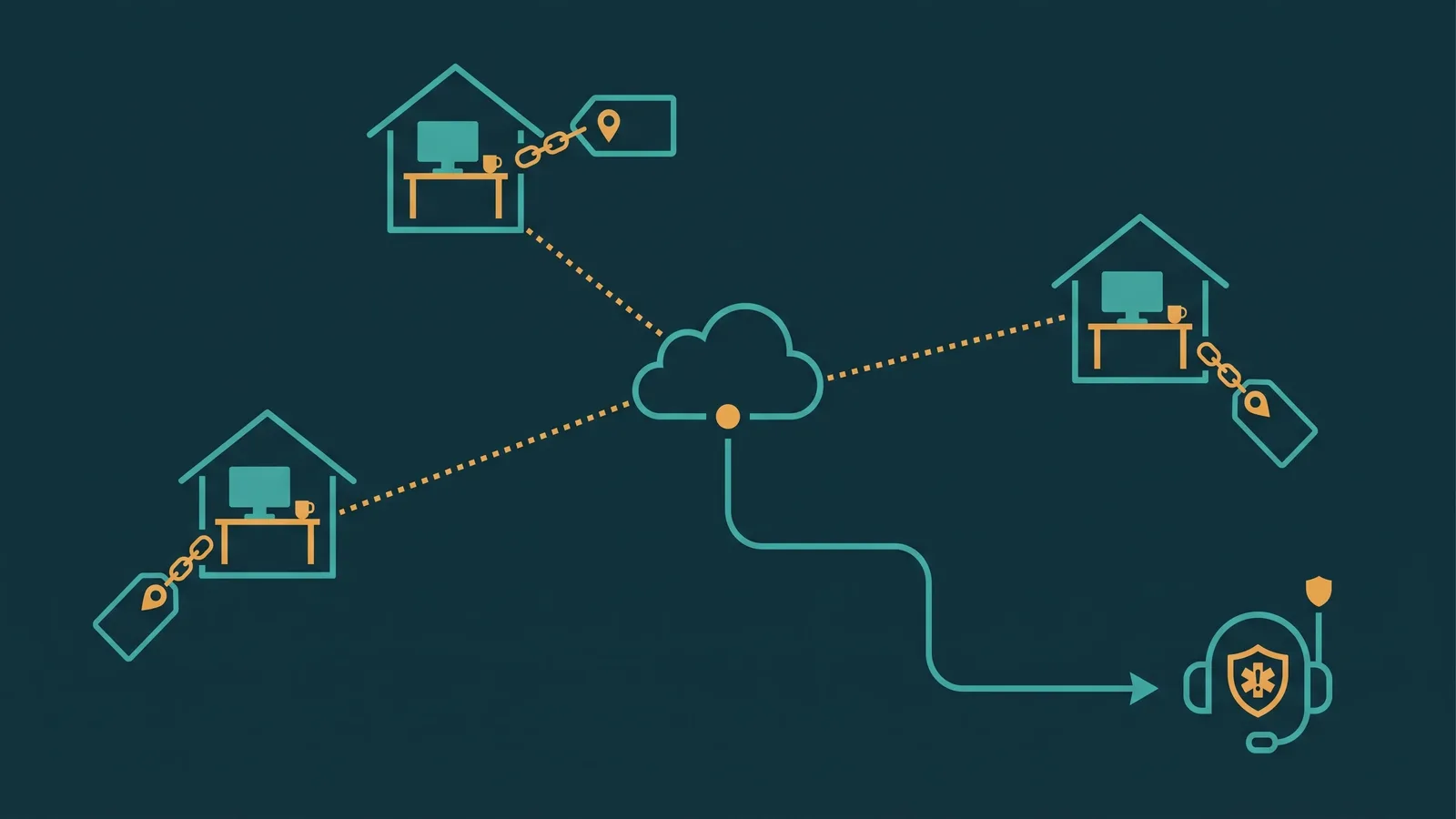
The provider maintains the E911 location record in an Emergency Location Identification Number (ELIN) database and routes 911 calls through an Emergency Services Gateway (ESG) that passes the registered address to the appropriate PSAP.
Provider workflow for nomadic VoIP 911
A compliant nomadic E911 workflow follows this sequence:
- User logs in at their current location. The softphone or unified communications app opens on the user's device at their home office, hotel, or other remote location.
- The system checks the user's registered E911 address. Some platforms compare the registered address to the detected network location; others simply prompt the user to confirm or update their address at login.
- User confirms or updates their dispatchable address. The user enters or confirms their current street address, including unit or apartment number, city, and state.
- The provider updates the E911 database record for that user's DID. The updated address is pushed to the carrier's ELIN database or Emergency Services Gateway, associating the DID with the new dispatchable location.
- If the user calls 911, the correct address is delivered to the PSAP. The Emergency Services Gateway routes the 911 call to the correct PSAP for the registered address and passes the dispatchable location data so the dispatcher's screen shows the employee's actual location.
The entire update process should take less than a minute for the user. The critical discipline is ensuring that users actually complete it whenever they change locations — which requires both a platform that prompts for it and a policy that requires it.
What businesses need to do
Compliance with Kari's Law and RAY BAUM's Act is not automatic. Businesses need to take deliberate steps:
- Confirm nomadic E911 support with your VoIP provider. Ask specifically whether your platform supports nomadic E911, how the address update workflow functions, and whether users are prompted to update their location at login or connection from a new network.
- Verify Kari's Law configuration. Confirm that 911 can be dialed without any prefix and that the on-site notification is properly configured — identifying who receives the notification and how (SMS, email, phone alert, or desk phone ring).
- Establish a written policy for address updates. Require remote workers to update their E911 address in the platform whenever they change their primary work location. Include this in remote work policy documentation.
- Train employees. Ensure all remote employees know how to update their E911 location in the softphone or admin portal. A process they do not know exists is not a process that will be followed.
- Document E911 configuration for all users. Maintain a record of each user's registered E911 address and when it was last confirmed. This is especially important for workers who move frequently.
Jurisdiction and disclaimer
The FCC rules described in this article — Kari's Law (47 CFR §9.16) and RAY BAUM's Act E911 location requirements — apply to interconnected VoIP providers operating in the United States. Several states have enacted additional E911 requirements that go beyond the federal baseline. Businesses operating in multiple states should verify whether state-level obligations apply. Businesses operating outside the United States should verify local emergency calling regulations with their telecommunications provider, as rules vary significantly by country.
This content is informational and reflects public FCC rules as of publication. Regulations may be updated; businesses should verify their specific compliance obligations with qualified legal counsel and their VoIP provider.