When hold times get long, two options are common in call queue design: offer the caller a callback so the system calls them back when an agent is free, or offer voicemail so the caller can leave a message and a human handles it later. Both solve the same immediate problem — the caller does not need to stay on hold. But they work differently, create different expectations for the caller, fail in different ways, and require different things from the team on the other side.
Choosing between them — or deciding when to offer both — requires understanding those differences clearly. This article covers how each mechanism works, what the key dimensions of comparison are, when each is the right choice, and what to do when things go wrong.
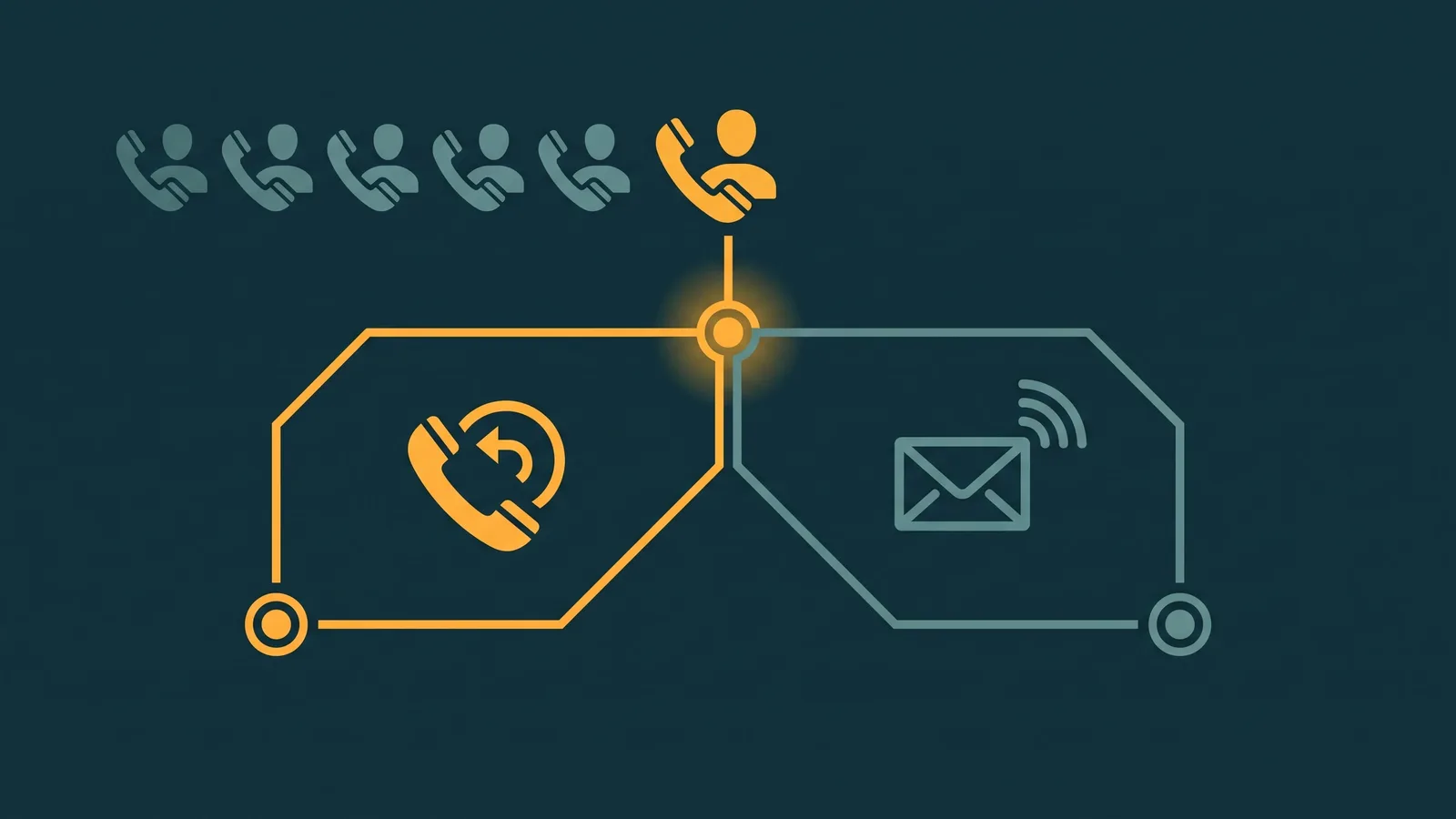
Queue callback vs voicemail — the short version: Queue callback is system-driven: the platform holds the caller's place in line, and when an agent becomes available the system initiates the outbound call automatically. Voicemail is agent-driven: the caller leaves a message, and it is up to the agent or team to retrieve it and return the call on their own initiative. Callback is more predictable for callers and requires less agent discipline — but it can only work well when agents will actually be available to handle the returned calls within a reasonable window. Voicemail is more flexible in timing but is invisible without explicit tracking, making unreturned messages easy to miss.
How Queue Callback Works
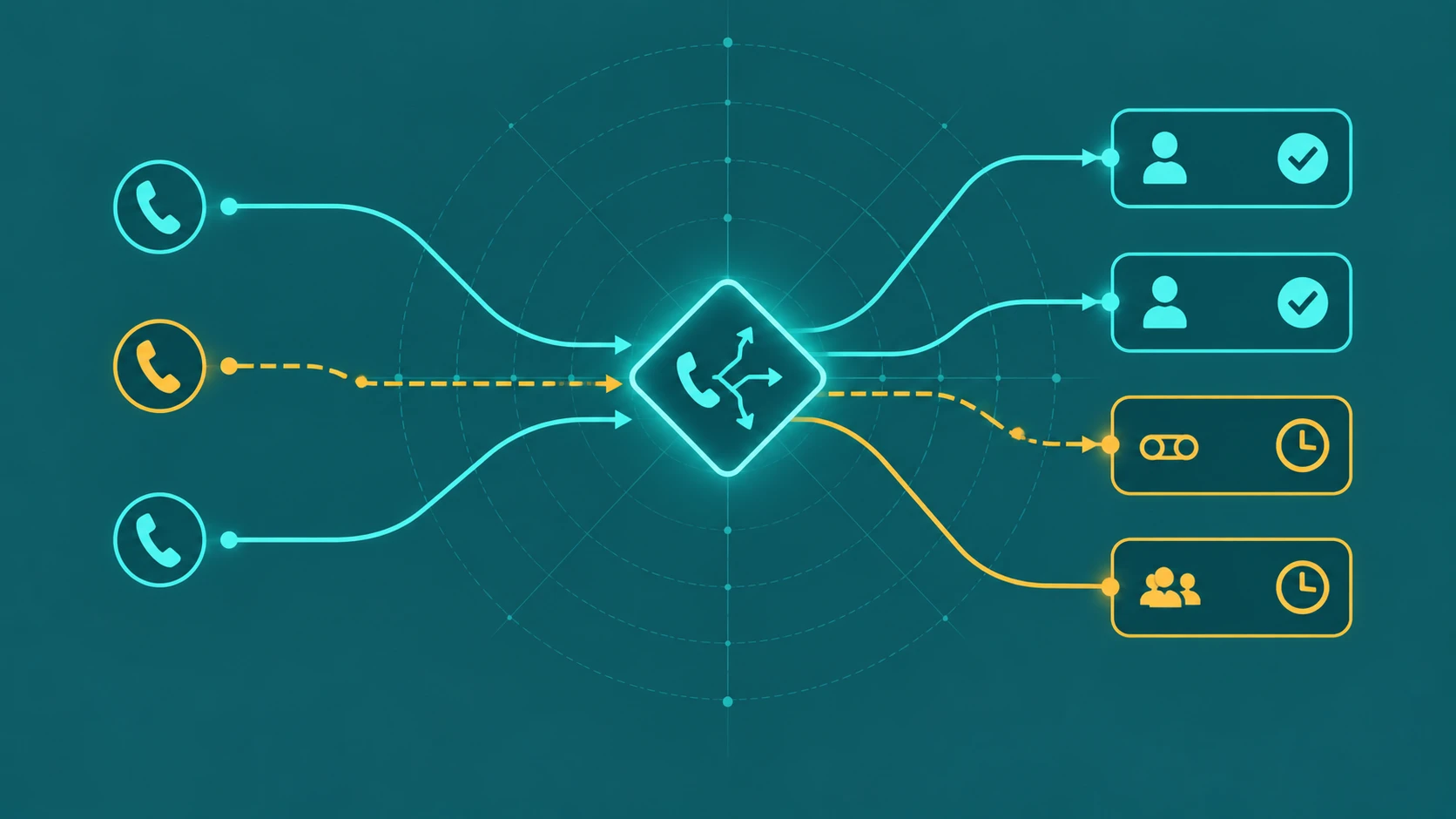
Queue callback — sometimes called virtual hold or virtual queuing — captures a caller's intent to speak with an agent and releases them from the hold line. The platform records their phone number, either preserves their position in queue or places them in a dedicated callback queue, and initiates an outbound call when capacity allows.
Position preservation
The best callback implementations preserve the caller's original queue position. When the caller's slot would have reached the front of the live queue, the system fires the outbound call. This is "true" position preservation and requires the platform to maintain a placeholder for the departed caller. Some platforms use timestamp-based logic instead — no live placeholder, but the callback is prioritized according to the caller's original arrival time. Others place all callback requests into a separate FIFO queue, which may not correspond to original arrival order at all. The practical effect on the caller varies significantly depending on which model the platform uses, so the promises made in queue announcements should match the actual behavior.
Retry policy
When the callback fires and the caller does not answer, the platform should attempt a retry — typically one or two additional attempts at a configured interval (5 minutes, 30 minutes, or longer). The interval matters: a retry five minutes after the first attempt catches callers who were momentarily unavailable; a 30-minute interval better serves callers who are in a meeting or driving. After retry attempts are exhausted, the callback is marked failed. What happens next — supervisor alert, voicemail to the caller, or silent failure — should be explicitly configured and not left to platform defaults.
Agent workflow
When a callback fires, the agent receives an alert. In auto-dial systems, the platform initiates the outbound call without agent action — the agent simply picks up when the customer answers. In manual systems, the agent must confirm before the call is placed. Auto-dial produces higher callback success rates because it eliminates the delay introduced by requiring human confirmation. The agent should receive context about why the callback was generated — the original queue, the wait time at the time of opt-in, and the number of prior retry attempts.
Caller confirmation step
Some callback platforms play a confirmation prompt when the outbound call connects: "We're connecting you with an agent now — press 1 to accept." This prevents agents from being connected to an unanswered phone, a voicemail system, or a household member who picked up. The confirmation step reduces wasted agent time but adds friction for the caller. Whether it is worth including depends on the caller population and the cost of false connects.
How Voicemail Works as a Queue Alternative
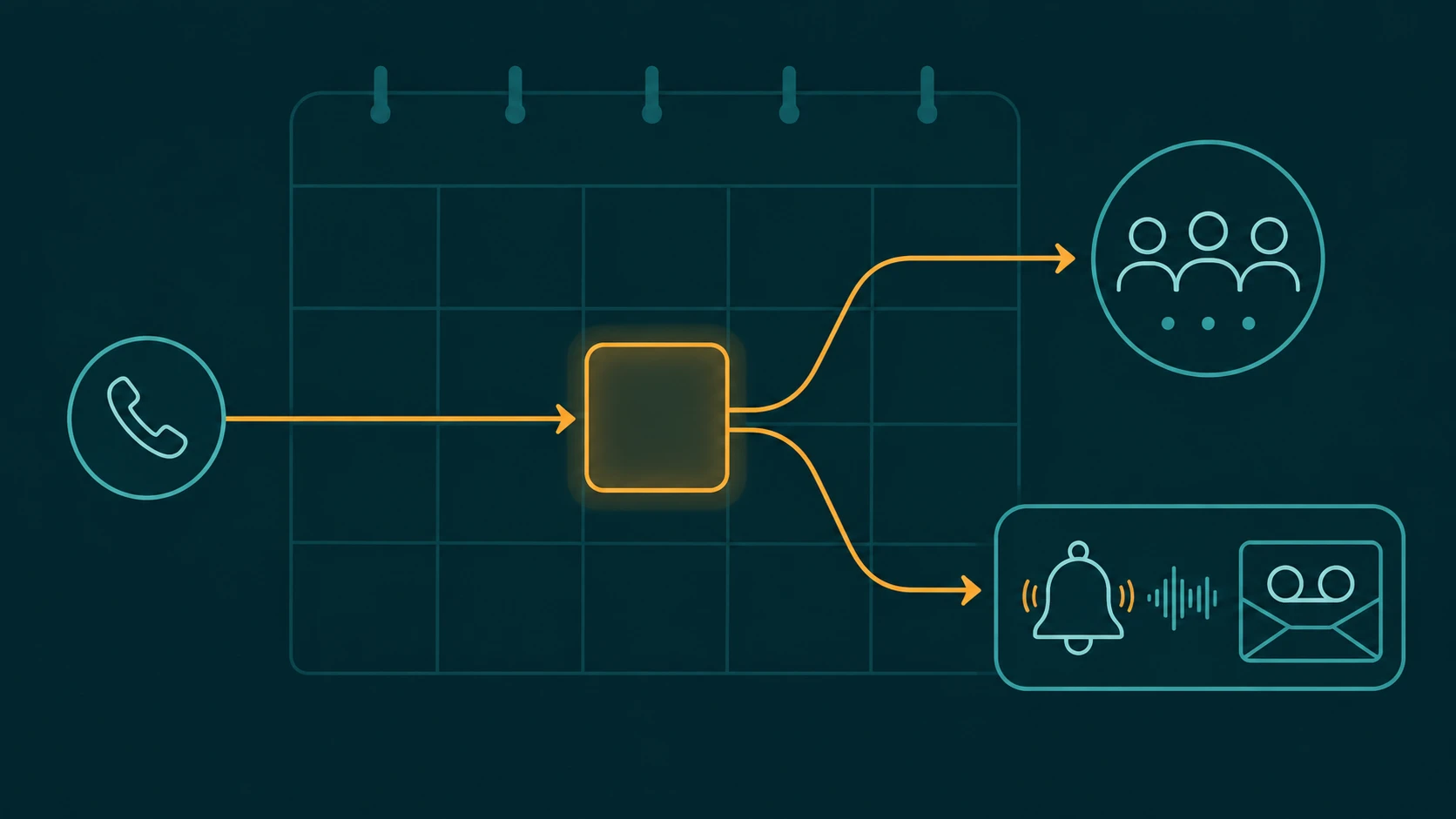
Business voicemail as a queue alternative is typically offered after a caller has waited past a defined threshold — "You have been waiting for over five minutes. Press 2 to leave a voicemail and we will return your call." The caller records a message, the call ends, and the message is delivered to a shared queue mailbox, a team inbox, or a specific agent or group.
Delivery and access
Voicemails may be delivered as audio files to an email address, available in a shared voicemail inbox on the phone system, or pushed into a CRM record. Where the voicemail lands determines how visible it is to the team responsible for returning it. A shared inbox that multiple agents can see is more resilient than a message going to a single agent's personal mailbox — if that agent is out, the message may not be seen.
Agent workflow
Unlike callback, there is no system automation driving the return call. The agent must notice the voicemail, listen to it, extract the caller's number, and manually place an outbound call. This introduces several points of failure: the voicemail may not be noticed promptly, the caller's number may be unclear in the recording, the agent may not have the account information needed to make the return call useful, or the return call may be attempted outside the caller's available hours.
SLA for voicemail returns
Voicemail is asynchronous — the caller leaves a message and receives no commitment about when they will hear back. Without a defined SLA for voicemail returns (same business day, within two hours, within four hours), messages will be returned at whatever pace agents happen to manage. Defining the SLA is only useful if it is also tracked. Without tracking, the SLA is aspirational rather than operational.
Key Differences
| Dimension | Queue Callback | Voicemail |
|---|---|---|
| Return mechanism | System-initiated outbound call | Agent-initiated return call |
| Timing predictability | Relatively predictable (position-based or capacity-based) | Unpredictable without a defined and tracked SLA |
| Caller context at return | Agent knows caller's original queue, wait time, and intent | Agent must interpret the voicemail message for context |
| Failure mode | Callback not answered; retries exhausted; contact lost | Voicemail not returned; contact silently lost |
| Caller effort | Low — opt in, hang up, answer the return call | Medium — must leave a coherent message with sufficient context |
| Agent effort | Low — system drives the call, agent handles the conversation | Higher — must initiate return call, interpret message, research account |
| Reporting visibility | Full — callbacks in queue can be tracked completely | Poor without specific voicemail return tracking |
When Queue Callback Is the Right Choice
Callback works well when the conditions that make the system's promise credible are actually in place:
- Wait times are predictable and bounded. If your estimated wait time is reasonably accurate and the callback will typically fire within 30–60 minutes, callback is a genuine improvement over hold. If wait times are unpredictable — spiking to two or three hours at times — the callback may not fire within a window the caller considers acceptable, creating a worse experience than a clear voicemail option.
- Agent capacity exists to handle returned calls. Callback requests that sit in the system for two or more hours before being attempted are often worse than voicemail. Offering callback when agents are unlikely to reach callers promptly creates a specific disappointment: the caller opted in expecting a reasonable return time and received something they could not predict.
- The caller's issue is resolvable in a single call. Complex issues that require account research, multi-party coordination, or escalation are harder to serve via an automated callback. The agent who picks up has whatever context the system logged — if that context is minimal and the issue is complicated, the callback may require the caller to re-explain everything from the beginning.
- The caller pool is likely to answer an unknown outbound number. Callback success depends on the caller answering. In markets or demographics where calls from unrecognized numbers routinely go to voicemail, callback success rates may be low enough that the feature adds overhead without commensurate benefit.
Callback is well suited to billing questions, general account support, order status inquiries, and other single-session interactions where a single call is likely to resolve the issue.
When Voicemail Is the Right Choice
Voicemail has a distinct role and is genuinely appropriate in specific contexts — but it should not be a default substitute for callback when callback would have worked.
- After hours. When no agents are available and real-time callback cannot be committed to, voicemail is the appropriate mechanism. The caller receives a clear message: "We are closed. Leave a voicemail and we will return your call the next business day." This is honest and sets appropriate expectations.
- During high-volume periods when callback cannot be honored promptly. If the queue is overwhelmed to the point that callbacks would not fire for three or more hours, voicemail with a same-day or next-day return commitment may be more honest than a callback offer that implies a shorter wait.
- For inquiries that benefit from preparation. "Please leave a message describing your account issue and we will review your account before calling you back" can be a genuine service improvement for complex cases. The agent has time to pull the account and prepare before placing the return call.
- For non-urgent messages where timing is flexible. A caller who wants to leave feedback, request a quote, or ask a non-time-sensitive question may be well-served by voicemail. The issue is not that voicemail is being used — it is whether the return call actually happens.
Voicemail should not be offered as a substitute for callback when same-day response is expected but cannot be guaranteed. Offering voicemail and then not returning calls within the implied timeframe is one of the most common sources of caller frustration in businesses that think of voicemail as a passive safety net.
Failure Modes for Each
When callback fails
The most common callback failure: the system initiates the outbound call, the caller does not answer, retries are exhausted, and the contact is lost. This happens because the caller is driving, in a meeting, at work and unable to answer a personal call, or simply did not recognize the callback number. From the business's perspective, this shows up as a failed callback event in the queue log. It is visible in reporting — but only if reporting is actually being reviewed.
A secondary failure: the caller opts into callback and also calls back immediately on a different phone or from the same number. This creates a duplicate contact in the queue. Queue systems should not prevent a caller who requested callback from also re-entering the queue — but agents should have visibility into pending callback records to avoid redundant handling.
When voicemail fails
Voicemail failure is more dangerous than callback failure because it is less visible. When a callback fails, there is a system event — a failed outbound attempt, a logged retry exhaustion. When a voicemail is not returned, there may be no system event at all. The message sits in the inbox; no one pulls it; the caller receives no follow-up; the contact is silently lost. Without explicit tracking of voicemail return rates and return times, this failure mode is essentially invisible until the caller complains — often by calling a competitor instead.
This asymmetry is the core reason voicemail requires more process discipline than callback, even though it seems simpler to set up. The technology is simpler; the human process requirement is higher.
Offering Both at the Same Time
Some organizations present both options in the queue announcement: "Press 1 to receive a callback when an agent is available. Press 2 to leave a voicemail now." This can work well when the two options genuinely serve different caller preferences:
- Callers who want to speak with someone as soon as possible choose callback.
- Callers who want to leave detailed information immediately — without waiting for a callback slot — choose voicemail.
Presenting both options requires careful queue announcement script design. The distinction must be clear. If callers do not understand the difference — or if the callback timing is so uncertain that callers default to voicemail regardless — then having two options creates confusion without delivering clearer service.
The mechanics of IVR callback presentation — how the option is announced, what language sets appropriate expectations, and how the confirmation step works — have meaningful effects on callback opt-in rates. A poorly scripted option will be underused even when it would serve callers well.
Offering both also means operating both well. Running callback and voicemail simultaneously doubles the number of failure modes that need monitoring. Both require tracking; neither should be left on without measurement.
Measuring Both
Neither callback nor voicemail is being managed if there are no metrics. Switching on the feature is not the same as operating it.
Callback metrics to track
- Callbacks offered vs. callbacks accepted. What percentage of callers who are presented the callback option actually opt in? A low acceptance rate may indicate that callers do not trust the estimated wait time, do not believe they will receive a prompt return call, or find the offer unclear.
- Callback success rate (first attempt). Of callbacks placed, what percentage connect on the first attempt? A low first-attempt success rate increases agent overhead and reduces the channel's efficiency.
- Callback-to-resolution rate. Of completed callbacks, what percentage resolve the caller's issue in that call? This is the ultimate effectiveness measure — callbacks that require a follow-up call are less efficient than callbacks that close the issue.
- Failed callback rate. Of all accepted callbacks, what percentage are marked failed after retries are exhausted? These are lost contacts and should be flagged for manual follow-up where possible.
Voicemail metrics to track
- Messages received. How many voicemails are being left in a given period? This is the baseline volume figure.
- Messages returned. What percentage of voicemails result in a completed return call? Anything less than 100% indicates contacts being lost.
- Time from message to return call. How long does it take for an agent to return the call after the voicemail is left? This is the voicemail equivalent of wait time, and it should be measured against the SLA.
- SLA adherence rate. What percentage of voicemails are returned within the defined SLA window? If this number is not tracked, the SLA exists only on paper.
Frequently Asked Questions
Is queue callback always better than voicemail for callers?
Not always. Callback is better when agents have capacity to return calls promptly and the callback will fire within a reasonable window. When agents are overwhelmed and callbacks would sit for hours, an honest voicemail offer with a clear return-time commitment may set better expectations. The right choice depends on the team's actual capacity at the time the caller hits the queue — not on which option sounds more customer-friendly in the abstract.
What happens if a caller opts into callback and then calls back on their own before the callback fires?
The caller re-enters the queue as a new inbound call. The original callback request remains active. This creates a duplicate contact — the caller may speak to an agent via the inbound call, and then later receive an outbound callback for the same issue. Platforms should surface "callback pending" information to agents so they can note the issue was already handled. Some platforms also allow callback requests to be manually canceled once an issue is resolved through another channel.
How should voicemail SLAs be set?
SLAs should reflect what the team can realistically achieve and what callers would consider acceptable given the nature of the inquiry. A common starting point: same business day for messages left during business hours; next business day for after-hours messages. For time-sensitive queues (billing issues, service outages), a shorter SLA — within two hours during business hours — is more appropriate. The SLA should be stated to the caller in the voicemail prompt so they have an explicit expectation rather than an open-ended wait.
Does offering callback or voicemail affect queue abandon rate metrics?
Yes, and it requires care in reporting. A caller who opts into callback and hangs up has not abandoned in the traditional sense — they have made a deliberate choice to exit the queue with an intent to reconnect. If the reporting system logs that hang-up as an abandonment, the abandonment rate will be overstated and the callback volume will be undercounted. Platforms that support callback should distinguish callback opt-outs from true abandonments in queue reporting. Voicemail exits should similarly be logged as an intentional exit rather than an abandon.
Can the callback number differ from the number the caller called from?
Most queue callback systems allow this. During the opt-in flow, the system reads back the caller's number and offers them the option to enter a different number if needed. This matters because callers may be calling from a mainline, a switchboard, a shared office phone, or any number that cannot receive a direct inbound call. The callback number input step should be designed to catch this — and should validate that the entered number is a dialable format before confirming the callback request.