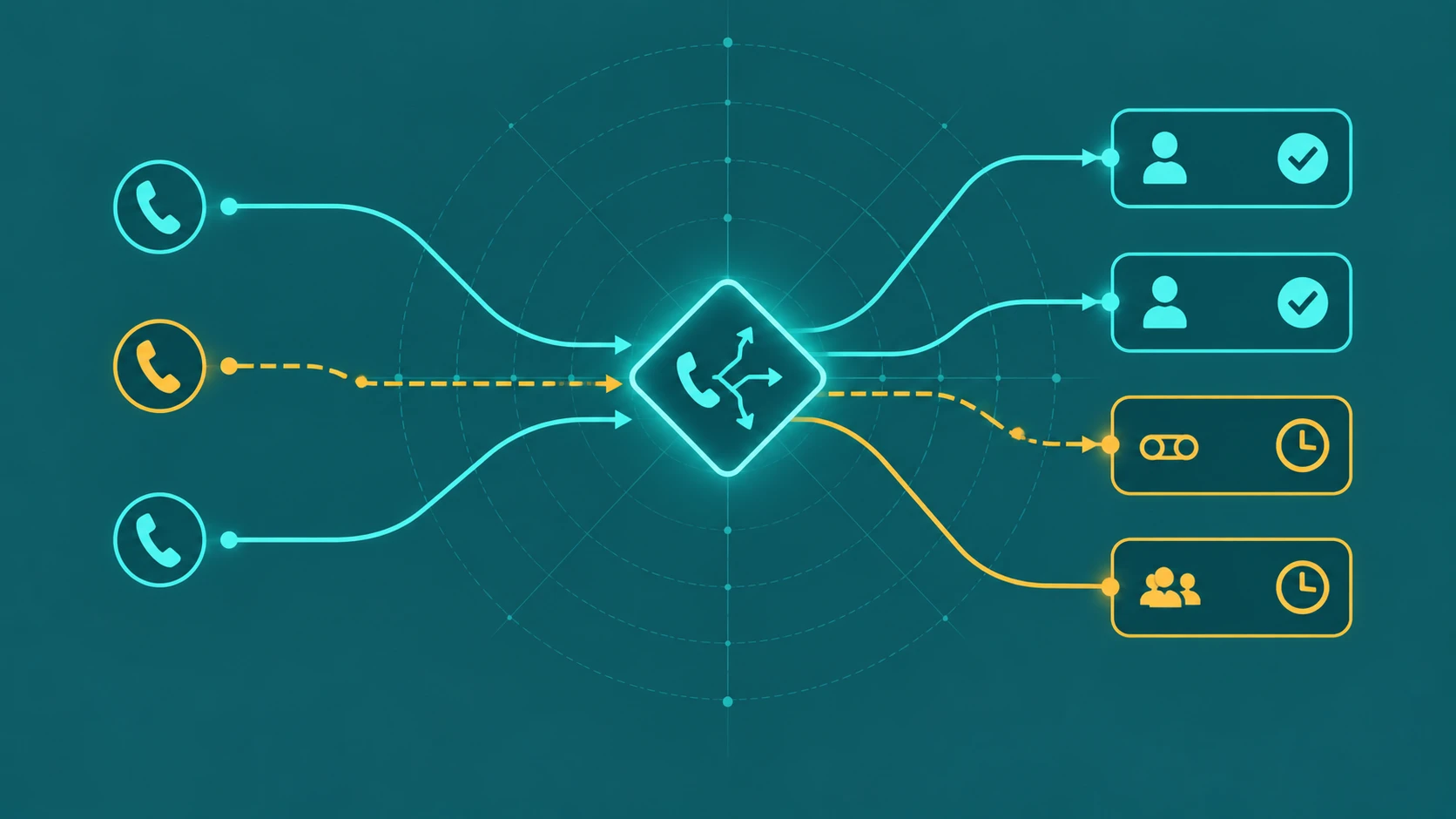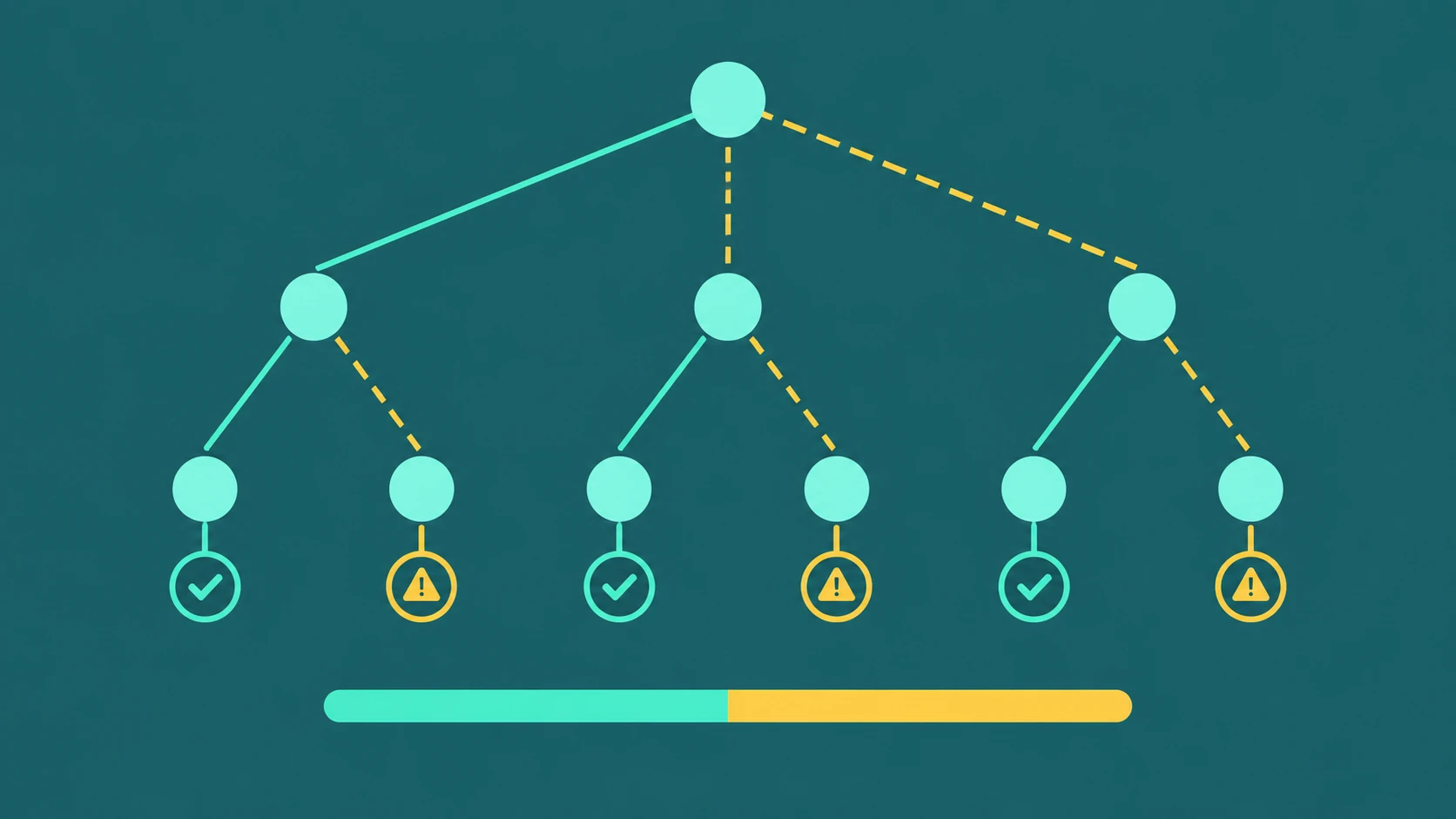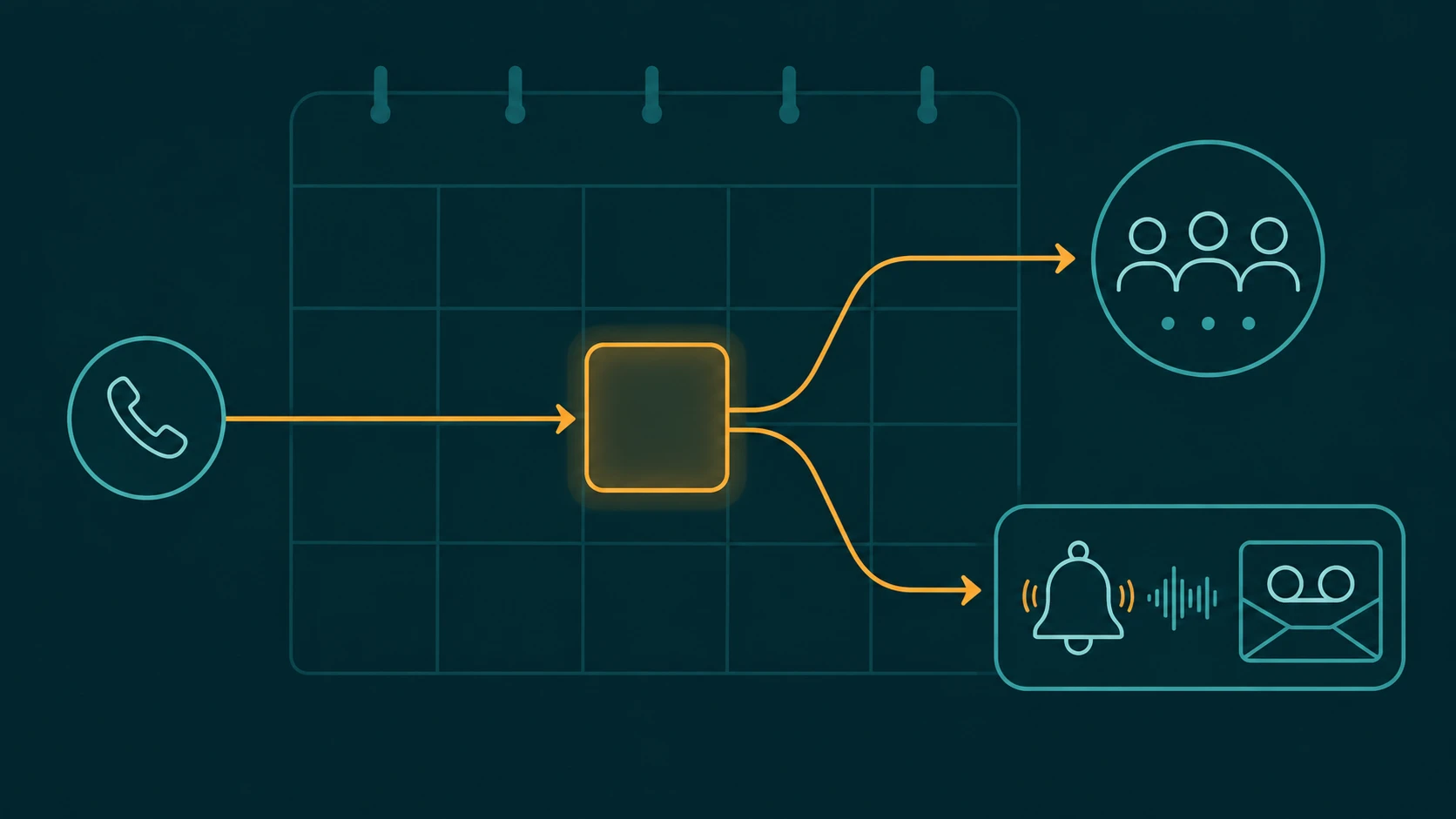
Holding on the phone while music loops is one of the more universally disliked experiences in customer service. Queue callback is a system that lets callers opt out of the hold line — they hang up, go about their day, and receive a return call when an agent is available. The caller is not permanently dropped; they have registered an intent to speak with someone, and the system is responsible for following through.
How well that follow-through works — and what it actually means for the caller's "place in line" — depends on the platform and how the callback system is implemented. This article covers how queue callback works in practice, where the real variation between systems lies, and when callback is genuinely useful versus when it creates more friction than it solves.
What is queue callback? Queue callback — sometimes called virtual hold or virtual queuing — is a call center feature that allows a caller waiting in a queue to request a return call instead of remaining on hold. The caller's phone number is recorded, the call is terminated, and the system initiates a callback when an agent becomes available. Depending on the platform, the callback may be placed based on the caller's original position in queue, their time of request, or a separate callback queue with its own prioritization rules.
How Queue Callback Works
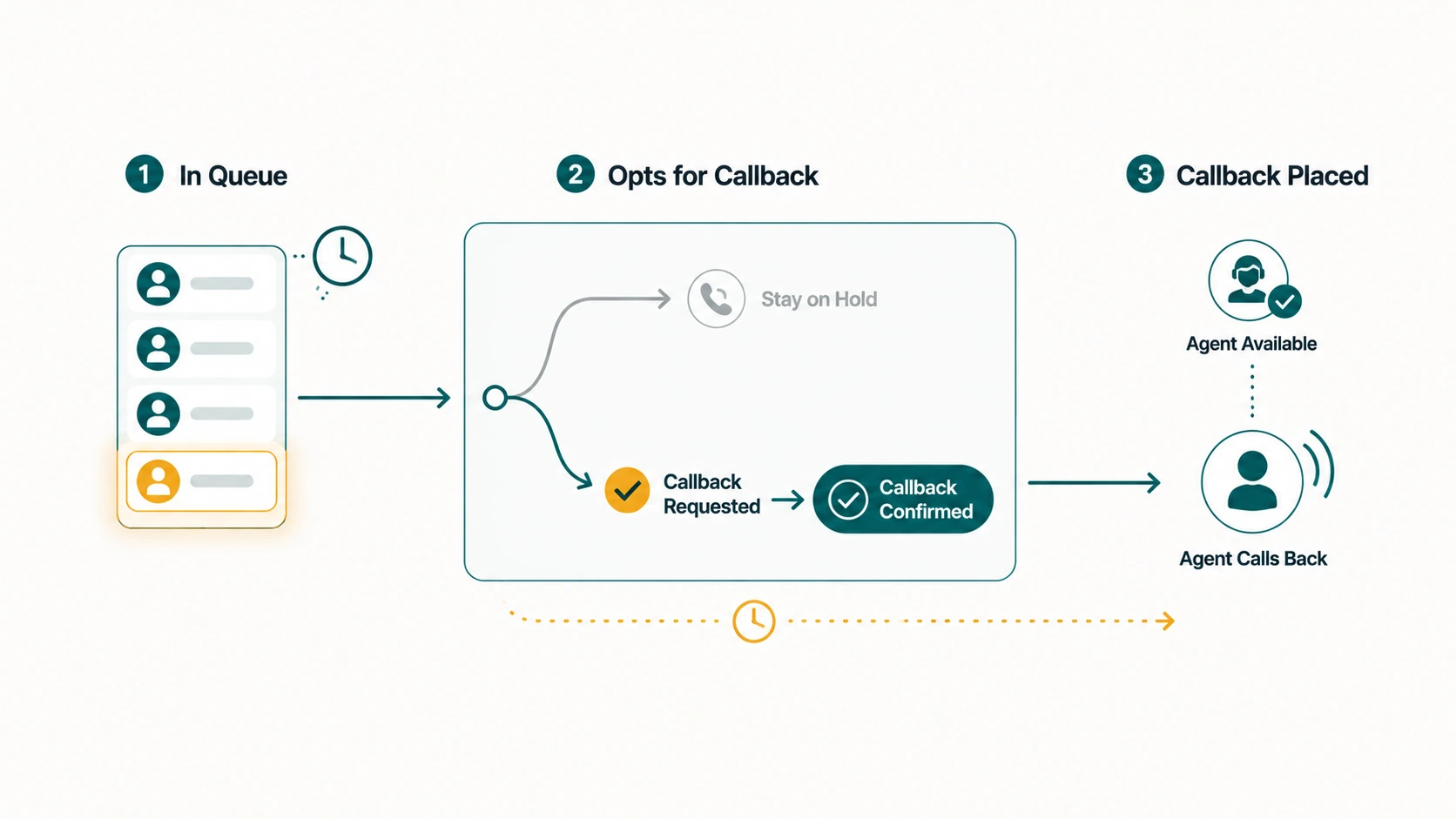
The mechanics of callback vary by platform, but the general flow follows a recognizable pattern:
- Callback becomes available. When configured conditions are met — the queue has reached a certain depth, wait time has exceeded a threshold, or the system determines estimated wait is above a set level — callers become eligible for callback. Eligibility criteria vary by platform. Some platforms offer callback to all waiting callers; others only to callers who have waited past a certain point.
- The caller is offered the option. An automated prompt plays during hold: "Your estimated wait time is approximately X minutes. Press 1 to receive a callback when an agent is available, or stay on the line to wait." Callers who want to hold can do so; the callback offer is optional, not forced.
- The caller confirms their number. If they request a callback, the system typically reads back the number it has on file (the number they called from) and asks them to confirm — or gives them the option to enter a different number. This step catches situations where the caller is calling from a switchboard or reception number that cannot receive an inbound call.
- The call is released. The caller hangs up. The original call is terminated or, depending on the platform's implementation, replaced by a placeholder entry in the queue.
- The system manages the callback position. What happens next is where implementations diverge significantly — this is covered in detail below.
- An agent becomes available. The callback system triggers an outbound call to the caller's number. In some implementations, the agent is connected first and the system dials the customer; in others, the system dials the customer first and bridges them to the agent on answer.
- The caller answers and the conversation begins. Depending on the platform and configuration, the agent may receive a screen pop or context about the caller's original queue entry, or the call may arrive with no history.
Does Queue Callback Actually Preserve Your Place in Line?
This is the question most articles answer incorrectly, usually by asserting that "the caller keeps their place in queue" as if it were universal. The reality is more nuanced and depends on how the platform has implemented callback.
Placeholder-based position preservation
Some platforms insert a live placeholder into the queue when a caller requests callback. The caller's phone hangs up, but a software representation of their position remains in the queue. When that placeholder reaches the front of the line, the system initiates the callback. This approach genuinely preserves position — the callback fires at roughly the same time as if the caller had stayed on hold.
Timestamp-based position preservation
Other platforms store the caller's original queue entry timestamp and use it to prioritize the callback relative to other callers. Amazon Connect, for example, records the customer's original queue position timestamp at the time of their callback request so that when an agent becomes available, the callback is initiated based on that stored position. The caller is not holding a live slot, but the ordering logic treats them as though they were.
First-in-first-out callback queues
Some implementations create a separate callback queue that processes requests in the order they were received — independent of the original inbound queue's state. Callers are called back in the order they requested callbacks, which may not correspond to their original inbound arrival order, especially if some callers waited longer before opting in.
Estimated-position callbacks
Simpler callback systems do not attempt to preserve position at all. They record the callback request, queue it internally, and initiate the call when agent capacity allows — without any guaranteed relationship to the original queue position. These systems reduce hold time but should not be described to callers as "keeping your place in line."
The practical takeaway: if a business wants to genuinely offer callers their queue position back, the platform's specific implementation needs to be understood. Claims like "you'll keep your place in line" should not be made unless the platform genuinely supports position preservation.
Callback Request Handling: What Else Can Go Wrong
The caller does not answer the callback
The system initiates the callback, but the caller does not pick up. Most platforms configure a limited number of callback retry attempts — typically one or two — with a defined interval between them. If no answer after retries, the callback is marked failed and may trigger an email notification to a supervisor, a voicemail to the customer, or no further action. How retries and failures are handled should be explicitly configured.
The callback number is not dialable
The number on file may be a mainline number, an internal extension, or a premium-rate number that the system is configured to reject. Microsoft Teams call queues, for example, require the inbound number to be a publicly dialable, non-premium phone number in E.164 format for callback eligibility. Platforms vary in how strictly they validate numbers at the point of callback request.
Queue timeout fires before callback is placed
On some platforms, the callback request itself is subject to the queue's overall timeout configuration. If the queue timeout expires before the callback is initiated — because agents remain unavailable — the callback may be canceled or flagged as failed. Queue timeout settings need to account for both the caller's hold period and the subsequent callback window. (See our guide on call queue timeouts for how timeout configuration works.)
Agent-Initiated vs Automated Callbacks
The queue callback systems described above are automated — the platform initiates the return call. There is a separate scenario worth distinguishing: an agent manually scheduling a callback after a call ends or after reviewing a missed call record. These agent-initiated callbacks are not the same as queue callback systems, though both result in an outbound call to a customer.
Agent-initiated callbacks are typically tracked through CRM or call disposition workflows, not through the queue's overflow or callback architecture. They are a follow-up process, not a wait-management tool.
Scheduled Callback vs Queue Callback
Queue callback is about getting back to the caller as soon as an agent is available — it is effectively a form of virtual holding. Scheduled callback is a different concept: the caller selects a specific time window for the return call ("call me back tomorrow at 2 PM"). The two mechanisms serve different needs, and many platforms support both — offering an immediate queue callback option alongside a scheduled callback option in the same call flow. Our guide on IVR callback covers how the initial callback request is typically presented to callers through a voice menu.
When Queue Callback Helps
Callback is most useful when:
- Wait times regularly exceed 3–5 minutes and callers are frequently abandoning the queue.
- The caller pool includes people calling from mobile phones or in situations where extended hold is impractical.
- The business has the agent capacity to return calls within a reasonable window — callback is not useful if the callback queue itself backs up for hours.
- The queue handles non-urgent inquiries where a slight delay in callback is acceptable.
When Queue Callback May Not Be Appropriate
Callback adds complexity and may not be the right answer when:
- The queue handles urgent or time-sensitive matters where a delay until callback is placed creates real risk.
- The team does not have capacity to actually place the callbacks promptly — a queued callback that fires four hours later is worse than voicemail with a clear return-call commitment.
- Callers frequently do not answer callbacks — this wastes agent outbound time and creates a backlog of failed callback attempts.
- The platform's callback implementation does not genuinely preserve position and the team is promising callers something the system cannot deliver.
Queue Overflow and Callback Together
Callback and overflow are complementary. A well-designed queue might offer callback as a voluntary option to waiting callers, and separately apply overflow routing to callers who hit the queue size limit before any callback offer is presented. Understanding how these interact — and which fires first in a given scenario — requires reading the specific platform's behavior carefully. (See our guide on call queue overflow for how overflow routing works alongside wait-time management.) For a direct comparison of queue callback versus voicemail — when each is appropriate and how each fails — see queue callback vs voicemail: which should you offer?
Frequently Asked Questions
Does queue callback always preserve my exact position in line?
Not always. Whether position is preserved depends on how the platform implements callback. Some use live placeholders, some use timestamp-based priority, and some use a separate FIFO callback queue. Before making promises to callers about keeping their place, verify how your specific platform handles it.
Can a caller change the callback number?
Most platforms allow callers to confirm or change the callback number during the opt-in flow. This is important because callers may be calling from a mainline or shared number rather than a direct line. The confirmation step should be designed to catch this.
What happens if the callback fails repeatedly?
Platforms typically have a configured retry limit. After retries are exhausted, the callback is marked failed. Some platforms send a notification to a supervisor or team email; others simply log the failure. Explicit failure handling should be configured rather than left to platform defaults.
Is virtual hold the same as queue callback?
Yes, virtual hold is a common term for the same concept — particularly associated with systems where a virtual "placeholder" holds the caller's position in queue while they wait off the line. The terms virtual hold, virtual queuing, and queue callback are generally used interchangeably.
How does callback affect call center reporting metrics?
Callbacks need careful handling in reporting. The original inbound call may be logged as abandoned or as a callback request. The return call is an outbound event. If reporting treats the two as disconnected, the actual interaction volume and resolution rate will be undercounted. Platforms that support callback should also provide reporting that correlates the inbound request with the outbound callback outcome. See our guide on call center metrics for context on how abandonment and service level are affected.