
Dallas-Fort Worth is one of the fastest-growing business markets in the United States. Companies relocating from California, New York, and Illinois arrive regularly. Local startups scale quickly in a market with abundant commercial real estate and a large talent pool. Established enterprises expand their DFW presence as the metro's population and economic output continue to grow.
Against this backdrop, business phone service in Dallas is not a static purchase — it needs to grow with headcount, survive office relocations, support remote and hybrid teams spread across 9,000 square miles of metro, and present a professional face to customers in a market where competition is intense.
This guide covers the business phone service landscape in Dallas, what DFW companies need from a phone system, and how to evaluate your options.
Bottom line: For Dallas businesses, the best phone service is cloud-based VoIP — it handles distributed DFW teams, survives office relocations, supports local 214/469/972/945 numbers, and costs significantly less than legacy landline service with more features.
What Dallas businesses actually need from a phone system
The DFW market has specific characteristics that shape phone system requirements:
Distributed teams across a large metro. A Dallas business might have its primary office in Uptown, a sales team in Frisco, operations staff in Irving near DFW Airport, and a significant portion of staff working from homes across Plano, Allen, McKinney, and Garland. A phone system that only works at a fixed office address fails this reality. Every employee needs to reach and be reached on the company number from wherever they work.
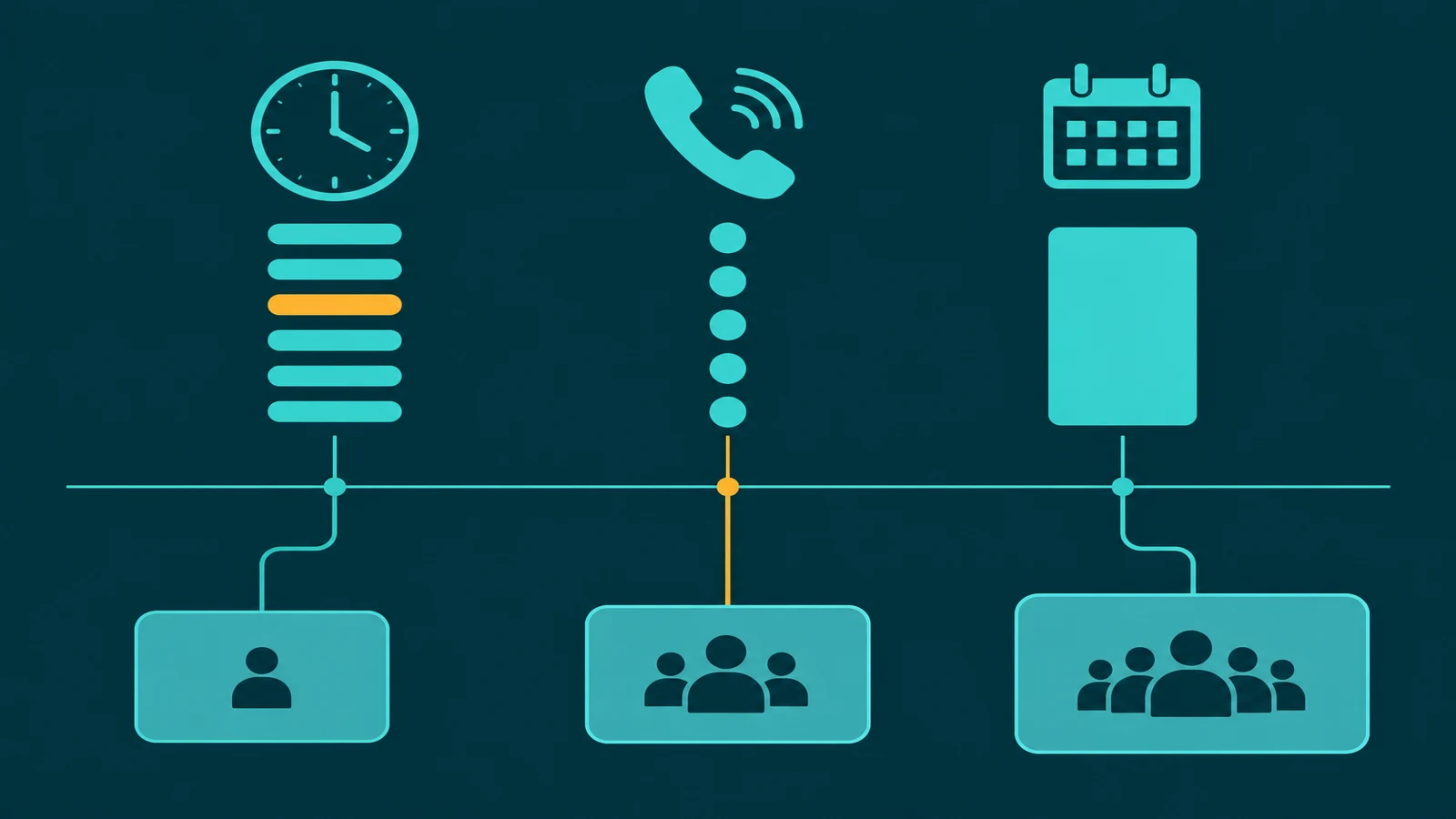
Rapid scaling. DFW companies that are growing need to add phone lines quickly without hardware lead times or technician scheduling. Cloud phone systems provision new users in minutes through a web portal.
Office relocations. Dallas's commercial real estate market is active — companies move offices frequently as they grow or optimize costs. A cloud-based phone system moves with the business at no cost; a legacy PBX tied to physical wiring requires expensive re-installation.
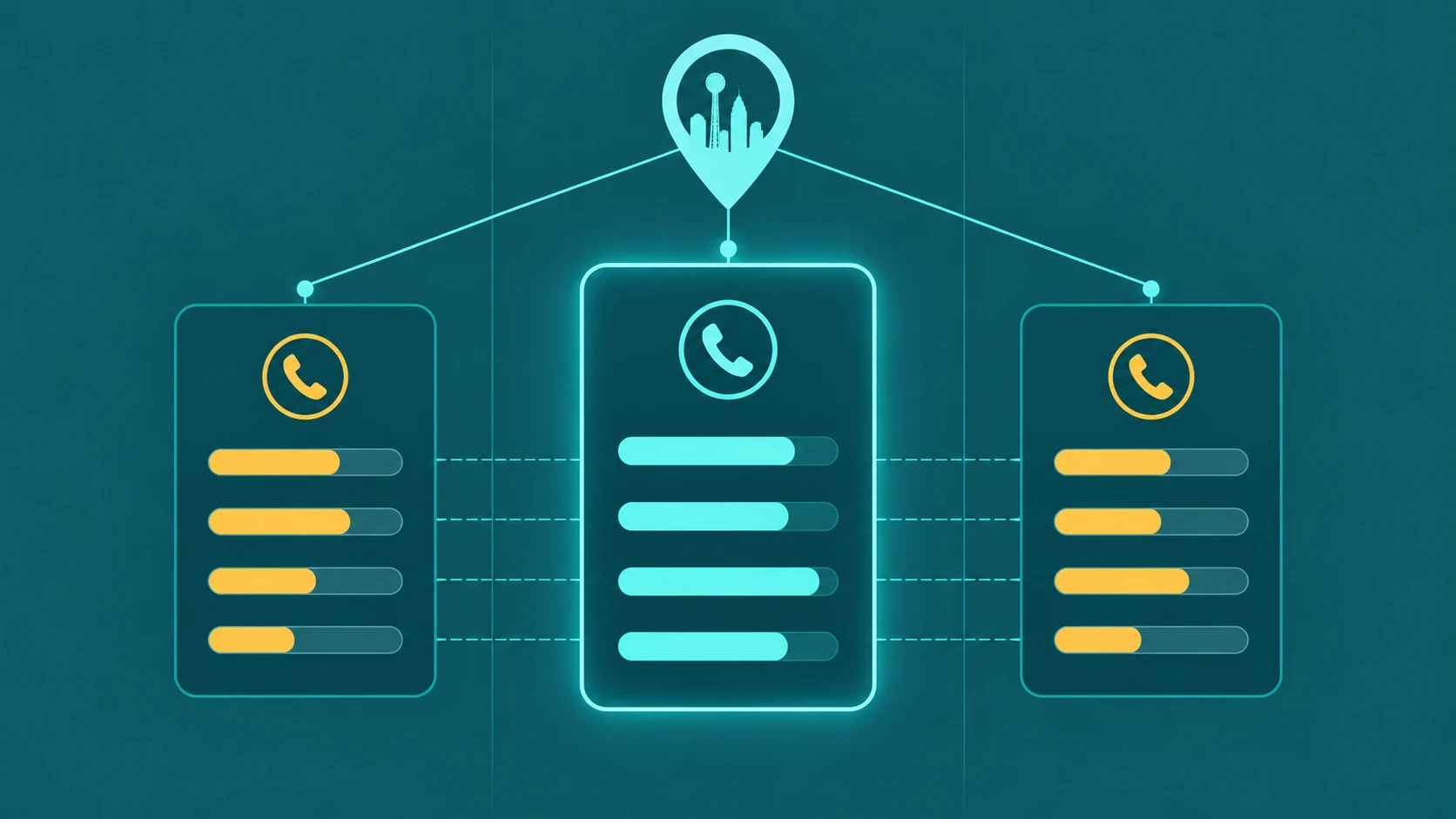
Local number presence. Dallas buyers and customers respond better to local 214, 469, 972, or 945 numbers than to toll-free or out-of-state numbers. A business that relocated from another state still needs a DFW local number for customer-facing operations.
Business phone service options in Dallas
Cloud VoIP providers
Cloud VoIP delivers phone service over your internet connection from a provider's cloud infrastructure. No hardware required beyond the devices your staff already has. Features include extensions, IVR auto-attendant, call queues, call recording, business SMS, voicemail-to-email, and mobile apps. Pricing is per-seat monthly with no hardware capital expense.
This is the dominant choice for Dallas businesses of all sizes — from 2-person startups to enterprises with hundreds of employees — because it handles the distributed, mobile DFW work environment better than any alternative.
Legacy landline / on-premise PBX
Traditional business phone service from AT&T, Spectrum Business, or Frontier — delivered over physical lines with on-premise PBX hardware — remains in use in older Dallas office buildings and established businesses that have not modernized. These systems are reliable but inflexible: adding lines requires hardware, remote workers need separate solutions, and moving offices is expensive and disruptive.
For most Dallas businesses evaluating new or replacement phone service, on-premise PBX is not the right choice unless there is a specific compliance or connectivity requirement that cloud cannot address.
Hosted PBX (managed on-premise)
Hosted PBX sits between legacy on-premise and pure cloud: the PBX is managed by a provider but may still involve some physical infrastructure at your location. This model is less common as pure cloud VoIP has largely made it unnecessary for most business use cases.
Evaluating business phone providers for Dallas
Local number inventory
Confirm the provider can assign numbers in your preferred DFW area codes — particularly 214 for central Dallas presence. Some providers have better inventory than others in specific area codes. Ask before committing.
Number porting from existing Dallas carriers
If your business has existing numbers with AT&T, Spectrum Business, Frontier, or another Texas carrier, porting them is likely your first concern. Get a specific porting timeline commitment and ask what the provider's process is when a port from a specific carrier encounters issues.
Reliability for a DFW business environment
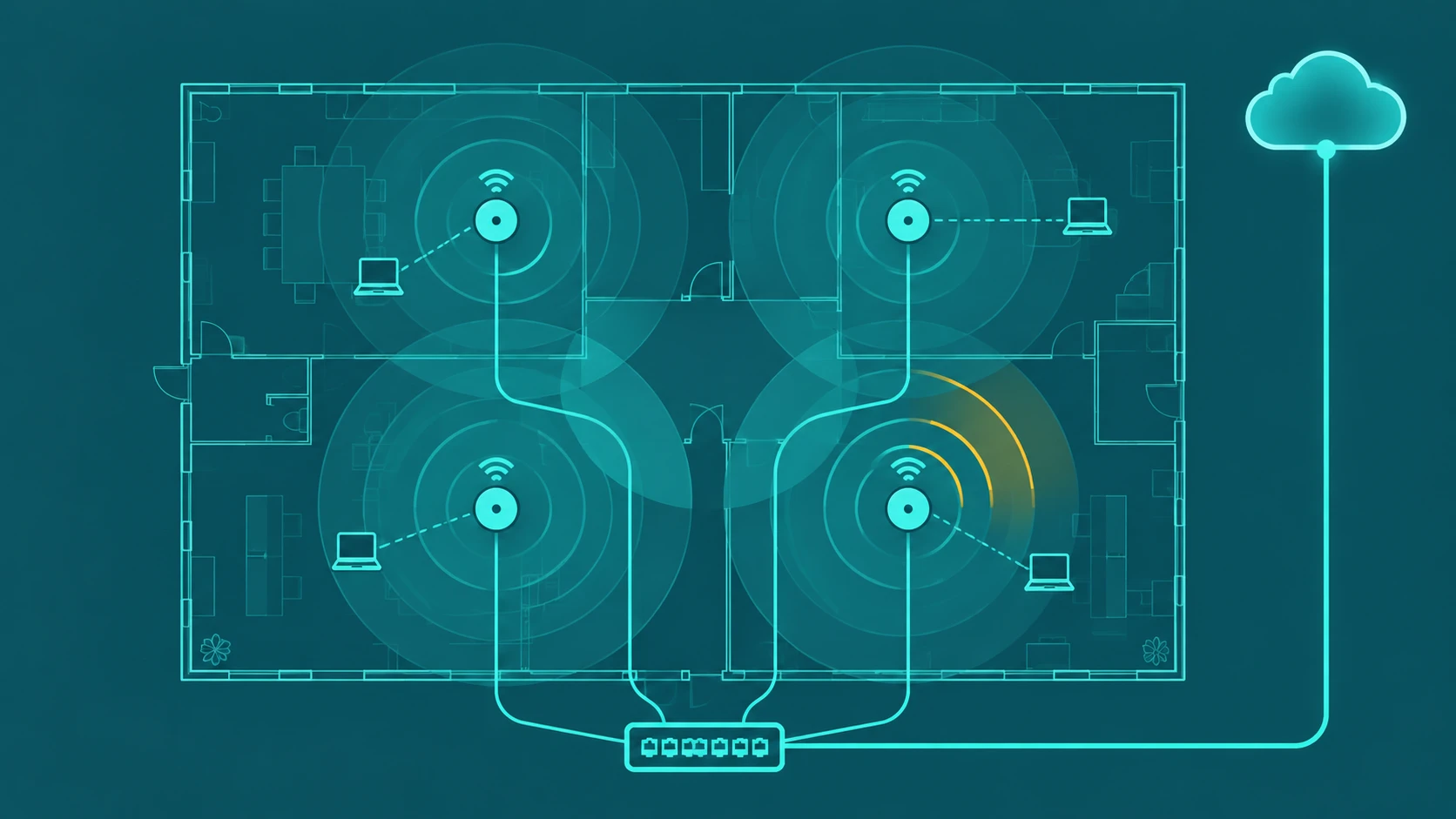
Dallas infrastructure is generally excellent for VoIP — major fiber providers (AT&T, Spectrum, Google Fiber in parts of Dallas, Frontier Fiber) offer low-latency broadband across most of the metro, which supports strong VoIP call quality. However, severe weather events (ice storms, severe thunderstorms) can disrupt local connectivity. Evaluate whether the provider offers:
- Multi-region failover that reroutes calls if your office internet fails
- Mobile app fallback so staff can switch to cellular when office internet is down
- PSTN failover for critical inbound lines
Features for Dallas business types
Dallas has strong concentrations of professional services (law, accounting, consulting), healthcare, real estate, technology, and logistics businesses. Feature requirements vary:
- Professional services: Call recording, voicemail-to-email, individual direct-dial numbers, conference calling
- Healthcare (Dallas Medical District, Medical City, Baylor area): HIPAA compliance, BAA availability, secure voicemail, E911 with location registration for remote staff
- Real estate: Mobile-first operation, call forwarding to agent personal numbers, multiple property numbers managed from one account
- Customer service / call centers: Call queues, IVR routing, call recording, agent monitoring features, real-time dashboards
Support quality
When something goes wrong with your phone system during business hours in Dallas, you need support that responds promptly. Evaluate: are support hours 24/7 or business-hours only? Is phone support available or only tickets? What is the provider's average response time for critical issues? A provider with strong infrastructure and poor support is a significant operational risk.
Questions to ask any provider before signing
- Can you provision 214 / 469 / 972 / 945 numbers? How quickly?
- What is your process for porting existing Dallas-area numbers from AT&T or Spectrum?
- What is your uptime SLA and what happens if you miss it?
- Do you offer a BAA for healthcare customers?
- What are your support hours and channels?
- Is there a minimum seat commitment?
- What are the contract terms — monthly or annual?
For a broader framework on evaluating providers, our guide to choosing business phone service providers covers the full criteria set applicable to any market. For the technical specifics of what a cloud system includes, see our overview of cloud phone systems. For a side-by-side comparison of all phone system types available to Dallas businesses — including on-premise, hosted PBX, SIP trunking, and cloud VoIP — see Dallas phone systems.
VoIP phone systems built for Dallas businesses
EaseDial provides cloud business phone service with local Dallas-area number coverage, number porting support, no hardware requirements, and a self-serve portal for all configuration. The platform includes IVR, call queues, call recording, business SMS, and mobile apps — everything a DFW business needs to run professional phone operations across a distributed team.