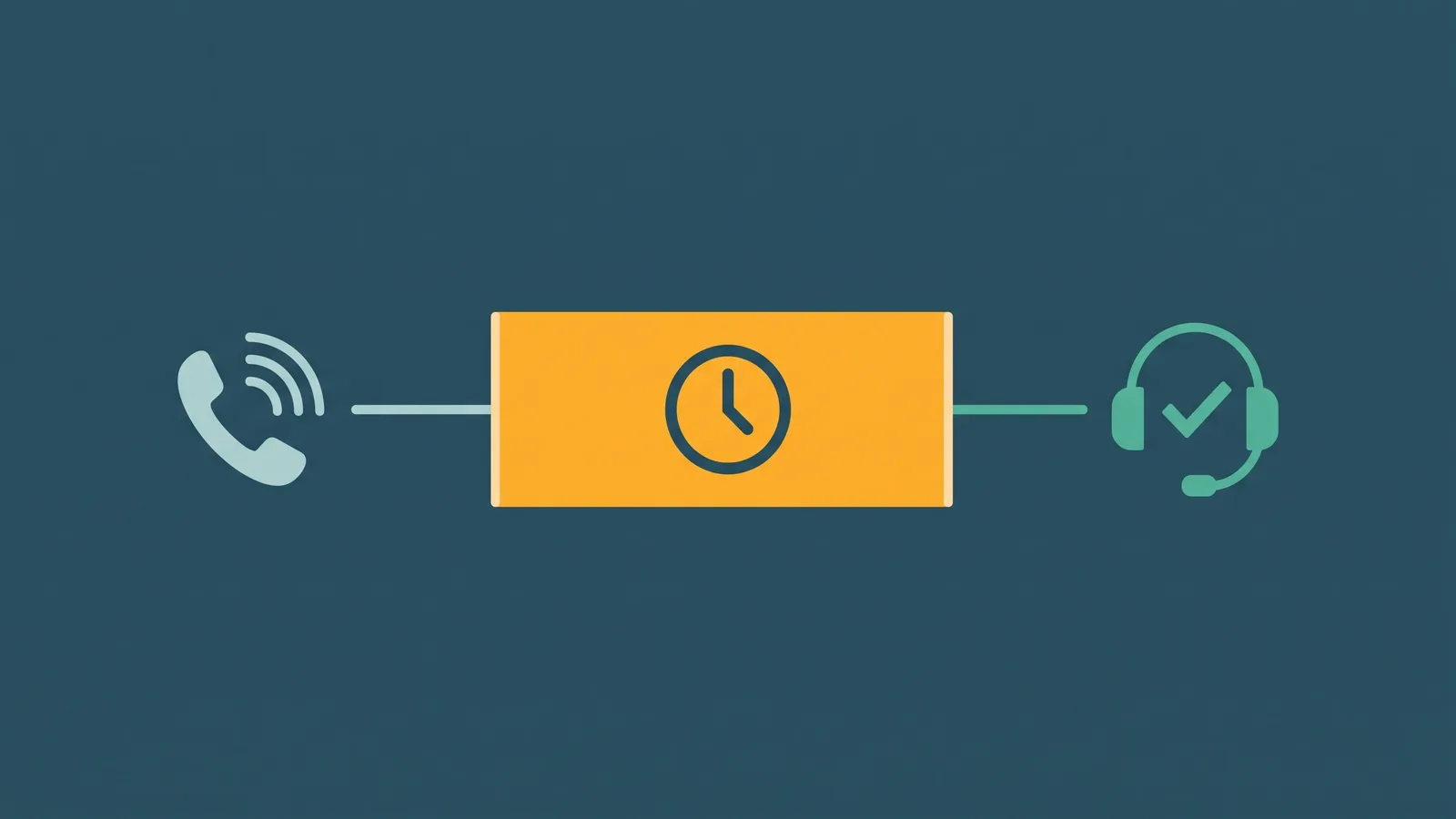
When a call ends, the work is not over. Before an agent can take the next call, they need to document what happened — write notes, select a disposition code, update the CRM, create a follow-up task, or send a confirmation email. All of that happens in a window called after-call work. How long that window lasts, and what fills it, has a direct effect on how many calls your team can handle, how long customers wait, and whether your service level holds under volume.
What is after-call work (ACW)? After-call work is the period that begins when a call disconnects and ends when the agent returns to Available state, ready to receive the next call. During this interval the agent is occupied with tasks directly related to the just-completed interaction — documentation, data entry, and follow-up actions. ACW is also called wrap time or wrap-up time. It is a distinct, measurable state in contact center telephony systems, tracked separately from talk time and hold time.
What Happens During ACW
The specific tasks an agent completes during after-call work depend on the nature of the interaction and the tools in use, but the core categories are consistent across most contact centers:
- Call notes and summary: The agent records what the caller needed, what was discussed, and what was resolved. These notes become part of the contact's history and are available to any future agent handling the same account.
- Selecting a call disposition code: The agent chooses a structured label from a predefined list — Resolved, Callback Scheduled, Escalated, Sale, Not Interested, and so on. Dispositions convert individual call outcomes into reportable data. For a full treatment, see what is a call disposition.
- CRM record update: The agent updates or creates fields in the customer relationship management system — account status, issue category, purchase details, or next-action date.
- Scheduling a callback or follow-up task: If the caller requested a callback or the issue requires a follow-up, the agent creates a scheduled task in the system so it is not lost between interactions.
- Sending a follow-up email: Some interactions require a confirmation, a summary, or a document sent to the caller. Agents may compose or trigger a template email during wrap-up.
- Escalation documentation: If the call must be escalated to a specialist or a supervisor queue, the agent documents the reason, the context, and any commitments made, so the next handler has full information before picking up.
The critical operational fact about ACW is that the agent is not available to receive new calls during this period. The system holds them in a wrap-up state, and the queue continues to build while they complete post-call tasks. This is what makes ACW duration a staffing and service-level variable, not just an administrative detail.
ACW Modes
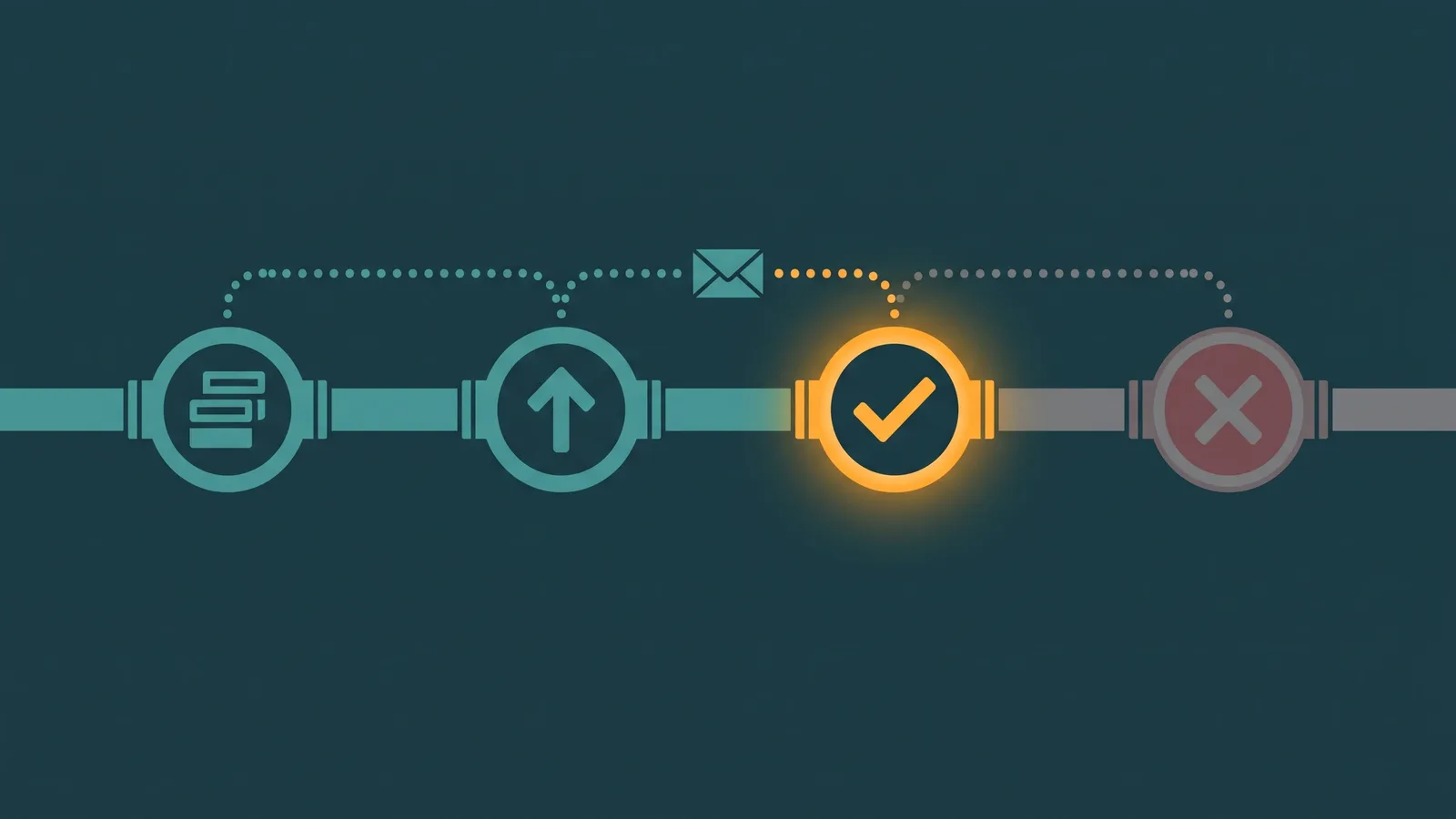
Contact center platforms handle after-call work in one of three ways, and the mode a center uses affects both the accuracy of wrap-time reporting and the pressure agents feel to complete tasks quickly.
Fixed / timed wrap-up
In fixed wrap-up mode, the system automatically returns the agent to Available state after a preset number of seconds — commonly 30 or 60 seconds. The agent gets that window regardless of what they actually need; when the timer expires, they are considered ready whether they have finished or not.
Fixed timers are easy to configure and enforce a consistent wrap-up ceiling. The problem is that 30 or 60 seconds is often too short for complex calls — a support interaction that requires a detailed case note and a follow-up task cannot realistically be documented in under a minute. Agents under time pressure either rush documentation (producing incomplete records) or manually extend their unavailability by moving to a Not Ready state, which obscures the actual wrap-up time in reporting.
Manual wrap-up
In manual mode, agents press a button or select a control in the interface when they have finished post-call tasks, signaling to the system that they are ready for the next call. The system measures actual wrap-up duration — from call end to the agent's ready action — and logs it accurately.
Manual wrap-up produces the most accurate ACW data and allows agents to take the time genuinely needed for complex interactions. The downside is that it can be gamed: an agent who wants a longer break between calls can simply delay pressing the ready button, inflating reported ACW without any corresponding documentation work. Supervisors typically monitor manual ACW distributions for outliers.
Auto-wrap with extension
Some platforms implement a hybrid approach: a countdown begins automatically when the call ends, but the agent can extend the timer if additional time is needed. This provides the discipline of a deadline while accommodating genuinely complex interactions. The agent sees the countdown and can request one or more extensions, each of which is logged — giving supervisors visibility into how often extensions are needed and by whom.
How ACW Is Measured and Its Role in AHT
After-call work is the third component of Average Handle Time (AHT), the most widely tracked efficiency metric in contact centers. The AHT formula is:
ACW inflates AHT just as talk time and hold time do. An agent who handles a two-minute call and spends four minutes in wrap-up has a six-minute handle time for that interaction — three times the call itself. Across a day of calls, high ACW compounds into significantly reduced throughput.
Benchmark ranges for ACW vary considerably by industry and call type. Simple transactional interactions — balance inquiries, address changes, order status — may generate 30 seconds of legitimate wrap-up. Complex technical support or insurance claims can require three to six minutes. Industry commentary from organizations like ICMI and SQM Group has referenced cross-industry ACW averages, but published figures vary widely and depend heavily on the mix of call types surveyed. Rather than anchoring to a single benchmark number, the more useful approach is to baseline ACW within your own operation by call type and complexity tier — the gap between your highest and lowest performers on comparable interactions represents recoverable capacity.
For a full overview of the metrics that surround ACW, see call center metrics and KPIs.
Why Excessive ACW Hurts Service Levels
Service level — typically expressed as the percentage of calls answered within a target number of seconds — is sensitive to effective agent capacity. Every second an agent spends in ACW is a second they are not available to handle the next incoming call. When ACW is long, agents cycle back to Available more slowly, which reduces the effective number of agents the queue can draw on at any given moment.
This relationship is built into contact center staffing models. In Erlang C calculations, which underpin workforce management planning, ACW is included in handle time. If your staffing model assumes a 60-second average handle time but your actual ACW alone is running 90 seconds, the model is structurally understaffed for real-world load.
High ACW cascades. When agents are slow to return to Available, the queue grows. As the queue grows, wait times increase. As wait times increase, service level drops. Callers who wait too long may abandon — and abandoned calls often re-enter the queue shortly afterward, adding volume without adding answered calls. The practical consequence is that a team handling the same call volume with the same headcount can serve callers well or serve them poorly depending almost entirely on how long wrap-up runs.
For how staffing and scheduling interact with ACW, see call center workforce management.
How to Reduce ACW Without Cutting Corners
Reducing ACW is not about pressuring agents to document less. Incomplete notes and missed dispositions cost more downstream than the time saved. The goal is to reduce the time needed for thorough documentation, not to skip the documentation itself.
- Structured disposition codes: Fewer, clearer disposition choices mean faster selection with less ambiguity. A list of 40 codes forces agents to read and deliberate; a list of 10 well-defined codes can be selected in seconds. Rationalize the list to the minimum set that actually drives different downstream actions.
- CRM screen pop: When a call connects, a well-integrated system pre-populates the customer record on the agent's screen — account history, prior interactions, open cases. The agent spends wrap-up updating fields rather than searching for the record, which can eliminate 30 to 90 seconds of post-call lookup time.
- Post-call automation: Certain fields can be logged automatically — call duration, queue name, agent ID, timestamp, call recording link. Automating these removes manual entry that adds no informational value and consumes wrap-up seconds.
- Real-time transcription with AI summary: Platforms that transcribe calls as they happen and generate a structured summary at call end can reduce note-writing from several minutes to a review-and-confirm workflow, which takes a fraction of the time. Agents verify accuracy rather than composing from memory.
- After-call coaching on documentation efficiency: Supervisors who review ACW data at the agent level can identify who is spending significantly more or less time in wrap-up than peers. Agents with high ACW often benefit from coaching on note structure, system navigation shortcuts, or disposition selection — not pressure to go faster, but training on how to go faster without sacrificing quality.
ACW vs Other Availability States
Contact center telephony systems track agent availability in multiple distinct states. ACW is one of several, and conflating it with others produces inaccurate reporting and faulty staffing models.
| State | Description | Receives new calls? |
|---|---|---|
| Available | Agent is ready and waiting for the next call to be routed | Yes |
| Busy / On Call | Agent is actively handling a live call | No (unless blended with outbound) |
| Hold | The caller is placed on hold during an active call; the agent is still handling that call | No |
| After-Call Work (ACW) | Call has ended; agent is completing post-call documentation and tasks before returning to Available | No |
| Break / Not Ready | Agent has intentionally removed themselves from the queue — lunch, break, training, or administrative time not tied to a specific call | No |
ACW is a distinct state between Busy and Available. It is associated with a specific preceding call and should not be confused with Break or Not Ready, which are voluntary unavailability states unrelated to a particular interaction. Agents who use Not Ready as a proxy for extended wrap-up artificially suppress ACW metrics while still being off the queue — a pattern that skews both ACW and break-time reporting.
Frequently Asked Questions
Use our free After-Call Work (ACW) Calculator to quantify the annual cost of wrap time and model savings from a 30% ACW reduction — no email required.
After-call work sits at the intersection of documentation quality, agent capacity, and service level. Reducing it through better tooling — structured dispositions, CRM pre-population, AI-assisted summaries — directly expands effective agent availability without cutting corners on the records that the next interaction depends on. For related context, see what is a call disposition, call center metrics and KPIs, and call center workforce management.