
What is a financial services contact center?
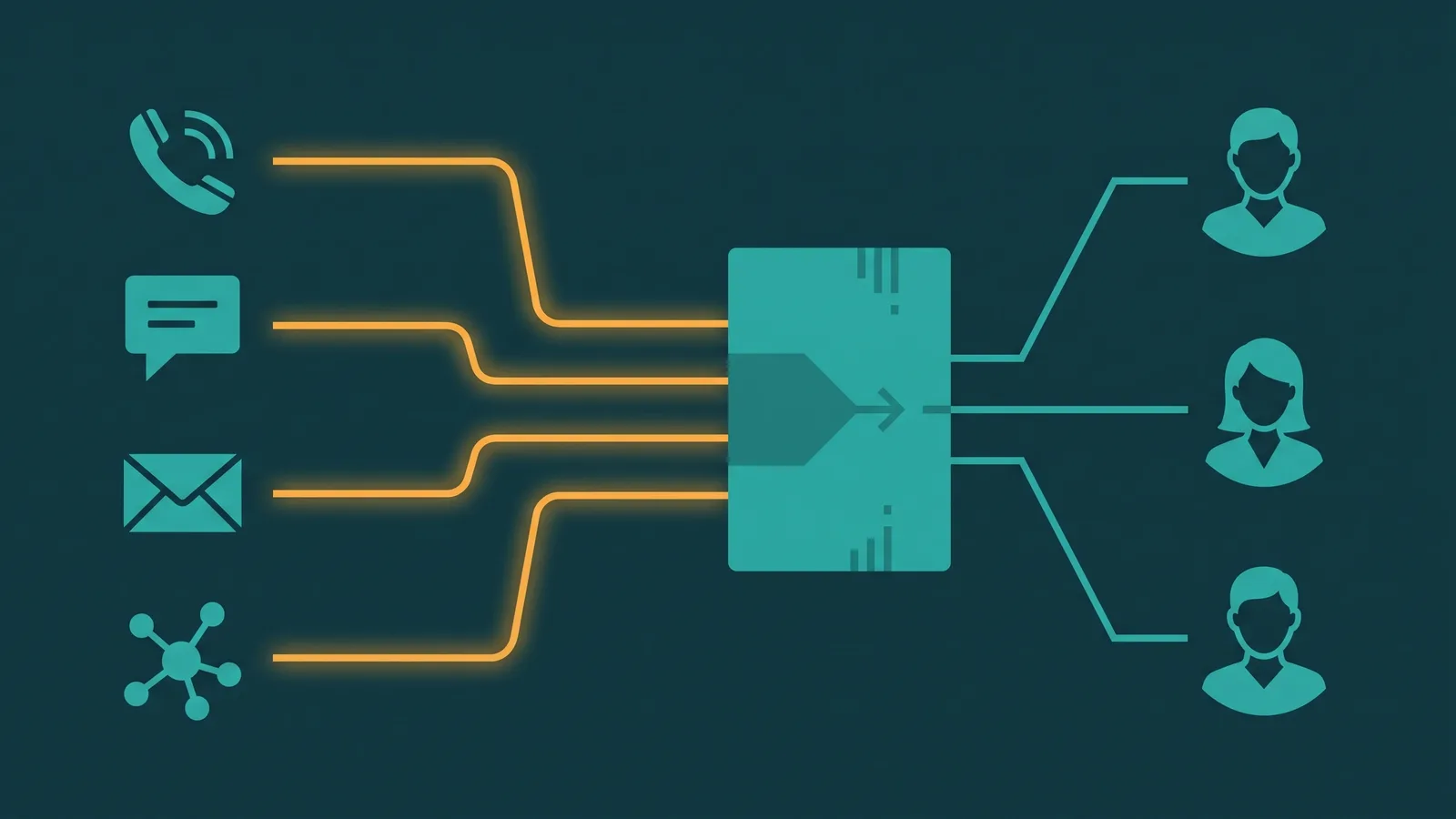
A financial services contact center is the communication environment that financial organizations use to manage customer interactions — including service inquiries, application calls, account-related calls, dispute handling, outbound notifications, and routing across departments and teams. The specific capabilities an organization needs depend on the type of business it operates, the services it offers, and the regulatory environment it operates in.
Financial organizations include a broad range of entities — banks, credit unions, lenders, insurance companies, fintech platforms, mortgage companies, wealth-management firms, and broker-dealers. These organizations share a common operational need: managing high volumes of customer calls across multiple departments, often with significant accuracy, documentation, and security requirements.
This guide covers the workflows financial services contact centers commonly manage, the contact-center capabilities buyers evaluate, security and customer-information considerations, call recording and payment-data considerations, AI boundaries, and a practical set of questions to ask any provider during evaluation.
Common financial services contact center workflows
Financial organizations use their contact centers for a range of inbound and outbound workflows:
Inbound customer service
Customer-service calls across financial service organizations typically involve account inquiries, billing questions, product or service information, and general support. These calls are often routed by product type or service area — a customer calling about a loan reaches a different team than one calling about an insurance claim.
Application and intake calls
Customers initiating applications for loans, insurance products, or account openings often start with a phone call. Routing this traffic to appropriately qualified agents — and capturing the initial interaction accurately — is a routing and recording consideration.
Dispute and complaint calls
Dispute calls typically require routing to specialist teams, accurate call recording for documentation, and defined escalation paths. The ability to record, retrieve, and review these interactions is operationally important regardless of regulatory requirements.
Callers reporting suspected fraud
When a customer calls to report suspected fraudulent activity on their account, the call must reach the right team quickly. Contact center routing and queue management support this workflow — the contact center technology routes the call; the organization's fraud team handles it. A contact center platform does not perform fraud detection itself.
Outbound notifications and campaigns
Financial organizations conduct outbound calls for payment reminders, renewal notifications, and account reviews. Outbound campaign tooling — including dialing modes and list management — supports these programs. Organizations conducting outbound campaigns should determine which consent requirements, do-not-call obligations, and other requirements apply to their specific campaigns and audiences.
After-hours routing and callback
Financial service calls arrive outside business hours. After-hours routing — voicemail, callback collection, AI-assisted initial handling, or on-call routing — determines what happens to those calls. Callback collection allows organizations to maintain contact without requiring callers to wait or call again.
Branch-to-contact-center routing
Organizations with physical locations often need call paths from branch phones into the central contact center queue system. Unified routing across locations avoids siloed communication infrastructure.
Queue management and supervisor escalation
Contact centers managing multiple service queues benefit from real-time visibility into queue depth, agent state, and wait times. Supervisor tools — including the ability to monitor live calls, coach agents, or join calls when needed — support service quality and escalation handling.
Contact center capabilities financial organizations evaluate
The following capability categories come up regularly in financial services contact center evaluations. Requirements vary by organization type, size, and operational model.
Call routing
Financial organizations typically route by product type, department, and customer tier. IVR systems collect caller intent before routing, reducing misrouted calls. Skills-based routing matches callers to agents qualified for their account type or inquiry. Multi-level IVR supports complex routing trees across product lines.
Call queues and callback
Call queues hold and distribute callers across available agents. Queue configuration — priority, overflow behavior, timeout handling — affects caller experience and service level. Callback options let callers request a return call rather than waiting on hold.
Call recording
Call recording is commonly used for quality review, dispute documentation, coaching, and operational review. Financial organizations evaluate recording access controls, retention configuration, and consent-notice capabilities. Recording requirements vary by organization type, activity, and applicable rules — contact center recording capability is a platform feature; whether and how an organization is required to use it depends on that organization's specific obligations.
Campaign dialer
Outbound campaign tools with preview, progressive, and predictive dialing modes support customer follow-up programs, renewal campaigns, and payment notifications. Organizations configure campaign parameters according to their own applicable requirements.
CRM integration
Integration with CRM platforms keeps customer records current and eliminates manual data entry. Financial services organizations commonly use Salesforce, HubSpot, and Pipedrive for customer relationship management; contact center platforms that integrate with these systems allow call logs, recordings, and contact data to flow directly into the CRM.
Analytics and reporting
Analytics covering call volume, agent performance, queue metrics, and campaign results support operational oversight and capacity planning. Real-time dashboards allow supervisors to monitor queue conditions and intervene before service level deteriorates.
Supervisor tools
Supervisor capabilities for live-call monitoring — including silent monitoring, agent coaching during live calls, joining calls when needed, and call takeover — support quality assurance and escalation handling. These tools are especially relevant for organizations that need documented evidence of active supervision.
AI-assisted initial call handling
AI Receptionist capabilities can answer calls immediately, collect caller intent, respond to general inquiries, and route to the appropriate team or queue. The boundaries of what AI should handle in a financial services context require careful consideration — see the AI section below.
Security controls
Contact center security capabilities buyers evaluate include voice traffic protection in transit, administrative access controls, role-based access, multi-factor authentication for administrative accounts, and audit logging for platform activity. These controls support vendor security review and organizational security requirements.
Customer information and security considerations
Financial organizations may face requirements concerning the protection of customer information. Which specific requirements apply depends on the organization's activities, its regulator, and its jurisdiction.
Financial institutions — broadly defined under federal law to include companies providing financial products or services — may face obligations under applicable federal and state law to safeguard customer information. These obligations vary by organizational type and regulatory relationship. Organizations should assess their specific obligations with qualified legal and compliance counsel.
From a contact center technology perspective, buyers typically evaluate:
- Voice traffic protection in transit — whether voice calls are encrypted in transit between endpoints
- Administrative access controls — role-based access, multi-factor authentication for admin accounts
- Audit logging — records of admin console activity, access events, and configuration changes
- Recording access controls — who can access, download, or delete recordings
- Retention and deletion configuration — the ability to set and enforce retention periods and deletion workflows
- Vendor security documentation — independent security assurance reports, audit documentation, or certifications the provider can supply for vendor review processes
These considerations apply across the organization's vendor review process — they are not unique to the contact center platform but are typically part of it.
Call recording: access, retention, and consent
Call recording in financial services organizations is commonly used for quality assurance, dispute documentation, agent coaching, and operational review. Some regulated organizations face specific call recording or communication retention requirements — these vary by organization type, activity, regulator, and jurisdiction.
Recording access controls
Access to call recordings should be configurable by role. In financial services environments, limiting who can play, download, or delete recordings is standard operational practice. Audit logging for recording access supports review and accountability.
Recording consent
Recording consent requirements vary by jurisdiction. In states and countries where all-party consent is required, callers must be notified before recording begins. Contact center platforms support configurable consent-notice playback at the start of calls. Organizations are responsible for determining the consent requirements applicable to their calling environment and configuring the platform accordingly.
Retention configuration
Retention requirements vary by organization type and applicable rules. Organizations should establish retention policies aligned with their specific obligations and configure the platform accordingly. The ability to set retention periods and automate deletion is a standard contact center platform evaluation criterion.
Broker-dealer communication supervision
FINRA member broker-dealers face communication supervision requirements under FINRA Rule 3110, which requires firms to establish supervisory systems and written supervisory procedures reasonably designed to achieve compliance with applicable securities laws and FINRA rules — including supervision of business communications. Broker-dealers and other regulated entities may also face recordkeeping requirements under applicable SEC rules. These requirements apply to FINRA member firms and are distinct from the obligations of other financial organizations. Organizations should evaluate the specific rules applicable to their registration, activities, and regulators.
Payment card data and call recording
Organizations that accept payment card information by phone — including card number, expiration, and verification values — bring that telephone environment into PCI DSS scope. PCI DSS prohibits storing sensitive authentication data, including card validation codes, after authorization. Organizations that record calls should evaluate whether their recording architecture captures and retains prohibited data.
Organizations accepting payment card data over the phone should evaluate their contact-center and recording environment against current PCI DSS requirements with a qualified PCI DSS assessor. The specific architectural controls required depend on the organization's environment, transaction flows, and assessment findings. See IVR payment processing considerations for additional context on payment-handling workflows in contact centers.
Ordinary customer service calls that do not involve payment card data are not affected by PCI DSS recording requirements.
AI-assisted call handling: scope and boundaries
AI Receptionist technology can support financial services contact centers in specific, appropriate ways — and has clear boundaries that organizations must respect in a financial context.
Appropriate AI uses
AI-assisted initial call handling is appropriate for:
- Answering inbound calls immediately — 24 hours a day, including outside business hours
- Collecting caller intent and routing to the appropriate department or queue
- Responding to general inquiries about business hours, locations, and services
- Collecting callback contact information for follow-up
- Handling initial after-hours call collection and routing
- Transferring to a live agent with a summary of what was already discussed
What AI should not handle in financial services
Financial services organizations must configure AI-assisted call handling with clear boundaries. EaseDial's AI Receptionist feature documentation explicitly states that it does not handle legal, medical, or sensitive matters. For financial services organizations, this means AI should not be used for:
- Identity verification or authentication of account holders
- Collecting financial account numbers or authentication credentials as part of an account-access workflow
- Providing financial advice, investment recommendations, or product guidance
- Approving or declining loan, credit, or account applications
- Accessing, modifying, or confirming account balances or transactions
- Processing or accepting payment card information
- Performing any function requiring professional judgment or regulatory authorization
Calls involving any of the above should be transferred to a qualified human agent. AI handles the initial answering and routing; trained agents handle the substantive interaction.
Questions to ask a financial services contact center provider
Security
- How is voice traffic encrypted in transit — what protocols protect SIP signaling and voice media?
- What role-based access controls are available for administrative functions?
- What authentication is required for admin accounts?
- What audit logging is available for admin activity, access events, and configuration changes?
- What independent security assurance documentation, audit reports, or certifications can you provide for our vendor review process?
Recording
- Who can access, download, or delete call recordings, and how is that access controlled?
- What retention and deletion configuration options exist?
- How are recording consent notices configured and delivered?
- How does the platform handle calls involving payment card information — what recording controls are available?
- Is access to recordings logged?
Routing and operations
- How are calls routed by department, product type, or agent skill?
- What callback options are available?
- What supervisor monitoring capabilities exist — listen, coach, join, take over?
- What real-time and historical analytics are available?
- Which CRM platforms does the system integrate with, and what data flows are supported?
Outbound campaigns
- What dialing modes are available, and how are campaign parameters configured?
- How does the platform support do-not-call list management?
- What controls exist for managing call abandonment rates?
- What documentation is available for our outbound program compliance review?
AI call handling
- What information does the AI Receptionist collect or process during initial call handling?
- What topics or request types should callers not be directed to AI?
- When and how does AI transfer to a human agent?
- Where are call summaries and transcripts stored, and who can access them?
- What data handling documentation is available?
Compliance and vendor review
- What documentation supports our organization's vendor security review?
- Which platform controls are configurable, and which are fixed?
- Which compliance responsibilities remain with our organization to configure and maintain?
- Is there a formal shared-responsibility model for compliance-related controls?
How EaseDial supports financial services contact centers
EaseDial provides contact center infrastructure that financial services organizations can configure for their operational requirements. Confirmed current capabilities include:
- IVR and skills-based routing — multi-level IVR routes by department or product type; skills-based routing matches callers to agents by qualification
- Call queues — configurable queues with business-hours routing and callback
- Call recording — automatic recording with role-based access controls, configurable retention and deletion, consent-notice playback, and recording pause/resume capability
- Supervisor tools — live-call monitoring (listen, whisper, barge, intercept), real-time queue dashboard
- Campaign dialer — preview, progressive, and predictive dialing modes for outbound programs
- CRM integration — Salesforce, HubSpot, and Pipedrive; call logs and recordings sync automatically
- Analytics — real-time and historical reporting on call volume, queue metrics, and agent performance
- AI Receptionist — initial call answering, general routing, FAQ handling, and callback collection, within its documented scope
- Security controls — TLS for SIP signaling in transit, SRTP for voice media in transit, RBAC, 2FA for admin accounts, audit logging, recording access controls
For the full product and workflow view, see the EaseDial financial services contact center solution page. For platform security documentation, see EaseDial security and EaseDial compliance.
Organizations should assess their own applicable requirements and configure the platform accordingly. EaseDial does not make compliance representations on behalf of its customers. Consult qualified legal and compliance counsel for requirements specific to your organization.
Frequently asked questions
What is a financial services contact center?
A financial services contact center is the communication environment a financial organization uses to manage customer interactions — including service inquiries, application calls, dispute handling, outbound notifications, and routing across departments. What capabilities an organization needs depends on the type of business it operates, the services it offers, and its regulatory environment.
What should financial organizations evaluate in contact center software?
Evaluation categories typically include call routing and IVR, queue management, call recording with access controls, outbound campaign capability, CRM integration, real-time analytics, supervisor tools, AI-assisted call handling (with clear scope boundaries), and vendor security documentation. Security controls — access management, audit logging, encryption in transit — are also common evaluation criteria for financial services buyers.
What security controls should financial services contact center buyers evaluate?
Common evaluation criteria include: voice traffic encryption in transit (TLS for SIP, SRTP for media), role-based access controls, multi-factor authentication for admin accounts, audit logging for admin and access events, recording access controls, configurable retention and deletion, and independent security assurance documentation the provider can supply for vendor review.
Can financial services contact centers record calls?
Yes — call recording is a standard contact center platform capability. Whether an organization is required to record calls, how long recordings must be retained, and what controls must be in place depends on the organization's type, activities, and applicable regulatory requirements. Organizations should assess their specific recording obligations with qualified legal and compliance counsel and configure the platform accordingly.
What should organizations consider when calls contain payment card information?
Organizations accepting payment card data by phone bring that environment into PCI DSS scope. PCI DSS prohibits storing sensitive authentication data — including card validation codes — after authorization. Organizations should evaluate their call-recording architecture against current PCI DSS requirements with a qualified PCI DSS assessor. Ordinary customer service calls that do not involve payment card collection are not affected by these requirements.
Does FINRA Rule 3110 apply to every financial services organization?
No. FINRA Rule 3110 applies specifically to FINRA member broker-dealers. It requires these firms to establish supervisory systems, written supervisory procedures, and business communications supervision. It does not apply to banks, credit unions, insurance companies, mortgage companies, or financial organizations that are not FINRA members. Organizations should evaluate the rules applicable to their specific registration, activities, and regulators.
Can AI handle financial customer service calls?
AI-assisted call handling is appropriate for initial answering, general routing by caller-stated intent, business-hours and service FAQs, callback information collection, and after-hours handling. AI should not be used for identity verification, collecting financial account credentials, providing financial advice or investment recommendations, approving applications, accessing account information, or processing payments. Calls involving these topics should be transferred to a qualified human agent.
What questions should buyers ask a contact center provider?
Key questions include: How is voice traffic protected in transit? What access controls and audit logging are available? Who can access recordings and under what conditions? What retention and deletion controls exist? How does the platform handle calls with payment card data? What independent security assurance documentation can you provide? Which compliance responsibilities remain with our organization? What AI scope limitations exist and what information should callers not provide to AI?