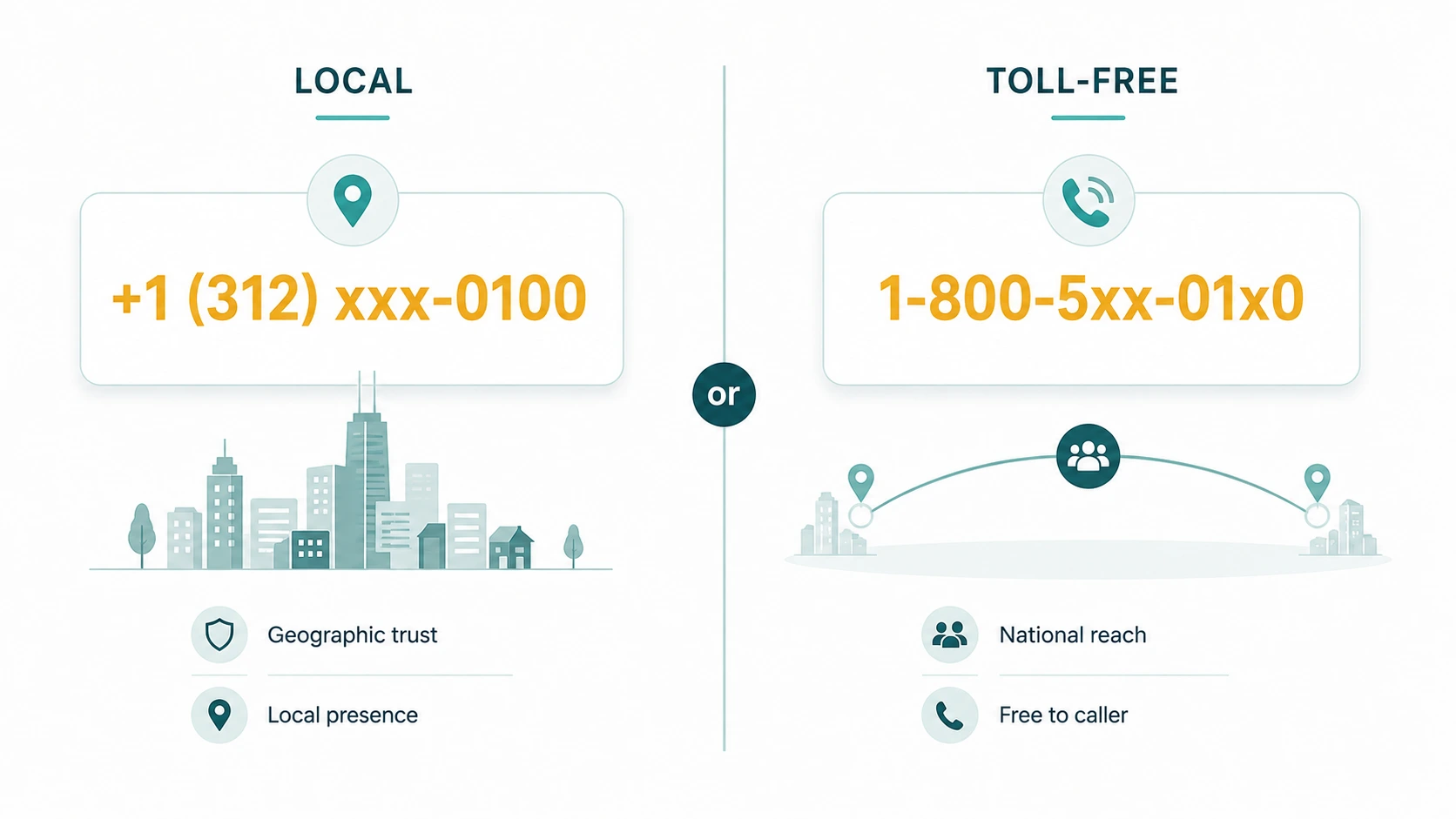
Local numbers signal geographic identity. Toll-free numbers signal national presence. Both route calls over the same networks, both can be managed from a cloud phone system, and both serve entirely legitimate business purposes — but they communicate very different things to the person deciding whether to call you back.
Most businesses eventually need both. The question is which to lead with, and when each type serves your callers better.
The core distinction: A local number carries an area code tied to a specific geographic region, creating familiarity and perceived local presence. A toll-free number (800, 888, 877, 866, 855, 844, or 833 prefixes) has no geographic identity and traditionally signals that the caller bears no long-distance charge. Neither is universally better — the right choice depends on who you are trying to reach, how you want to be perceived, and what kind of business you are operating.
What Is a Local Business Number?
A local business number uses a geographic area code — 212 for Manhattan, 312 for Chicago, 415 for San Francisco — that associates the number with a specific region. Under the North American Numbering Plan (NANP), area codes correspond to geographic Numbering Plan Areas (NPAs), and callers recognize them immediately as signals of local presence.
Local numbers are provisioned by carriers or cloud phone platforms as DIDs (Direct Inward Dialing numbers) — individually assigned phone numbers that route to a specific destination over the carrier's network. A business can provision local numbers in markets where it operates, markets it is entering, or markets it wants to build presence in — without any physical infrastructure in those locations. For more on how virtual local numbers work, see what is a virtual phone number and what is a DID number.
What callers read from a local number
When a local area code appears on caller ID, the recipient typically recognizes it as coming from someone in their region. That recognition creates a small but real behavioral effect: local numbers are more likely to be answered on outbound calls than numbers with unfamiliar area codes, and they create an implicit sense of relevance for the caller. "Someone local is calling" triggers a different response than "an 800 number is calling."
For inbound marketing — where you want callers to feel they are reaching a nearby business — a local number builds geographic trust that a toll-free number does not.
What Is a Toll-Free Number?
Toll-free numbers use specific three-digit prefixes — 800, 888, 877, 866, 855, 844, 833 — and traditionally indicate that the receiving business, not the caller, pays the per-minute cost of inbound calls. For a complete guide to toll-free number prefixes, RespOrg routing, porting, and contact center use cases, see Toll-Free Numbers: How They Work. In the PSTN (public telephone network), this reversal of billing is enforced through the carrier system.
In practice, cellular plans with unlimited minutes have eliminated long-distance charges for most callers, making the "toll-free" designation less financially meaningful than it once was. What has not changed is the perception: toll-free numbers are widely associated with national companies, customer service lines, and professional organizations. The 1-800 prefix in particular carries decades of brand association with large, established businesses.
The FCC regulates toll-free number assignment in the United States. Numbers are assigned on a first-come, first-served basis by Responsible Organizations (RespOrgs) — entities certified to manage toll-free numbering. Vanity numbers (1-800-FLOWERS, 1-800-CONTACTS) command premiums because they are memorable and drive direct response. Most businesses work with a cloud phone platform or carrier to provision a toll-free DID from the available pool.
Toll-free SMS: an important note
Toll-free numbers can send and receive SMS in the United States, but require registration through the carrier ecosystem to avoid message filtering. Unregistered toll-free SMS traffic is increasingly blocked by major carriers. If SMS is part of your inbound or outbound communication strategy, factor toll-free registration requirements into your provisioning plan.
Local vs Toll-Free: Key Differences
| Factor | Local Number | Toll-Free Number |
|---|---|---|
| Geographic identity | Yes — specific area code | None — national/neutral |
| Answer rate on outbound calls | Higher in matching regions | Lower — associated with robocalls |
| Brand perception | Local, community-oriented | National, established, professional |
| Caller cost (inbound) | Standard rates (usually included in plans) | Traditionally free for caller |
| Regulatory assignment | NANP area code allocation | FCC via RespOrgs (first-come basis) |
| Vanity options | Limited | Yes — 1-800-YOURNAME |
| Multi-location use | Multiple numbers, one per market | Single number, national routing |
| SMS capability | Yes (10DLC registration required) | Yes (toll-free registration required) |
Customer Perception and When It Matters
The psychological effect of each number type matters most in two specific situations: outbound calling and brand advertising.
Outbound calling
On outbound calls, caller ID is what the called party sees before deciding whether to answer. Local area codes have a documented advantage in answer rates, particularly for consumer outreach. A number with a local area code matching the called party's region is more likely to be recognized as potentially legitimate and answered. Toll-free numbers on outbound calls are more often associated with spam or robocalls in caller ID recognition systems, which may reduce answer rates.
This is why outbound call centers often provision multiple local numbers in the geographic regions they are calling — to match the area code of the called party and improve answer rates. A business calling Chicago customers from a Chicago 312 number performs differently than the same call from a 1-800 number. Whether this constitutes "neighborhood spoofing" (displaying a local number not actually associated with your location) varies by interpretation and specific carrier practices — the FCC has taken enforcement interest in deceptive caller ID practices, and this is an area to understand carefully before deploying local area codes outside your actual operating areas.
Brand advertising
In advertising — TV, radio, print, digital — toll-free numbers offer the memorable single-number simplicity that makes direct-response campaigns work. A single 1-800 number applies nationwide. Local numbers require geographic targeting, which adds campaign complexity. Vanity toll-free numbers (where the letters spell something relevant to the business) add memorability that no local number can match.
Multi-Location Businesses
Multi-location businesses often benefit from both number types used deliberately:
- Local numbers per market — each physical location or geographic service area gets a local DID. Callers in that market see a familiar area code. Local marketing lists that local number. The routing can point to any combination of staff, queues, or IVR.
- Single toll-free number for the brand — national advertising, corporate correspondence, and customer service lines use the toll-free number. Routing rules send calls to the appropriate regional team or national queue based on caller input, time of day, or other logic.
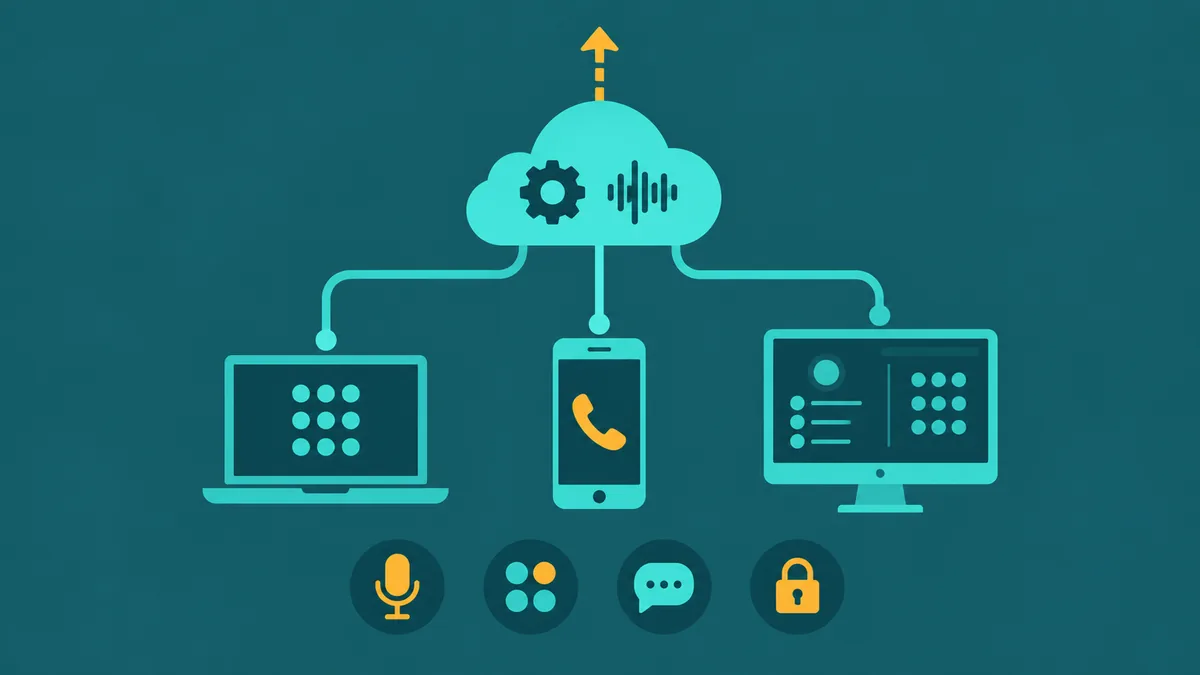
Cloud phone systems make this straightforward. Multiple numbers — local, toll-free, or both — can all route to the same underlying infrastructure. A call to a Chicago local number and a call to the 1-800 number can both arrive in the same queue with the same agents answering, simply with different routing paths and different caller-ID displays.
Number Portability
Both local and toll-free numbers can be ported between carriers in the United States. If you have an existing local or toll-free number that customers know, you can typically port it to a new cloud phone platform without the number changing. Porting timelines and requirements vary by number type and carrier, but losing an established business number when switching platforms is avoidable in most cases.
Which Should You Use?
Use a local number when:
- Your business primarily serves a specific city, region, or market.
- You want customers to perceive you as a local business.
- You are running outbound calling to consumers in a specific geographic area.
- You are establishing presence in a new market before opening a physical location.
Use a toll-free number when:
- Your business serves customers nationally and you want a single contact number.
- You are running national advertising campaigns where a single memorable number matters.
- You want to project a national or enterprise-scale brand image.
- You have a customer service line that should feel accessible regardless of caller location.
Use both when:
- You operate multiple locations across different markets.
- You run both local outbound campaigns and national inbound customer service.
- Your brand occupies both a local and national identity simultaneously.
EaseDial Business Phone Numbers
EaseDial supports provisioning both local and toll-free numbers as part of its business phone platform. Local numbers are available across a wide range of US area codes, allowing businesses to establish presence in specific markets. Toll-free numbers are available in standard toll-free prefixes. Both can be configured with call forwarding, business hours routing, IVR, call queues, and all other features of the EaseDial platform. Multiple numbers can route to the same agents and queues, or to separate destinations per number.
EaseDial
Local and toll-free numbers, all managed from one platform with full routing, IVR, and queue configuration.