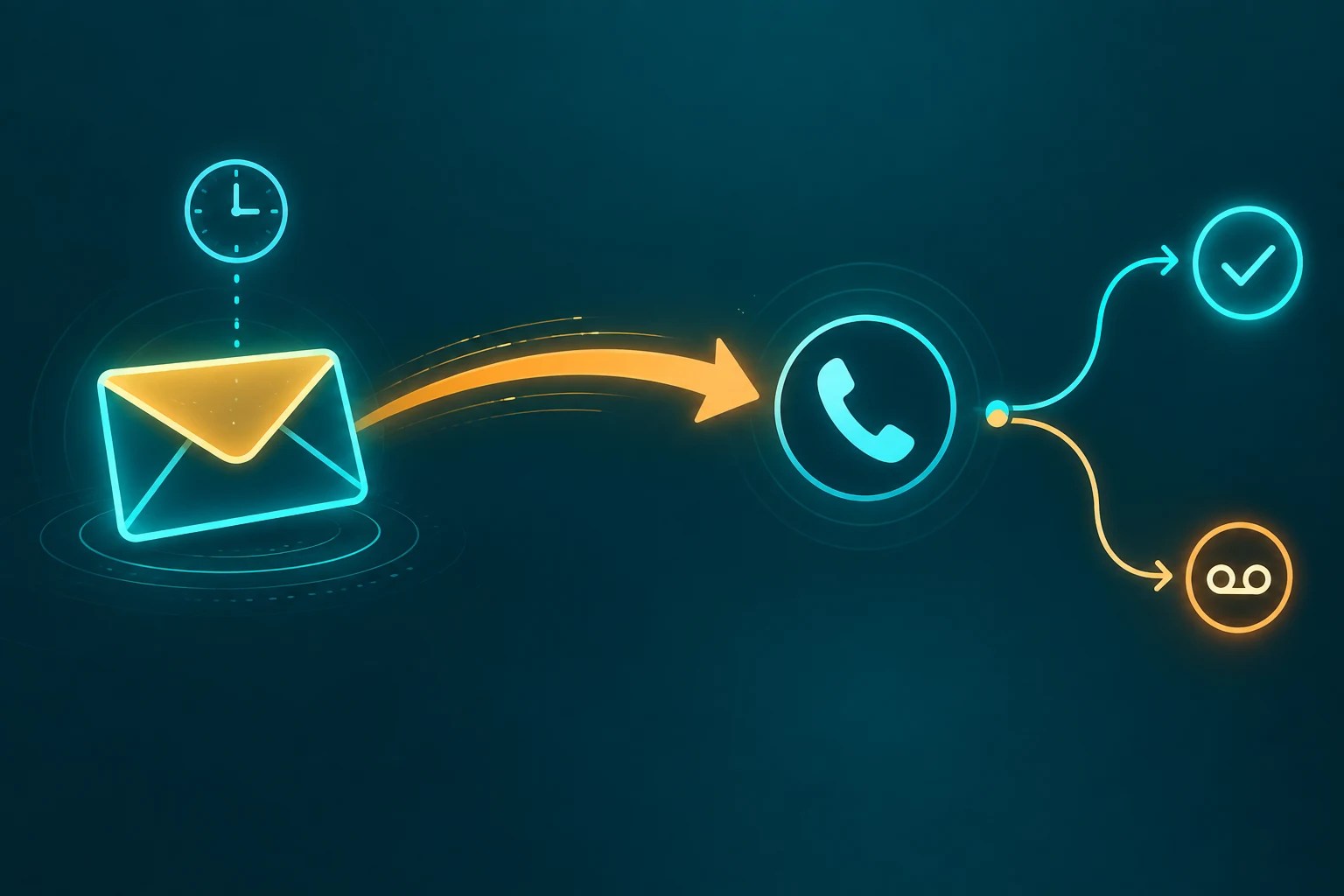
When customers cannot reach you by phone, they send an email. When they send an email and do not hear back promptly, they find another vendor. An email answering service addresses this by ensuring inbound emails receive timely, consistent responses — handled either by agents, automation, or a combination of both.
What follows covers what email answering services are, how they differ from phone answering, who actually needs them, what to look for, and how IVR and call routing tools extend coverage across both channels.
Definition: An email answering service handles inbound email inquiries on behalf of a business — reading, triaging, drafting responses, and following up — either through live agents, automated systems, or both. It ensures email channels receive the same responsiveness as phone channels.
What an email answering service is
An email answering service provides staffed or automated handling of inbound emails sent to a business address. Depending on the service model, this might involve:
- Human agents reading and responding to emails in the business's name
- Automated triage that categorizes, tags, and routes emails to the right team
- Template-based auto-responses that acknowledge receipt and set expectations
- Integration with CRM systems to log customer interactions and context
- Escalation rules that flag urgent emails for immediate human attention
The term covers a broad spectrum: at one end, a third-party virtual assistant team that reads and responds to your inbox manually; at the other, an automated helpdesk platform that handles most inquiries without human intervention.
How it differs from phone answering
Phone answering and email answering share the same underlying goal — ensuring customers receive prompt, helpful responses — but the mechanics are different in ways that affect what you need operationally.
| Factor | Phone Answering | Email Answering |
|---|---|---|
| Response timing | Immediate (synchronous) | Asynchronous — hours acceptable |
| Customer expectation | Answer or call back within minutes | Response within hours to 1 day |
| Complexity handled | Basic routing, scheduling, FAQs | Detailed questions, attachments, written records |
| Automation potential | IVR handles a portion | High — templates and AI can handle large volumes |
| Audit trail | Requires call recording | Inherent — email threads are records |
Phone answering is inherently higher-urgency. A caller expects to reach someone — or at minimum receive a callback promise — immediately. Email carries a different social contract: customers expect a response but accept a delay of several hours. This makes email answering more amenable to batch processing and automation.
Who actually needs an email answering service
Not every business needs a dedicated service. The need typically emerges in one or more of these situations:
High inbound email volume relative to staff. When the volume of inbound inquiries exceeds what your team can respond to in a reasonable timeframe, response quality drops and customers notice. An email answering service absorbs overflow volume.
After-hours coverage requirements. If your business operates in a time-sensitive industry — healthcare scheduling, legal intake, real estate, home services — customers who email outside business hours expect faster responses than the next morning. A 24/7 email answering service ensures coverage around the clock.
Inconsistent response quality. When different staff members respond to the same types of inquiries with inconsistent information, accuracy and tone suffer. A managed email answering service applies consistent templates and escalation rules.
Staff time better spent elsewhere. If your skilled employees spend several hours per day handling routine email inquiries that could be triaged or templated, an email answering service frees them for higher-value work.
Key capabilities to look for
- Response SLA commitments. Know what turnaround time you are buying — "same business day" and "within 4 hours" are meaningfully different for customer experience.
- Triage and routing logic. The service should categorize inquiries (billing, support, sales, general) and route them to the appropriate team or template, not dump everything into a single queue.
- Brand voice consistency. Responses should sound like your business. Evaluate sample responses before committing.
- CRM and helpdesk integration. If you use a CRM or ticketing system, the service should log interactions there automatically — not in a separate silo.
- Escalation to human agents. Complex or high-value inquiries need a path to a human quickly. Automated-only systems that cannot escalate create customer frustration.
- Reporting and visibility. You should be able to see response volumes, average handle times, and escalation rates — not just trust that emails are being answered.
Common email answering service features
When evaluating email answering services, the feature set varies considerably between providers. Understanding what to look for helps businesses choose a service that fits their actual workflow rather than adopting a generic solution.
- Response time SLAs. A defined service-level agreement specifies how quickly emails receive an initial response — whether that is 1 hour, 4 hours, or next business day. The right SLA depends on your industry and customer expectations.
- Templated replies. Pre-approved response templates ensure accuracy and brand consistency for common inquiry types. Agents select and personalise a template rather than drafting from scratch each time.
- Escalation rules. Effective services have defined criteria for escalating emails to senior agents or internal staff — for example, any email mentioning a refund, legal matter, or named executive.
- CRM integration. Emails and responses logged automatically to your CRM or helpdesk keep customer history in one place and eliminate manual data entry.
- Multilingual support. Businesses with international customers or multilingual markets benefit from services that can respond in the customer's language, either through multilingual agents or translation tooling.
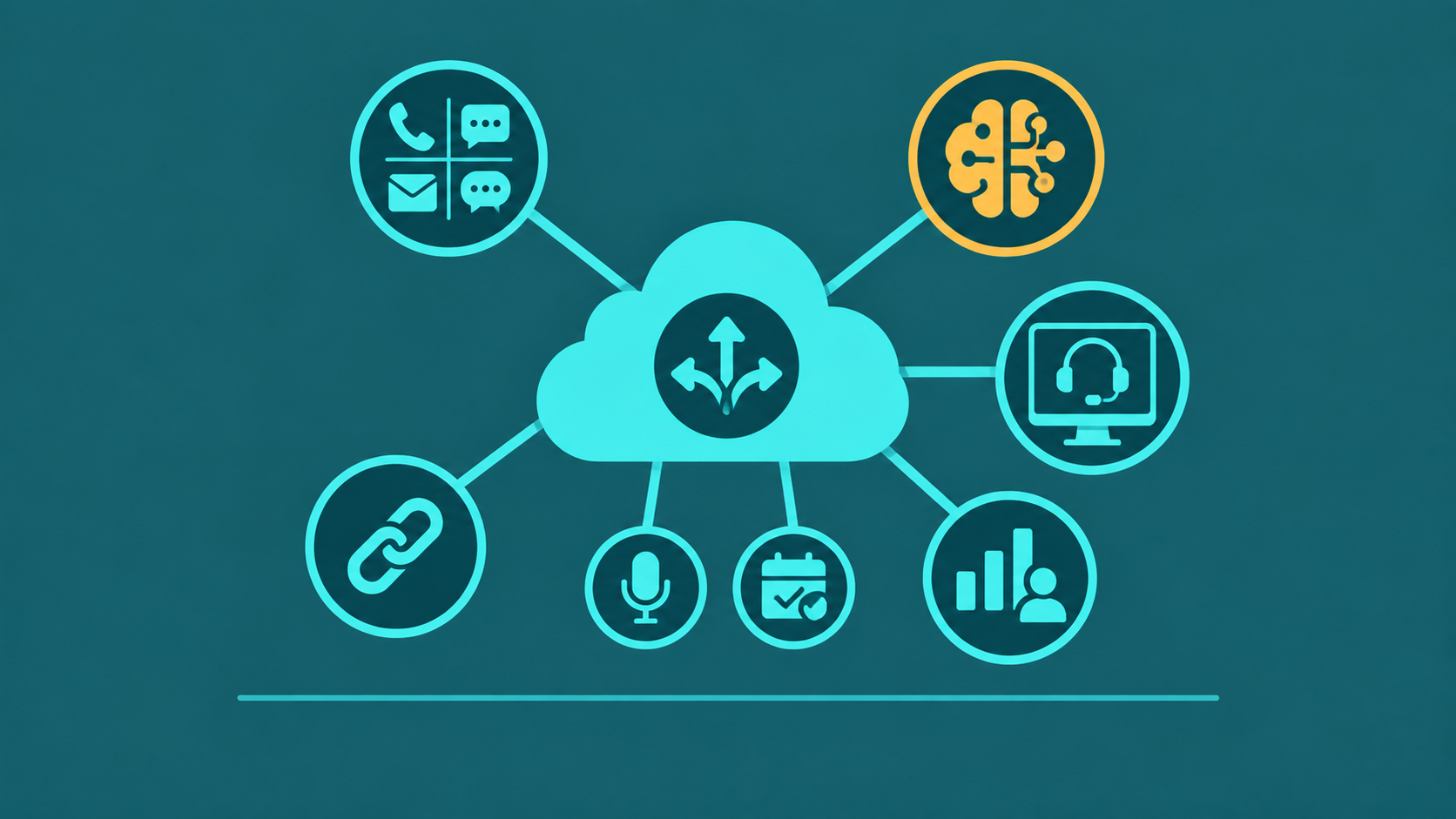
Some services also offer omnichannel customer service capabilities — managing email alongside live chat, social messaging, and SMS in a single queue. If your customers contact you across multiple channels, a unified omnichannel approach prevents the same inquiry from arriving twice through different channels without being recognised as related.
For businesses exploring automation, an AI receptionist can handle a portion of routine email inquiries automatically — acknowledging receipt, answering common questions, and routing complex cases to human agents — without dedicated staffing.
The 24/7 answering angle
The most common reason businesses seek email answering services is after-hours coverage. Customers do not limit their inquiries to business hours, particularly in B2C or high-consideration B2B contexts.
For some businesses, a 24/7 email answering service is the right solution — particularly when email is the primary inbound channel. For others, the real need is 24/7 call answering, and email is secondary. In that case, a call-focused solution with a full-featured IVR is often more cost-effective than a full email answering engagement.
The underlying question is: which channel do your customers actually use when they have an urgent need? If the answer is phone, invest there first. If email generates significant after-hours volume, that is where coverage is needed. Some businesses pair email answering with an SMS answering service to cover customers who prefer text messaging over email for faster, shorter exchanges.
How IVR and call routing complement email answering
Many businesses find that some portion of "email inquiries" are actually customers who tried calling, could not get through, and fell back to email. Reducing that fallback rate — by ensuring calls are answered or at minimum handled intelligently — reduces the downstream email volume that needs managing. A well-configured service reception setup ensures inbound calls are greeted, routed, and handled before customers resort to email as a fallback.
An IVR system that routes callers to self-service options, schedules callbacks, or takes structured voicemail responses handles a portion of inquiries that would otherwise become emails. A multi-level IVR extends this further — qualifying callers, routing to specialists, and capturing information before connecting to an agent.
For businesses that want 24/7 call coverage alongside email handling, a cloud business phone system with IVR, voicemail-to-email, and call routing handles the phone channel, while a separate or integrated email tool handles the email channel. The goal is ensuring no customer inquiry — regardless of channel — falls into a gap.