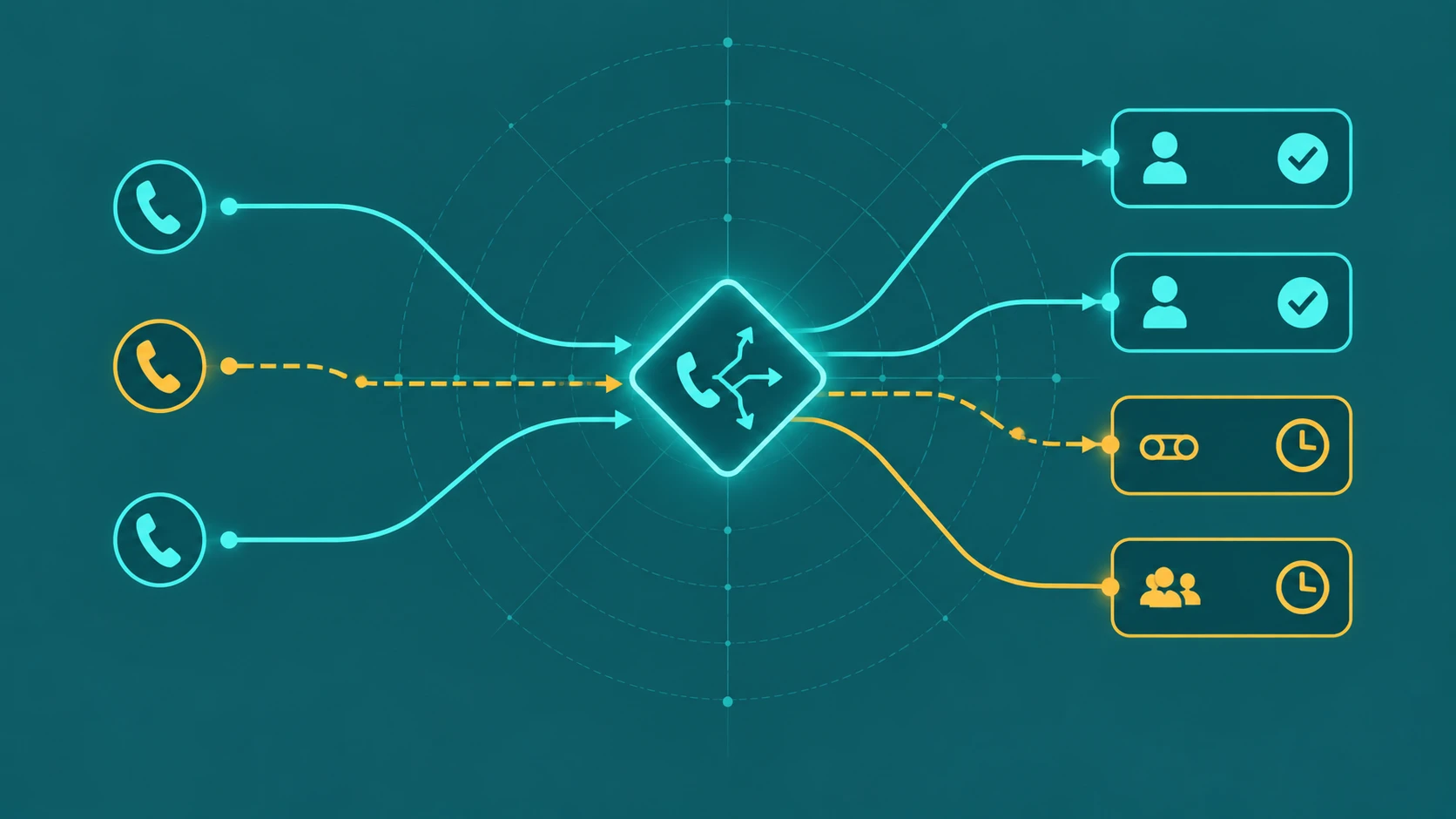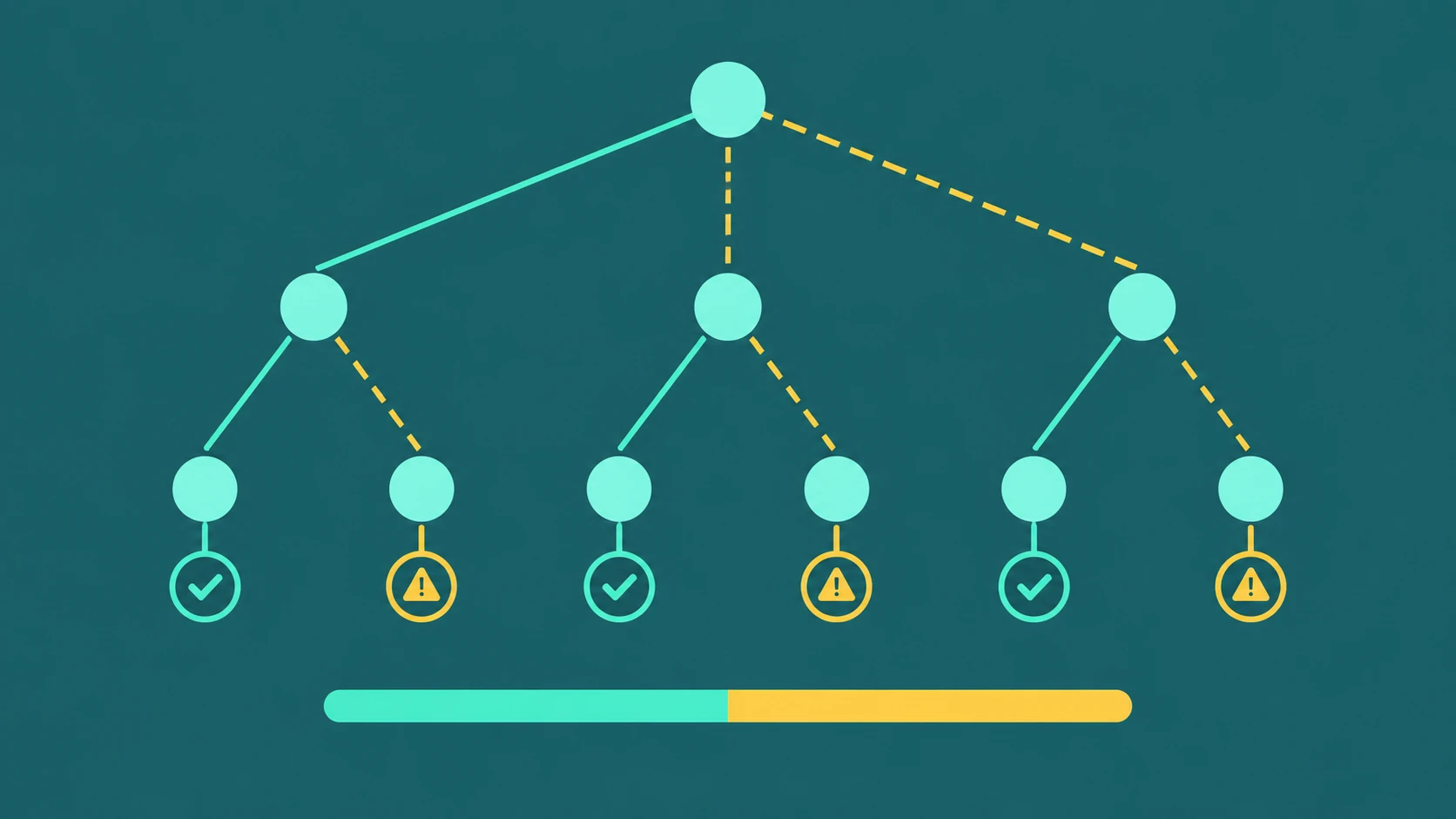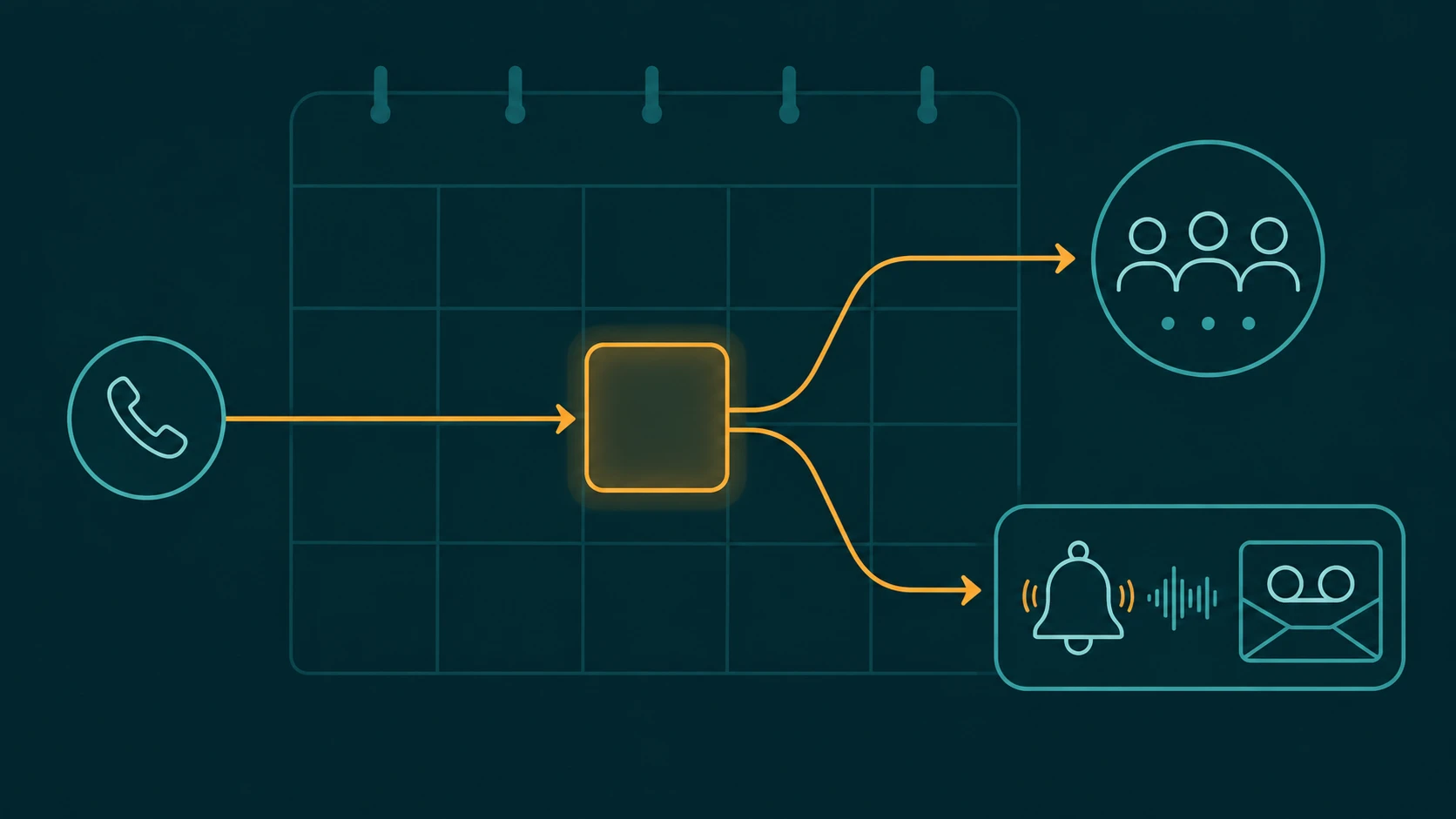
Call queues and call forwarding both move incoming calls from where they landed to where they need to go. That surface-level similarity makes the two easy to conflate — but they solve different problems, at different scales, with different implications for the caller experience.
Choosing between them — or deciding when to use both together — comes down to a practical question: is this call going to one specific destination, or does it need to reach one of several people based on who is available?
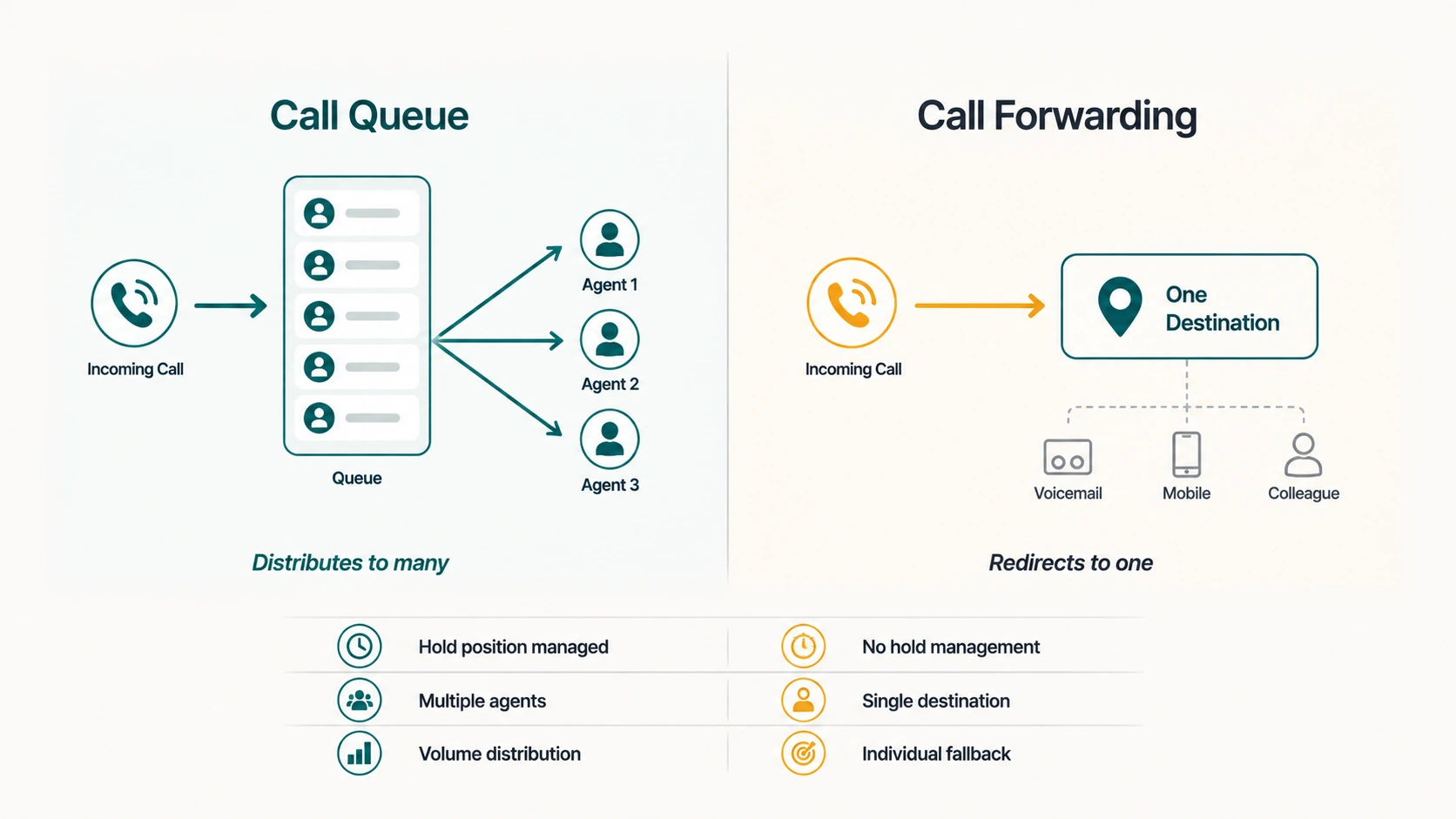
The core difference: A call queue holds callers in a managed wait line and distributes calls across multiple available agents using a defined routing strategy. Call forwarding redirects a call to a single alternative destination — another number, a voicemail box, or a different user — based on a condition such as no-answer, busy, or outside business hours. Queues handle volume across a team; forwarding handles individual-line fallback.
What Call Forwarding Does
Call forwarding is a rule applied at the number or extension level. When a call arrives at a destination and a configured condition is met — no answer after a timeout, the line is busy, or the call arrives outside business hours — forwarding redirects it to a pre-configured alternative.
The key characteristic of call forwarding: it redirects to one place. The caller is sent to a single destination — another number, another extension, or voicemail. There is no queue, no wait line, no agent selection logic. If that one destination also does not answer, the call follows that destination's own rules.
Forwarding types most commonly used in business settings:
- Unconditional forwarding: All calls are immediately redirected, no ringing at the original destination.
- No-answer forwarding: The original destination rings for a set time, then redirects if not answered.
- Busy forwarding: Calls redirect when the original line is already in use.
- Business hours forwarding: Calls outside configured hours go to a different destination — voicemail, an answering service, or an on-call number.
For a full treatment of forwarding types and how they work, see our guide on call forwarding.
What a Call Queue Does
A call queue manages multiple callers waiting to reach a group of agents. When a call arrives and agents are busy, the caller enters a hold line with a defined position. The queue tracks that position, plays hold music or messages, announces wait time or position, and connects callers to agents as they become available — using a routing strategy like Round Robin, Longest Idle, or Ring All.
The key characteristic of a call queue: it distributes across many people. Multiple callers can wait simultaneously, and the next available agent — not a pre-defined single destination — takes the call. The queue manages fairness, distribution, and wait experience in a way that forwarding cannot.
For a full explanation of how queues work — including routing strategies and overflow handling — see our guides on call queues and queue overflow.
Direct Comparison
| Dimension | Call Queue | Call Forwarding |
|---|---|---|
| Number of destinations | Many agents in a pool | One alternative destination |
| Routing logic | Round Robin, Longest Idle, Ring All, Serial | No selection — single redirect |
| Wait experience | Hold music, position announcements, wait management | Immediate redirect — no managed wait |
| Multiple simultaneous callers | Yes — queue holds many callers at once | No managed position — each call redirects independently |
| Agent availability | Queue tracks and distributes based on who is free | No availability awareness — forwards regardless |
| Reporting depth | Queue metrics: wait time, abandonment, service level | Call logs at number/extension level; less granular |
| Business hours | Typically controlled by IVR/schedule, with overflow for after-hours | Business hours forwarding handles after-hours redirects |
| Fallback behavior | Overflow rules (timeout, capacity) with configured destinations | Destination's own no-answer rules apply if redirect also misses |
| Typical use case | Support teams, sales teams, departments with multiple agents | Individual extensions, personal fallback, after-hours redirects |
When a Queue is the Right Tool
A queue is appropriate when:
- Multiple people handle the same type of incoming call and workload should be distributed fairly.
- Simultaneous call volume is high enough that callers need a managed hold experience rather than an immediate redirect.
- You need visibility into how many people are waiting, how long they wait, and how many abandon.
- A routing strategy (Longest Idle, Round Robin) is needed to ensure consistent agent workload.
- The team size and call volume justify queue management overhead — typically a team of three or more people handling shared inbound calls.
When Forwarding is the Right Tool
Forwarding is appropriate when:
- Calls need to reach a specific person — not any available person — and a backup destination is needed only if they do not answer.
- A direct line needs a simple fallback: voicemail, mobile number, or another colleague.
- After-hours calls need to go somewhere specific — an answering service, a shared voicemail, or an on-call mobile — without complex routing logic.
- The call volume or team size does not justify the overhead of a full queue configuration.
How Queues and Forwarding Work Together
In practice, most business phone setups use both — at different stages of the call flow. An incoming call might:
- Arrive at the IVR, which uses business hours rules (effectively a form of time-based forwarding logic) to route during-hours calls to a queue and after-hours calls to voicemail.
- Enter the queue, where agents handle it using a routing strategy.
- If the queue timeout fires, overflow rules redirect the call — which may include forwarding to an external answering service or voicemail.
- If the overflow destination is an individual extension, that extension may have its own no-answer forwarding to a backup user or voicemail.
The queue manages the shared holding and distribution. Forwarding handles the individual-level fallback at each stage.
Real-World Examples
Five-person support team
All inbound support calls go to a shared queue. The queue distributes calls using Round Robin so every agent handles roughly equal volume. The queue has a 5-minute timeout — calls that exceed it go to a shared support voicemail. Individual agents' personal extensions have no-answer forwarding to that same shared voicemail, so calls that reach them directly when they are unavailable also land in the same monitored inbox.
Two-person sales team
Sales calls go directly to Agent 1's DID. If Agent 1 doesn't answer in 20 seconds, no-answer forwarding sends the call to Agent 2. If Agent 2 also doesn't answer, the call goes to a sales-team voicemail with a same-day return-call commitment. No queue is necessary — the team is small enough that sequential forwarding serves the purpose.
Remote freelancer
A self-employed consultant uses unconditional forwarding to send all calls from her business number to her mobile. No queue is needed — there is one person. When she is unavailable, the call follows her mobile's voicemail settings. Forwarding is the entire routing architecture.
Eight-person inbound sales team
A product company routes all inbound sales calls to a queue using Longest Idle routing to ensure experienced agents get equitable call volume. The queue timeout is 3 minutes — overflow sends callers to a callback request flow rather than voicemail, since sales leads who wait 3 minutes without being answered are too valuable to lose to voicemail. Each agent's personal extension has separate forwarding rules for their individual outbound and direct calls.
A Note on Ring Groups
Ring groups are worth mentioning alongside queues and forwarding because they sit between the two. A ring group rings multiple phones simultaneously (like Ring All in a queue) but without queue management, hold positions, wait-time tracking, or overflow configuration. Ring groups are simpler to configure than queues and are appropriate for small teams where simultaneous ringing is the main requirement. They do not replace queues when volume or reporting depth is needed. Our guide on Ring All vs Round Robin covers the routing strategy comparison in more detail.
Frequently Asked Questions
Can call forwarding handle the same volume as a queue?
Not in the same way. Forwarding redirects each call to one destination. If that destination is busy, the call follows that destination's own rules — there is no managed wait line. A team receiving high simultaneous call volume will handle it better with a queue because callers can wait in an organized line rather than each independently hitting a busy signal or a second-level forwarding chain.
Is a ring group the same as a call queue?
No. A ring group rings multiple phones simultaneously without managing hold positions, routing strategies, wait-time announcements, or overflow configuration. A call queue provides all of those features. Some platforms blur the line between ring groups and queues by adding call queuing to ring groups (for example, placing callers on hold when all ring group members are busy), but the two remain distinct concepts.
Which is better for a small business — a queue or forwarding?
Neither is universally better; the right answer depends on volume and team size. A business with one or two people handling calls typically does not need a queue — forwarding handles the fallback adequately. A business with three or more people handling shared inbound calls, or with enough volume to create simultaneous hold situations, benefits from a queue. Many small businesses use both: a queue for shared lines and forwarding for individual extension fallback.
Does call forwarding work when the business is closed?
Yes. Business hours forwarding is one of the most commonly used forwarding types — it routes calls received outside configured hours to an after-hours destination like voicemail or an answering service. See our guide on after-hours routing for how this is typically configured and what destination options are available.
What happens to queue overflow — does it use forwarding?
Queue overflow routes callers to a configured destination when the queue is full or the timeout fires. That destination may be voicemail, another queue, or an external number — but the mechanism is queue overflow configuration, not traditional call forwarding. The distinction matters for reporting: overflow events are tracked as queue events, not as forwarded calls at the user level. See our guide on call queue overflow for how overflow configuration works.