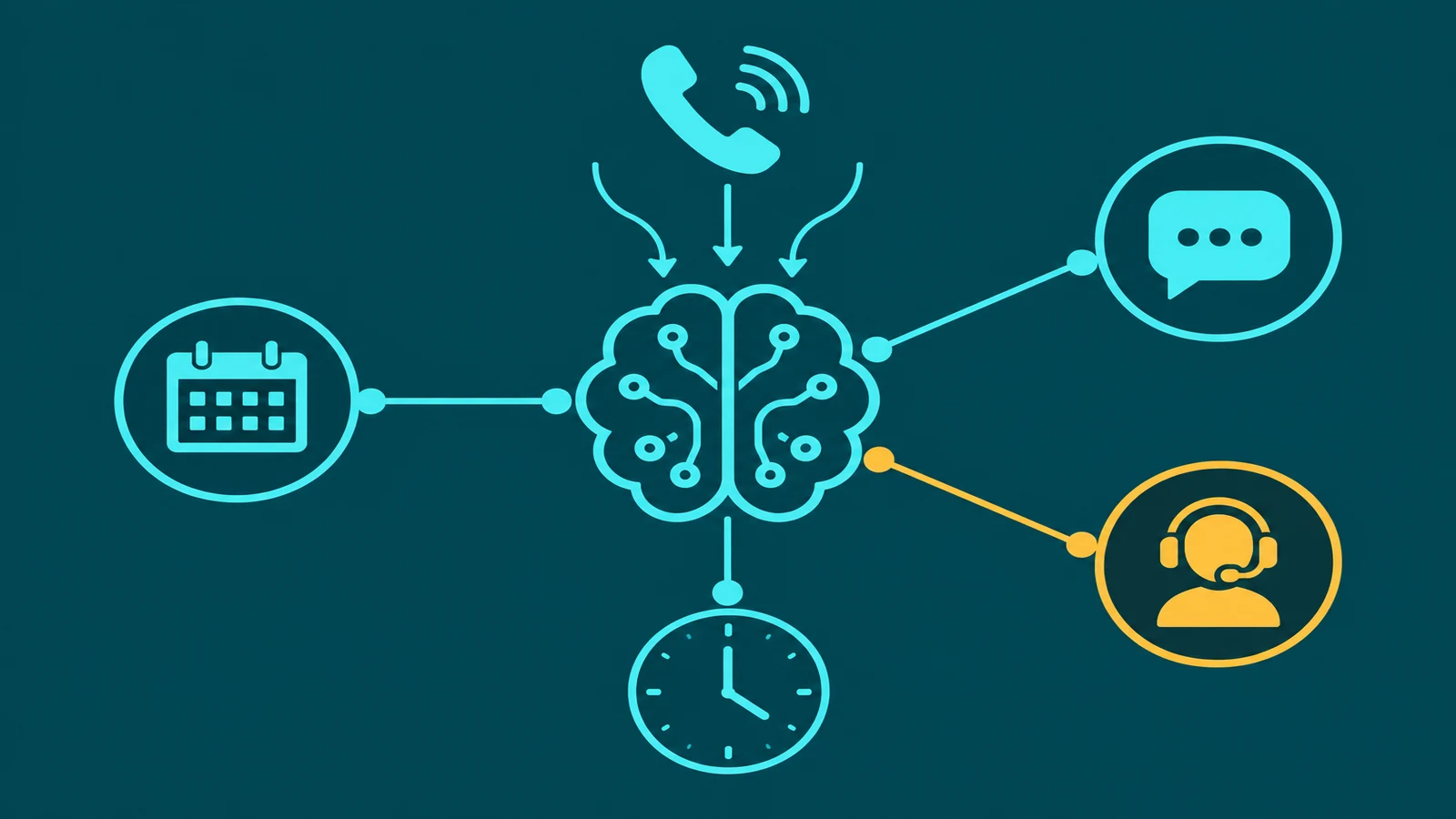

Speech analytics is the process of converting contact center call audio into structured data — transcripts, topic tags, sentiment scores, compliance flags, and agent behavior indicators. It encompasses both real-time processing (during the call) and post-call analysis (after the call ends), and is the data layer that makes automated quality management, coaching, and trend analysis possible.
Contact centers generate voice data at a volume no human QA process can fully review. Manual QA programs can only sample a fraction of all interactions — the rest are invisible to the coaching and compliance process. Speech analytics changes the math: every recorded call becomes a data point. This guide covers how speech analytics works technically, what it measures, where it is reliable and where it isn't, and how to evaluate vendors.
How speech analytics works
The transcription layer
The first step in any speech analytics pipeline is converting audio to text. Automatic speech recognition (ASR) engines process the audio stream and produce a transcript, typically with speaker diarization — separating what the agent said from what the caller said. Transcript quality is the ceiling for everything downstream: topic detection, sentiment scoring, and compliance checks all operate on the transcript, not on the raw audio. Poor ASR accuracy means inaccurate downstream analysis.
ASR accuracy varies by audio quality, speaker accent, speaking rate, vocabulary domain, and background noise. Most commercial systems perform well on clear, quiet audio from native English speakers in common vocabulary domains. Accuracy degrades on technical jargon, regional accents, code-switching, and calls recorded over lossy codecs. Before selecting a vendor, test ASR accuracy specifically on a representative sample of your actual call recordings — not on vendor-provided demos.
Topic detection and call categorization
Once a transcript exists, topic detection identifies what the call was about. This can be rule-based (keyword matching: if "billing dispute" appears, tag the call as billing), ML-based (a classifier trained on your call history assigns a topic), or a combination. Topic detection enables call categorization — routing QA attention, building trend reports (how many calls per week involve a specific product issue), and triggering follow-up workflows.
The accuracy of topic detection depends on how well the categories match the actual distribution of your calls and how consistently those topics are expressed by callers. Novel phrasings and cross-topic calls (billing dispute that becomes a churn risk) require classifier retraining or more sophisticated intent models. Plan for ongoing maintenance rather than a one-time setup.
Sentiment and emotion analysis
Sentiment analysis labels the emotional tone of transcript segments — positive, neutral, or negative — and tracks how it changes over the course of a call. At the call level, sentiment trend (did the caller leave the call more frustrated than they started?) is a more useful signal than a single call-level score. At the segment level, detecting a negative sentiment spike during a specific call stage (e.g., during the price disclosure) surfaces interaction design problems.
Text-based sentiment analysis is reasonably reliable. Voice-based emotion detection — inferred from prosody, pitch, and speaking rate rather than word content — is harder. Models trained on one demographic or recording environment don't always generalize. Use sentiment data directionally for trend analysis and flagging rather than as a precise per-call measurement. See call sentiment analysis for a deeper treatment of how sentiment scoring works and where it applies.
Compliance and script adherence monitoring
Compliance monitoring is the most deterministic speech analytics application. It checks whether specific phrases were said (required disclosures, mini-Miranda in debt collection, TCPA consent language, greeting scripts) and whether prohibited language was used. This is a keyword/phrase matching problem, and it is highly reliable when the required language is well-defined and verbatim.
Script adherence monitoring extends this to call flow: did the agent follow the scripted sequence? Was the discovery phase completed before the pitch? Did the agent attempt an upsell before handling the primary issue? Script adherence analysis requires a more sophisticated understanding of call structure than simple phrase matching, and its accuracy depends on how consistently the expected flow is expressed in transcripts.

Real-time vs post-call speech analytics
Real-time processing
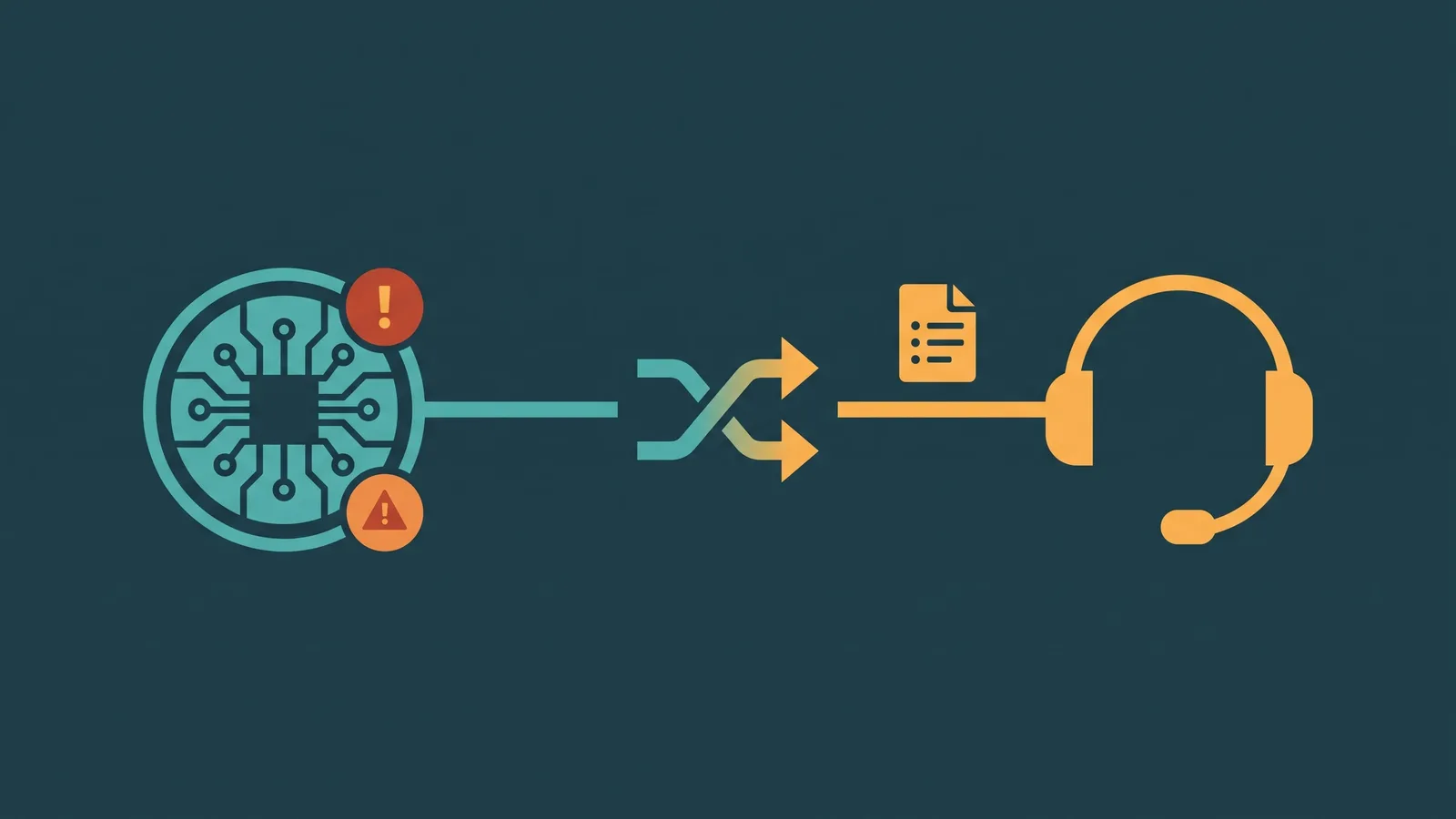
Real-time speech analytics processes the call as it happens and surfaces findings to the agent or supervisor during the interaction. Use cases include: compliance alerts (flag when a required disclosure is missed), agent assist prompts (surface a relevant KB article when a topic is detected), supervisor alerts (flag a call showing escalation patterns for live monitoring), and sentiment monitoring (alert supervisors to calls where caller frustration is increasing).
Real-time processing requires low-latency transcription infrastructure and adds system complexity. The value is highest for compliance-critical environments and for agent assist use cases where surfacing information during the call can change outcomes. The additional infrastructure cost is typically justified when compliance violations have significant per-incident cost, or when the agent assist use case has measurable handle time or CSAT impact.
Post-call analysis
Post-call analysis processes recordings after the call ends. All the same analytical layers apply — transcription, topic detection, sentiment, compliance — but the results feed QA workflows, coaching queues, and trend reports rather than in-call interventions. Post-call analysis is simpler to implement than real-time processing (no latency constraints), less expensive, and sufficient for most QA and trend analysis use cases.
For organizations primarily interested in QA coverage expansion, coaching prioritization, and operational trend analysis, post-call analysis is the right starting point. Real-time processing adds value incrementally and can be layered on later.
What speech analytics measures: key outputs
| Output | What it measures | Reliability |
|---|---|---|
| Transcript accuracy | Word error rate of the ASR output | High for clear audio; degrades with noise, accent, jargon |
| Call topic / category | What the call was about (billing, support, sales) | High for well-defined categories with consistent language |
| Sentiment trend | Emotional tone trajectory across call stages | Moderate — directional for trends, not precise per-call |
| Compliance phrase detection | Required and prohibited language presence | High for verbatim language; lower for paraphrase |
| Agent talk ratio | Proportion of speaking time, agent vs caller | High — derived directly from diarization output |
| Silence and hold time | Dead air duration and frequency | High — derived from audio waveform directly |
| Interruption frequency | How often agent and caller talk over each other | High — derived from diarization overlap detection |
| Script adherence score | Whether call followed expected flow | Moderate — depends on flow consistency in transcripts |
Speech analytics and quality management
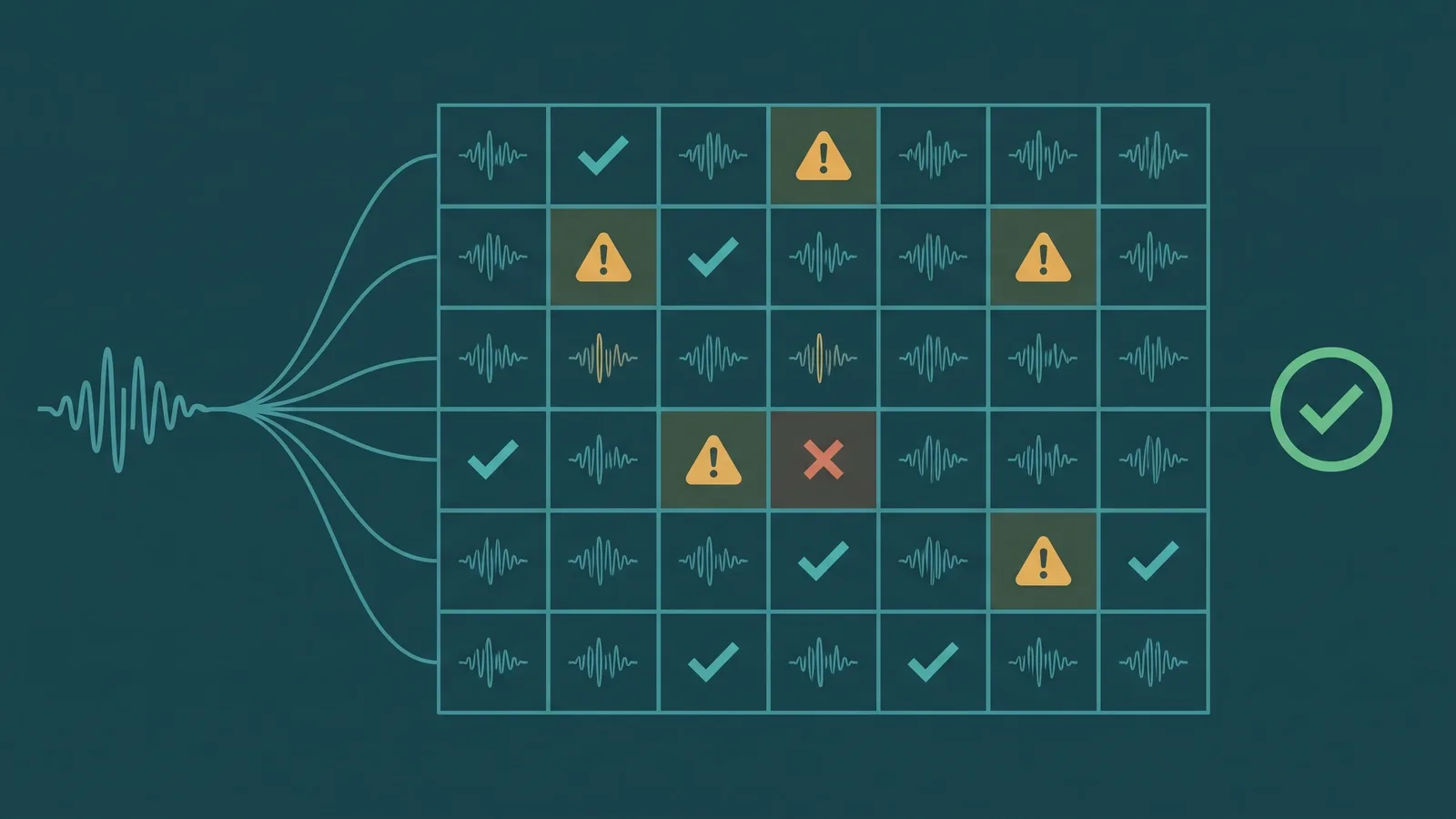
The primary operational use of speech analytics is expanding QA coverage. Manual QA programs can only review a small fraction of interactions — the exact share varies with team size, handle time, and tooling, but most interactions are not reviewed at all. Speech analytics scores every recorded call against a defined set of criteria, then routes calls to human reviewers based on score — flagged calls, borderline scores, and calibration samples. Reviewers spend time on calls that need human judgment rather than reviewing a random sample that mostly confirms what agents are already doing correctly.
The quality of automated scoring depends entirely on the scorecard criteria it is scoring against. Criteria must be specific enough for a transcription-based system to evaluate consistently. "Agent was empathetic" is not scoreable from a transcript. "Agent used the caller's name at least once during the call" is. Structuring scorecards for AI scoring is a different discipline than structuring them for human evaluation — see call center QA scorecards for how to design criteria that produce consistent scores. For the calibration process that aligns automated and human scoring, see QA calibration.
Speech analytics also enables trend analysis that manual QA sampling cannot. Because every call is processed, you can identify which call topics correlate with poor CSAT, which agents consistently miss specific disclosures, which call stages produce the most caller frustration, and which product issues are generating a surge in contacts. This operational intelligence informs training, routing design, and product decisions — not just individual coaching conversations.
Integration with call recording
Speech analytics requires access to call recordings. The integration model depends on whether recording is cloud-native or on-premise, and whether the speech analytics engine is embedded in the CCaaS platform or a separate vendor. Cloud CCaaS platforms with embedded speech analytics route recordings to the analytics engine automatically. Third-party speech analytics vendors require either API access to the recording storage or a real-time audio stream for real-time processing.
Recording quality directly affects analytics accuracy. Calls recorded at low bitrates, with heavy compression, or with audio issues (echo, clipping, background noise) produce less accurate transcripts. Dual-channel recording — capturing the agent and caller on separate audio channels — improves diarization accuracy and enables channel-specific analysis. For a detailed treatment of recording infrastructure, storage, and compliance requirements, see call recording for contact centers and call monitoring vs call recording.
EaseDial AI Quality Management
Automated scoring, compliance monitoring, and coaching queues — on every call, not just the 3% you sample.
Evaluating speech analytics vendors
The vendor landscape includes CCaaS platforms with embedded speech analytics (Genesys, Five9, NICE, Talkdesk), standalone speech analytics vendors (Verint, CallMiner, Tethr), and AI-native entrants. Key evaluation criteria:
- ASR accuracy on your call population. Request a proof-of-concept on a representative sample of your actual recordings before committing. Vendor demos use their best-performing audio. Your calls may be noisier or more accent-diverse.
- Real-time vs post-call support. If you need in-call agent assist or supervisor alerting, verify the vendor supports real-time processing at the latency your use case requires.
- Scorecard customization. Can you define custom QA criteria, or are you limited to the vendor's pre-built scoring model? Custom criteria require ongoing maintenance but allow the scoring to reflect your specific compliance and quality requirements.
- Integration with your recording and CCaaS infrastructure. Verify the data handoff path — how recordings reach the analytics engine, in what format, and with what latency.
- Calibration and model maintenance. Ask who is responsible for retraining classifiers as your call topics and language evolve. A model accurate at deployment will drift without maintenance.
- Data residency and compliance. Call recordings contain PII. Verify that the vendor's data residency, retention, and deletion policies meet your regulatory obligations.
Where speech analytics is still limited
Sarcasm and nuanced language
Sentiment models struggle with sarcasm, irony, and culturally specific expressions. A caller saying "Oh, that's just great" after being told their issue can't be resolved will typically be scored as positive sentiment. Human reviewers recognize the context; transcript-based models frequently don't. For calls where nuanced emotional tone matters for outcomes, human review remains necessary alongside automated scoring.
Cross-channel conversations
A caller who complained on chat yesterday and is now calling in about the same issue presents context that speech analytics can only partially reconstruct from the call transcript. Full journey context requires integration between speech analytics and CRM/interaction history systems. The integration is technically feasible but adds implementation complexity and data governance requirements.
Novel language and vocabulary drift
Product launches, policy changes, and external events introduce new terminology that classifiers weren't trained on. A new product name, a competitor acquisition, or a regulatory change can make existing topic models less accurate overnight. Plan for a model maintenance cycle tied to major business events — not just an annual review.
Frequently asked questions
Getting started with speech analytics
The lowest-risk entry point is post-call compliance monitoring on a defined set of required disclosures. This use case is deterministic, produces immediate measurable value (compliance violation rate), and requires no model training — it is keyword matching on verbatim language. Expand to topic classification and sentiment trending once the compliance layer is validated. Add real-time processing only when the agent assist or supervisor alerting use case has a clear measured outcome to improve.
For the broader AI in contact centers picture — how speech analytics fits alongside AI voice agents, agent assist, and workforce management tools — see AI in contact centers. For the analytics and reporting layer that speech analytics feeds, see contact center analytics.