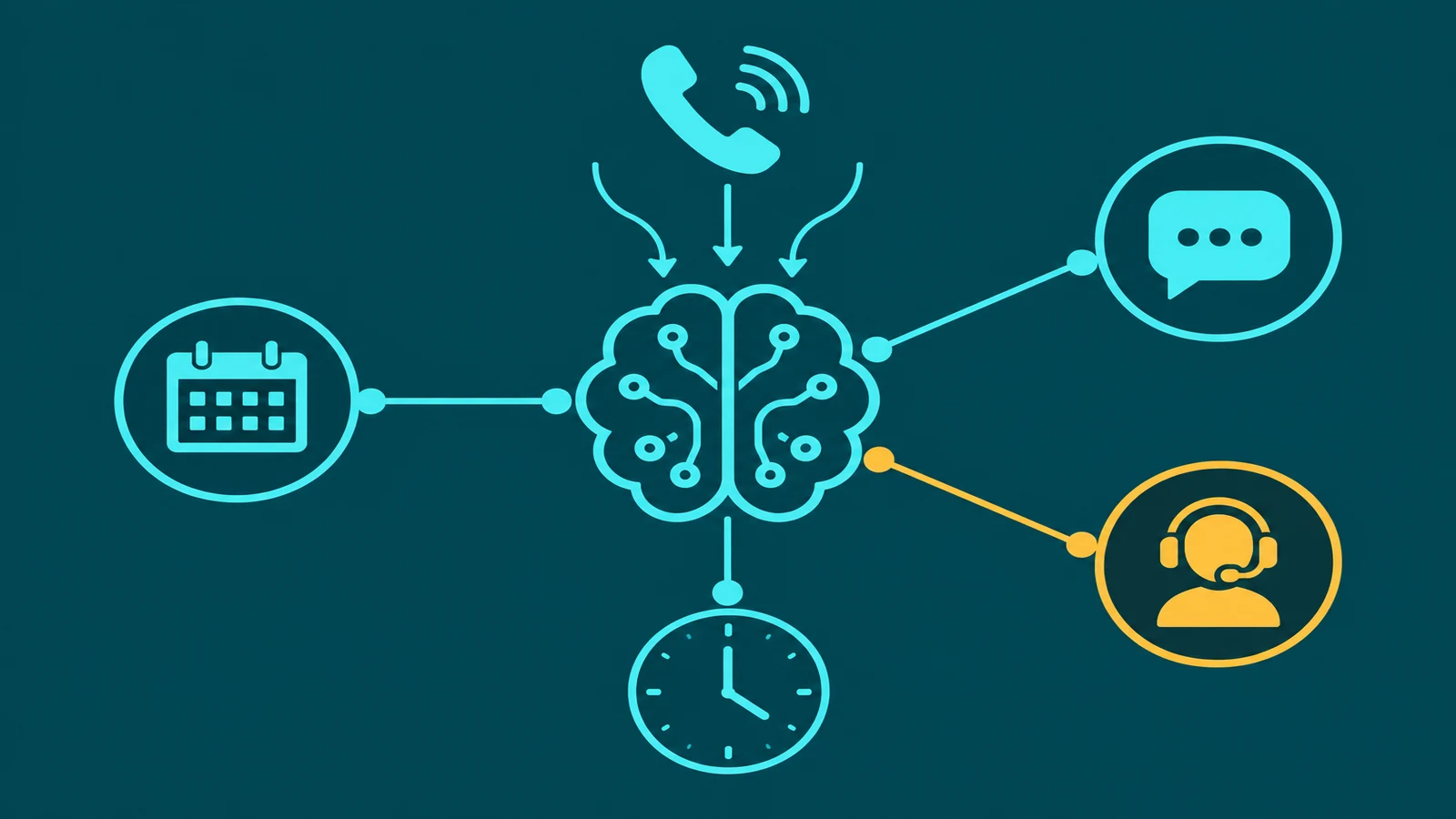
An AI voice agent that handles routine calls well but fails at handoffs creates a worse customer experience than one that never answered in the first place. The caller has already invested time explaining their situation to the AI — and if they suddenly find themselves repeating everything to a human who knows nothing about the conversation, confidence in the service collapses.
Designing a reliable AI voice agent handoff to a human is not a single configuration switch. It requires deliberate trigger logic, a well-structured context package, a smooth transfer mechanism, and a fallback strategy for when no agent is available. And it requires testing every one of those paths before you go live. This guide covers each step.
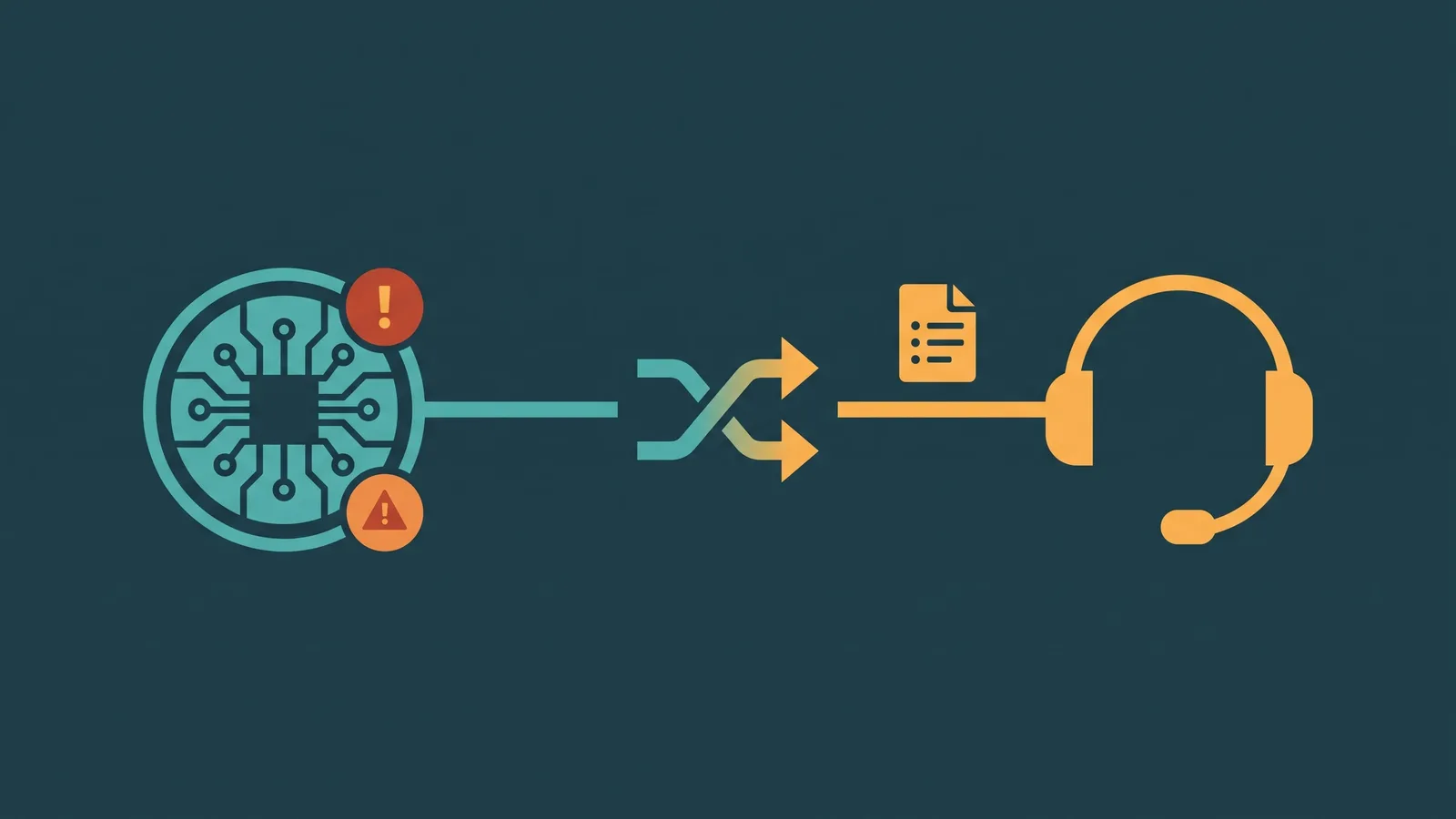
What is an AI voice agent handoff? An AI-to-human handoff is the process by which an AI voice agent transfers an active phone call to a live agent — along with the conversation context — when the AI determines it cannot or should not continue handling the call. The goal is for the receiving agent to pick up informed, so the caller does not need to re-explain.
Why Handoff Design Matters More Than Handoff Rate
A common instinct when deploying an AI voice agent is to minimize how often it hands off to a human. Lower handoff rates look like efficiency on a dashboard. But optimizing for a low handoff rate at the cost of handoff quality is a mistake. A caller who reaches a human agent who already has the transcript, the detected intent, and the relevant account data feels well served — even though the AI "failed" to handle the call fully. A caller who reaches an agent with no context, after thirty seconds of silence and a confusing transfer, feels abandoned.
The better measure is whether the handoffs that do happen are smooth. Compare it to the distinction between an AI receptionist and a human receptionist: the AI's job is not to replace every human interaction, but to handle what it can and hand off the rest without friction.
Trigger Rules: When Should the AI Hand Off?
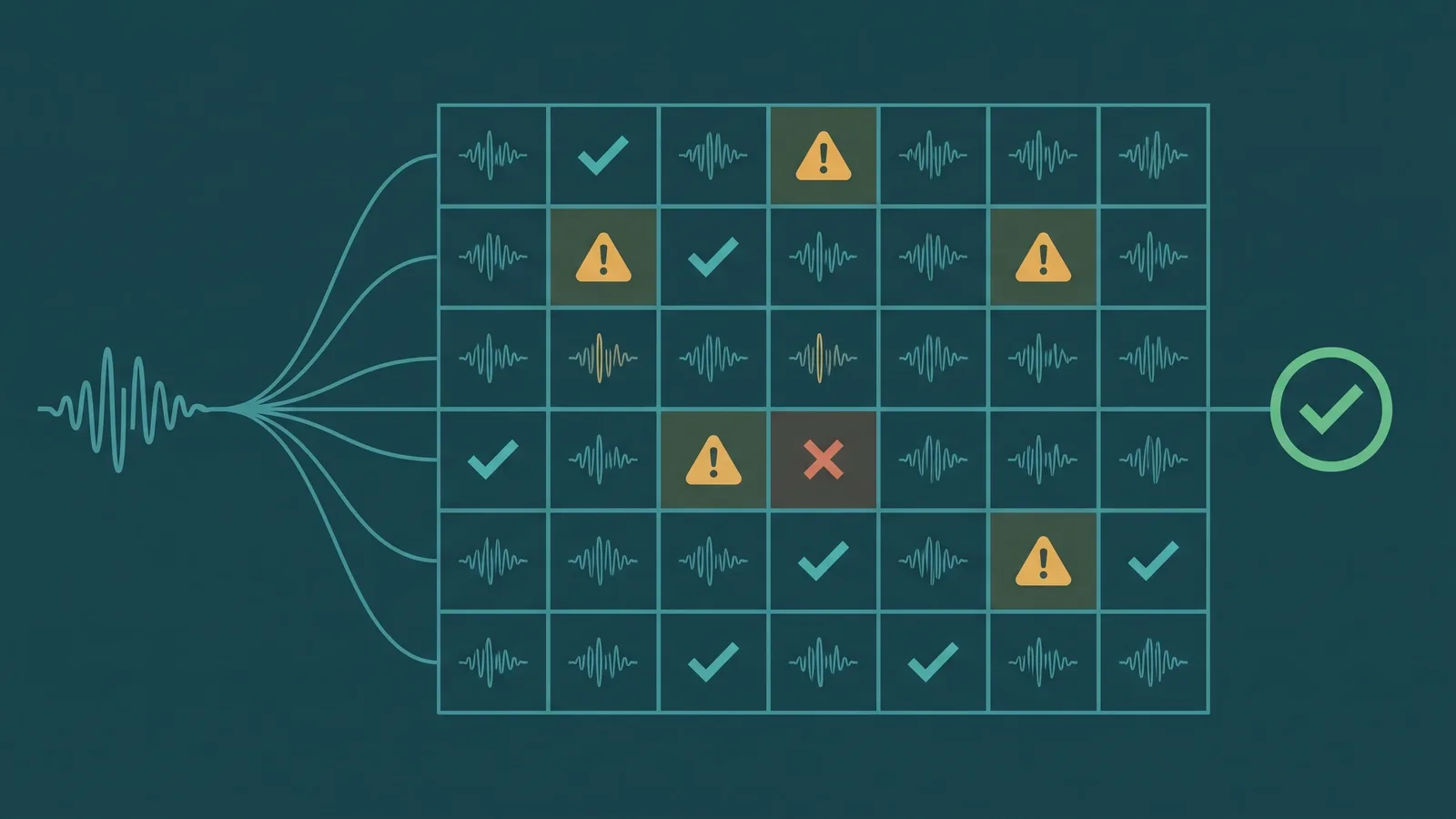
The handoff trigger is the most consequential design decision in the entire system. Trigger too early, and the AI adds no value. Trigger too late, and frustrated callers have already given up. There are six main trigger categories worth designing for explicitly:
| Trigger Type | Description | Notes |
|---|---|---|
| Confidence threshold | AI's internal confidence in understanding the caller's intent drops below a configured threshold | Threshold is deployment-defined; lower is more conservative |
| Explicit caller request | Caller says "talk to a person," "give me a human," "let me speak to someone" | Must trigger immediately — not after another AI turn |
| Sentiment detection | Negative sentiment or frustration signals detected in caller voice or language | Combine with other signals to avoid false positives |
| Repeated intent failure | AI has failed to understand or fulfill the same intent two or three times in a row | Set a fixed retry limit; do not loop indefinitely |
| Policy-mandated topic | Conversation topic requires human handling — legal disputes, medical advice, complex billing disagreements | Define policy topics explicitly; do not rely on AI judgment alone |
| Emergency keyword | Caller uses words indicating a genuine emergency (e.g. medical emergency, safety threat) | Emergency keywords should bypass AI and route directly — not via standard handoff. This includes 911 guidance |
A special note on the emergency trigger: it is not a standard handoff. If a caller uses clear emergency language, the call should not go through the normal handoff queue — it should route directly and immediately. Do not treat emergency escalation as one trigger among many.
For explicit caller requests, the AI must honor these immediately. A caller who has just said "I want to speak to a human" and is then subjected to another AI response — even a sympathetic one — experiences that as a refusal. The handoff should begin in the same conversational turn.
Building the Context Package
The context package is what the AI transfers to the receiving agent alongside the call audio. Without it, a handoff is just a blind transfer with extra steps. What goes into the context package is a deployment decision — it is not automatically assembled, and it is not automatic just because the conversation happened. You have to configure it.
A well-designed context package typically includes the following elements:
- Full conversation transcript — everything the AI and caller said, in order. This is the primary artifact. The receiving agent should be able to skim it in under thirty seconds.
- Detected intent — what the AI understood the caller to be trying to accomplish. Even if the AI couldn't complete the task, knowing the intent saves the agent from re-establishing it.
- Caller identification — caller ID, any account lookup the AI performed, authenticated identity if applicable.
- Tool call results — if the AI made API calls during the conversation (account lookup, order status check, appointment availability), include the results. The agent should not have to re-query what the AI already retrieved.
- Handoff reason — which trigger fired. An agent receiving a call where sentiment-detection triggered the handoff needs to know they are receiving a frustrated caller, not a routine query.
- Current queue state — which queue the call is entering, expected wait position if relevant, so the agent receiving it has context about what the caller may have heard.
One critical limitation: if the AI was not configured to capture context from the start of the call, it cannot reconstruct that context retroactively at handoff time. The context package design must be part of the initial deployment, not an afterthought added when handoffs start failing.
Transcripts passed to agents may contain personally identifiable information — caller name, account numbers, addresses, health details if relevant. Treat the context package like any call recording: apply your organization's redaction and retention policies before logging or archiving it.
Warm Transfer Mechanics for AI-to-Human Handoffs
There are two main transfer approaches: blind (cold) transfer and warm transfer. Our article on warm transfer vs cold transfer breaks down the comparison in a human-to-human context. In an AI-to-human scenario, the same distinction applies — but the mechanics differ because the "transferring party" is software.
A blind transfer from an AI simply connects the caller to a queue or extension and drops the AI from the call. The context package may still arrive separately via a screen pop or CRM update, but the caller experiences an abrupt transition — and if the context doesn't arrive before the agent picks up, the agent starts without it. Blind transfers are simpler to implement but produce the worst caller experience.
A warm transfer has the AI stay on the call — or bridge the call — during an announce phase before the agent fully takes over:
- The AI announces to the caller that it is connecting them to a specialist. The caller hears this — they should never experience dead silence as the transfer initiates.
- The AI whispers a summary to the receiving agent before the caller audio connects. This is sometimes called a whisper message — the agent hears a brief context briefing that the caller cannot hear.
- The agent acknowledges (or the whisper completes), and the AI connects the caller's audio and disconnects itself.
Some platforms support a variant where the AI bridges the call mid-stream and hands off while both audio streams are live. In either case, the receiving agent should hear context before the customer's first word — not after.
Customer Announcement: What the Caller Needs to Hear
The moment between the AI deciding to hand off and the caller reaching a human is the most failure-prone segment of the entire interaction. Callers who hear dead silence assume the call has dropped. Callers who hear hold music with no explanation assume they've been abandoned to a queue for an unknown reason.
Before initiating any transfer, the AI must announce the handoff explicitly. The announcement should:
- Tell the caller they are being connected to a live agent (not just "please hold")
- Briefly confirm what the issue is — "I'm connecting you with a billing specialist who can help with your invoice" — so the caller knows the context has been captured
- Set a realistic expectation — not a specific wait time if that cannot be guaranteed, but at least that the caller will be connected shortly
- Play appropriate hold audio immediately after the announcement, not silence
This announcement is especially important when the handoff is triggered by caller frustration. A caller who is already irritated needs to hear that their request to speak to someone has been honored, not that the AI is still making decisions for them.
Queue Failure Fallback: When No Agent Is Available
The handoff flow assumes an agent is available to receive the call. What happens when no agent is available — the queue is full, wait times are excessive, or it is outside business hours? This is the path most teams leave undesigned until a caller complains about it. Our article on call queue overflow covers queue overflow specifically in full.
The four main fallback options, each with a different trade-off:
| Fallback Option | How It Works | Best For |
|---|---|---|
| Callback offer | AI offers to call the customer back when an agent becomes available; customer confirms number | High-volume environments; preserves caller time |
| Voicemail capture | Caller records a message; agent reviews and calls back. Context package stored alongside | Non-urgent topics; after-hours scenarios |
| Queue hold | Caller enters the queue and waits; AI plays hold audio and queue position updates | Urgent calls where caller prefers to wait |
| Escalation queue | Call moves to a secondary or overflow agent group with broader scope | When primary queue is unavailable but coverage must continue |
The AI should offer the fallback option clearly and let the caller choose — not silently reroute them to voicemail when they requested a human. If a callback is offered, confirm the callback number with the caller before ending the call, and deliver the full context package alongside the callback task so the agent who calls back has the same briefing a warm-transfer agent would have received.
Testing Your AI Voice Agent Handoff Paths
A handoff that works in a demo environment regularly fails in production because test scenarios don't cover edge cases. For a broader treatment of pre-launch AI voice agent testing, see our guide to testing your AI voice agent before launch. For handoff-specific testing, these are the paths you must cover:
- Each trigger condition independently. Test a confidence-threshold handoff, an explicit-request handoff, a sentiment handoff, and a repeated-failure handoff as separate test calls. Do not assume that testing one trigger validates the others.
- Context package completeness. After a handoff, check what the receiving agent actually sees — not what the system was configured to send. Verify the transcript is complete, the detected intent is accurate, and the tool call results are present.
- Agent-side whisper experience. Have someone act as the receiving agent and describe what they heard in the whisper. Does the summary give enough context to begin helping the caller immediately?
- Queue-full path. Simulate a full queue and confirm the fallback options are presented clearly. Verify the callback or voicemail path delivers the context package to the agent who follows up.
- Emergency keyword bypass. Confirm emergency keywords route directly, bypassing the standard handoff queue entirely, with no AI-turn delay.
- Mid-sentence interruption. During a test call, say "let me talk to someone" mid-sentence. Confirm the AI stops, acknowledges the request, and initiates the handoff without completing its current response.
One path that frequently fails in testing is the mid-sentence explicit request. AI systems that process speech in chunks can miss a handoff request buried inside a longer utterance, or delay acting on it until the current response completes. The handoff should fire on detection of the request, not at the end of the AI's next turn. Processing speed during handoff matters — if the transfer takes too long, callers experience dead air. See AI voice agent latency for how response timing affects caller experience and handoff reliability.
Closing the Loop After Handoff
A handoff is not the end of the AI's involvement — it is a transition point with downstream data implications. After a handoff completes, the call's disposition should flow back to the AI platform for analysis: which trigger fired, whether the context package was received, how long the human handle time was, and what the final outcome was. This data shapes your trigger threshold tuning, your context package design, and your staffing decisions for the queues that receive AI handoffs.
At a minimum, track handoff rate by trigger type. If explicit-request handoffs are the majority, the AI may be failing on topics it should handle. If sentiment-detected handoffs are low, the sentiment model may not be calibrated well for your callers' language patterns. Neither is automatically a problem — but both tell you something worth investigating.
Getting an AI voice agent handoff right is a design problem, not a feature problem. The technology to transfer a call with context exists. What separates smooth handoffs from jarring ones is deliberate trigger logic, a context package configured before the first call, a transfer mechanism that announces itself to the caller, and a fallback path for every scenario where no agent is immediately available. Test each of those paths before you go live — and treat handoff quality as a metric on equal footing with containment rate.
Frequently Asked Questions
How do you determine the right confidence threshold for AI-to-human handoff?
Confidence thresholds depend on the domain and risk level. High-stakes flows like billing disputes or medical triage typically use a lower threshold (triggering handoff sooner), while FAQ-style queries tolerate a higher threshold. Start with a conservative value, measure false-positive and false-negative handoff rates over a sample period, then adjust. There is no universal number — the threshold is a trade-off between automation rate and customer experience.
What happens to call context if the handoff fails mid-transfer?
If the transfer attempt fails — for example, due to no available agents or a network error — the system should fall back to a predefined path such as offering a callback, routing to voicemail, or holding the caller in queue. The conversation transcript and extracted context should be preserved regardless of the transfer outcome so that when an agent does connect, they have full history.
Should the AI continue listening after initiating a handoff?
Once a handoff is initiated, the AI should stop generating responses but may continue capturing the caller's speech for transcript purposes until the agent connects. This avoids confusing the caller with overlapping AI and agent speech while preserving any additional context the caller provides during the wait.