This is a decision guide — AI voice agent vs. traditional IVR: which to deploy and when. For a complete technical reference on IVR architecture, components, and call flow design, see IVR System: What It Is, How It Works and When to Use It. For AI voice agent architecture specifically, see AI Voice Agent: How They Work.
If your business takes inbound calls, you have probably used an IVR — the "press 1 for sales, press 2 for support" system that routes callers through a menu tree. For decades, IVR was the only practical way to automate phone interactions at scale. That changed when large language models, real-time speech recognition, and neural text-to-speech matured enough for production telephony use. Now there is a genuine choice: keep the menu tree, or replace it with a system that actually converses.
This article is a direct comparison. If you want a deeper explainer on how AI voice agents work from start to finish, see our AI voice agent guide. Here, the focus is on the decision: what each technology does, where each falls short, and how to figure out which one — or which combination — your operation actually needs.
The short answer: Traditional IVR routes callers to answers using keypad menus. An AI voice agent resolves calls directly through open-ended conversation. IVR self-service tops out at roughly 10–30% containment. AI voice agents typically contain 60–80% of calls without human involvement — the difference is not incremental.
What each technology actually does
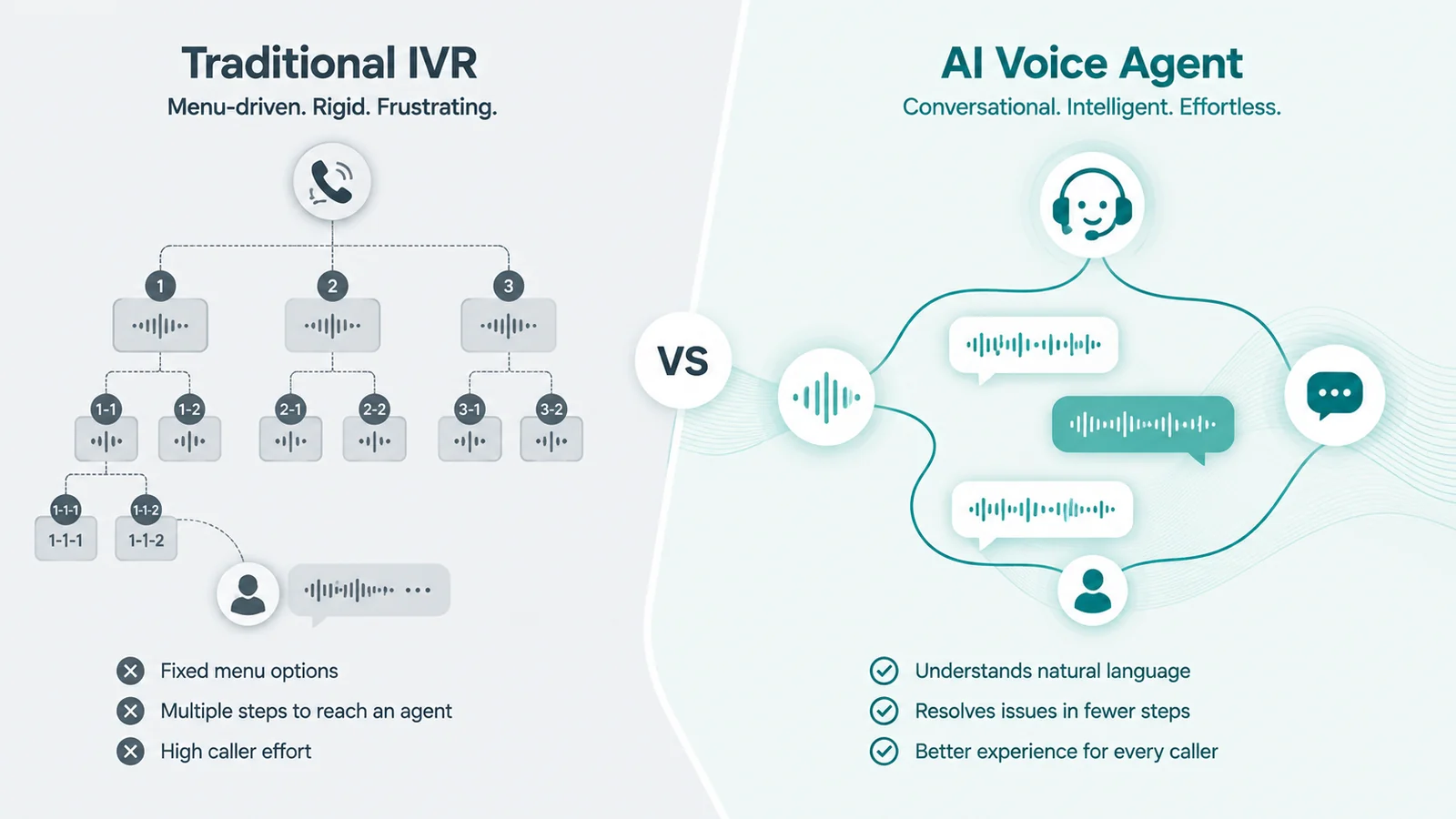
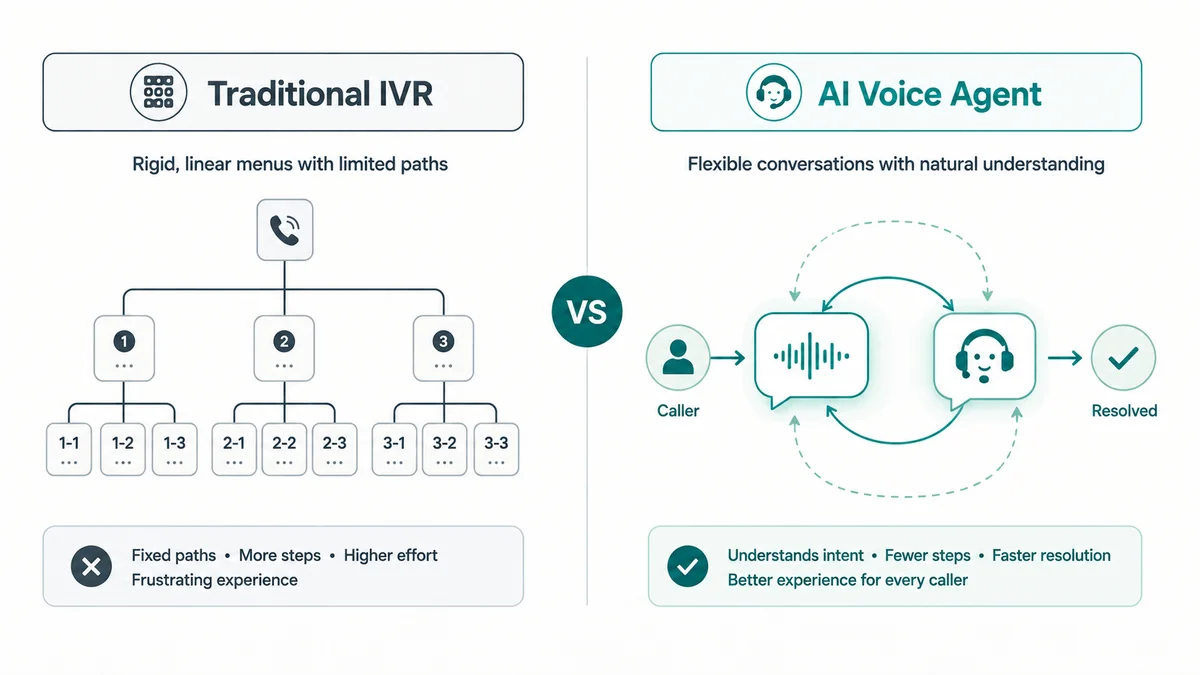
IVR (Interactive Voice Response) is a telephony automation system that plays recorded prompts and collects structured input — either keypad tones (DTMF) or constrained spoken keywords — to branch to a sub-menu, trigger a database lookup, or transfer the call to a queue. Every possible outcome must be pre-built. The system cannot handle any request that falls outside its defined flow.
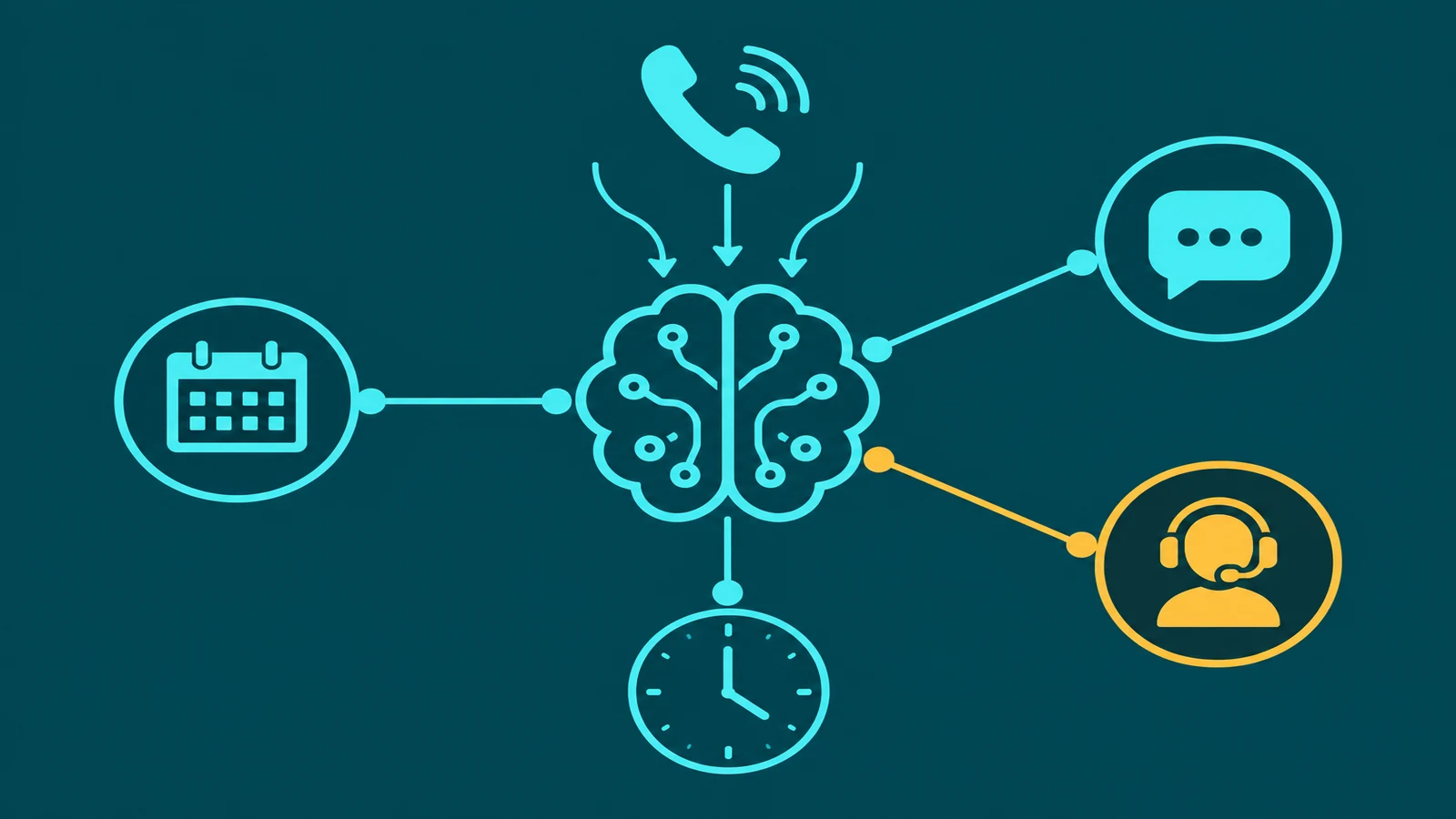
An AI voice agent uses a pipeline of streaming speech recognition (ASR), a large language model (LLM), and neural text-to-speech (TTS) to conduct a genuine two-way conversation. The caller speaks naturally. The system interprets intent, retrieves relevant information from connected systems, executes actions (reschedule an appointment, look up an order, log a ticket), and responds with synthesized speech that sounds like a person. It handles variation, context, and follow-up questions across multiple turns — all without a human agent involved.
The architectural difference matters: IVR is a router. An AI voice agent is a resolver.
Head-to-head comparison
| Dimension | Traditional IVR | AI Voice Agent |
|---|---|---|
| Input method | Keypad tones (DTMF) + limited keyword speech | Free-form natural language |
| Self-service containment | 10–30% of calls resolved without an agent | 60–80% of calls resolved without an agent |
| Multi-turn context | None — each menu step is stateless | Full conversation history maintained |
| System integration | Read-only lookups (balance, account status) | Full read/write/execute via API (book, update, pay) |
| Cost per resolved call | $0.10–$0.50 (but most calls reach an agent anyway) | $0.30–$2.50 vs. $5–$12 for human agent |
| Language support | Pre-recorded per language — costly to add | 50–100+ languages via multilingual LLMs |
| Implementation time | 1–4 weeks for a basic flow | 2–8 weeks depending on integration depth |
| Maintenance overhead | High — every change requires re-recording and redeploy | Medium — update prompts and knowledge base; no recording |
| Outbound calls | One-way notification only | Full conversational outbound (reminders, collections, surveys) |
| Escalation to human | Transfers call; agent gets basic CTI screen pop | Warm transfer with full transcript, intent summary, extracted entities |
| Internet dependency | Low — can run on PSTN without cloud dependency | High — ASR, LLM, and TTS all require live cloud connectivity |
The caller experience gap
The numbers above describe capability differences. The experience difference is starker. With IVR, a caller who wants to reschedule a healthcare appointment has to: listen through the full greeting, press the right digit from a list of options they may not remember, authenticate by entering digits, navigate a sub-menu for scheduling, and eventually be transferred — often to a hold queue — because rescheduling requires a human to look at a live calendar.
With an AI voice agent handling the same call, the interaction sounds like this: the agent answers, asks what it can help with, the caller says "I need to move my Thursday appointment to Monday morning," the agent checks the calendar in real time, offers two available slots, and confirms the rebooking with a text notification — all in under two minutes, with no hold time and no human involved.
That difference in caller experience shows up in survey data. AI-resolved calls score CSAT around 72–85% when the call is fully resolved, versus the widespread frustration that 61% of callers report with traditional IVR experiences. The "when fully resolved" qualifier matters — poor AI handoffs can undercut that score quickly.
When IVR is still the right answer
There are situations where keeping a traditional IVR is the correct call, and it is worth naming them plainly.
- DTMF-based card capture for PCI compliance. PCI-DSS requires that credit card numbers not pass through systems that log or analyze conversational data. In compliant contact center architectures, the IVR (or a pause in the AI conversation while DTMF digits are captured separately) remains the approved path for card number entry. This is not going away soon.
- Very simple, very high-volume deterministic interactions. If 80% of your inbound calls are "press 1 to confirm your appointment, press 2 to cancel," IVR costs $0.10–0.50 per call and requires zero LLM inference. AI is cost-superior only when it contains calls that would otherwise require a human agent.
- Internet-unreliable environments. AI voice agents depend on live cloud connectivity to ASR, LLM, and TTS providers. IVR can operate on a local PSTN connection with no cloud dependency. In environments where internet reliability is a real concern, IVR is more resilient.
- Regulatory contexts requiring deterministic, auditable call paths. Some compliance frameworks require that every possible call outcome be pre-defined and auditable. AI's probabilistic responses make that harder to certify — a legitimate gating factor in heavily regulated industries.
- Organizations not yet ready to maintain a knowledge base. AI voice agents require ongoing knowledge base updates, prompt maintenance, and performance monitoring. An organization that cannot commit to that operational discipline will see AI performance degrade over time.
When AI voice agents win clearly
The value of AI voice agents is clearest in several specific scenarios.
- Appointment scheduling and rescheduling — any interaction that requires back-and-forth ("Which day works for you? Morning or afternoon?") breaks IVR immediately. AI handles it naturally.
- After-hours coverage — an AI voice agent is available at 3am with full capability; IVR can only take a message or route to voicemail.
- Multilingual operations — adding a language in IVR means recording a full new prompt set. An AI voice agent handles 50–100+ languages through multilingual LLMs without additional recording costs.
- Complex tier-1 triage — insurance claims intake, technical support pre-screening, legal intake — anything that requires conditional questions based on previous answers is beyond what IVR can handle.
- Outbound campaigns with two-way dialogue — appointment reminders that accept rescheduling, payment arrangements that negotiate terms, post-discharge follow-ups that ask symptom questions. IVR cannot do any of this conversationally.
Hybrid approaches: AI on top of IVR
A phased or hybrid architecture is often the practical path, especially for organizations with an existing IVR investment. Two patterns are common.
AI as a front-end, IVR as a fallback. The AI voice agent handles 60–80% of calls. Calls it cannot resolve transfer to the IVR (for authentication, card capture, or specific compliance-required flows) before reaching a human agent. This gets most of the containment gain without ripping out existing IVR infrastructure.
IVR handles authentication, AI handles resolution. The IVR collects the caller's account number and authenticates them via DTMF — a step where IVR's determinism is an asset — then passes the authenticated call to the AI voice agent for resolution. The AI receives the caller's identity and account context via a CTI data packet, avoiding the need to re-authenticate conversationally.
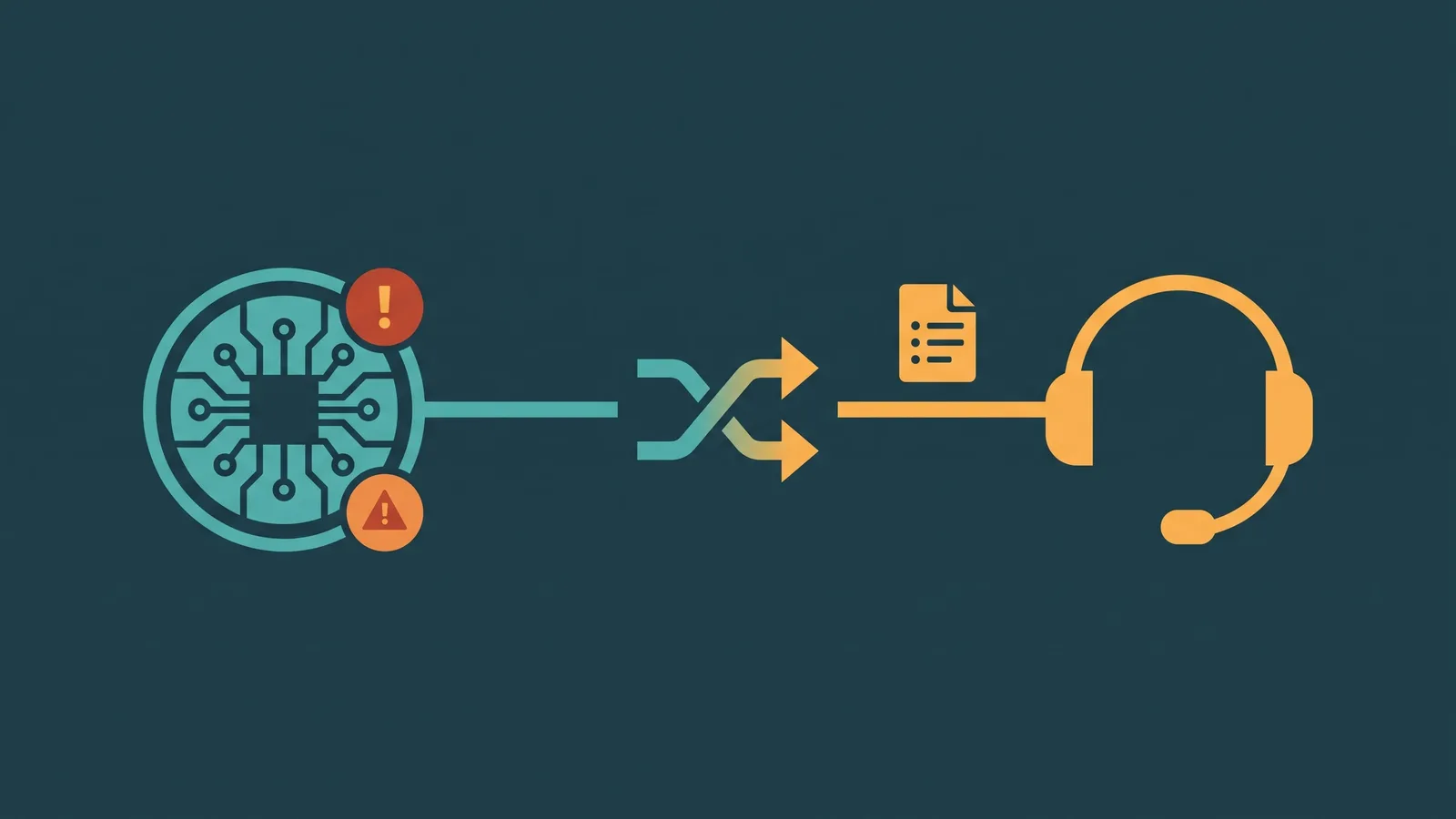
For call routing and queue management considerations in a hybrid setup, the key is ensuring the AI's escalation path is clean — the human agent should receive the full transcript and a plain-English summary of what the caller needed, not just a cold transfer.
EaseDial AI Voice Agent
Handle inbound calls, schedule appointments, and resolve tier-1 inquiries — without adding headcount.
Migration path: IVR to AI voice agent
The most common migration mistake is translating IVR menu logic directly into AI conversation design. This recreates the broken experience with an unpredictable interface — callers get an AI that sounds natural but still navigates them through internal department logic they do not understand. The correct approach is to start from caller intent, not from organizational structure.
A practical phased approach:
- Audit your IVR data first. Pull call volume by IVR branch and containment rate by branch. Identify which paths carry the highest volume and which have the highest transfer-to-agent rate. Those high-volume, high-transfer branches are your first candidates for AI replacement — that is where containment gain has the most financial impact.
- Start with one call type, run parallel. Deploy the AI voice agent on one branch (e.g., appointment scheduling) while the IVR handles everything else. Measure containment, CSAT, and escalation rate against the IVR baseline for the same call type. Do not go broad until you have validated performance.
- Build the knowledge base from escalation transcripts. Every call that the AI could not resolve is a training signal. Review escalation transcripts weekly during the pilot phase. The gaps in the knowledge base become visible fast.
- Expand branch by branch. Once one branch is performing at or above target, move to the next highest-value branch. Run each as a phased pilot before committing the full volume.
- Retire IVR branches only after sustained performance. Do not switch off an IVR branch until the AI equivalent has held containment targets for at least 30 days at full volume.
Realistic limitations of AI voice agents
AI voice agents are not a universal upgrade, and the limitations are real.
ASR accuracy degrades on telephony audio. Speech recognition benchmarks on clean studio audio show 6–7% word error rates for leading models. On actual telephony audio — compressed by G.711 or G.729 codecs, with background noise, accents, and domain-specific vocabulary — error rates are substantially higher. One Interspeech study found word error rates rising from 16.8% on clean audio to 74.6% on noisy overlapping speech. Domain fine-tuning (custom phonetic lexicons for medical, legal, or industry-specific terms) is not optional for specialized verticals; it is a prerequisite for acceptable accuracy.
Hallucination is a real risk without proper grounding. LLMs can state incorrect information with full confidence. Without retrieval-augmented generation (RAG) grounding responses against current business data, AI voice agents may quote outdated pricing, wrong policies, or fabricated facts. For healthcare and financial services, this is not a minor inconvenience — it is a liability and compliance exposure. Properly configured AI voice agents retrieve information from authoritative sources before stating anything factual; hallucination monitoring should be part of ongoing operations, not an afterthought.
Latency is perceivable. The pipeline — speech recognition, LLM inference, text-to-speech synthesis — takes 500–1,200ms end-to-end. Human conversational turn-taking tolerates about 300–500ms of pause. Anything above 800ms is noticeable. Well-optimized pipelines use streaming (TTS starts synthesizing before the LLM has finished generating) to stay within acceptable range, but this requires deliberate architecture choices and ongoing benchmarking under peak load.
Integration complexity is underestimated. Connecting an AI voice agent to a legacy CRM, an on-premise scheduling system, or a proprietary telephony platform often requires more engineering than the platform itself. Vendors that demo with a Salesforce sandbox may take weeks to integrate with your actual configuration. Factor integration time and cost into every evaluation.
Compliance certifications require vendor diligence across the full stack. For HIPAA, a Business Associate Agreement is required with every vendor in the processing chain — ASR provider, LLM provider, TTS provider, analytics platform, and the orchestration layer. Not every vendor in each layer offers a BAA. For security and compliance requirements in regulated industries, audit the full vendor chain before assuming compliance, not after.
What to evaluate when choosing
If you are evaluating AI voice agent platforms, these are the criteria that matter most, in rough priority order.
- ASR accuracy on your audio. Do not rely on vendor benchmarks on clean datasets. Provide audio samples from your actual call recordings — including accented callers, background noise from your typical call environment, and domain-specific vocabulary. Measure WER before committing.
- End-to-end latency under load. Request P50 and P95 latency benchmarks at 2x your anticipated peak concurrent call volume. Latency that looks fine at low concurrency can become unacceptable at 100 simultaneous calls.
- Integration depth with your systems. Native connectors to your CRM, scheduling system, and ticketing platform — not just generic webhook support — significantly reduce integration time and maintenance overhead. Verify against your actual system versions, not just the platform names.
- Escalation and handoff quality. How the AI hands off to a human agent is often more important to caller satisfaction than the AI resolution itself. Insist on seeing a live demo of the escalation — the agent desktop should receive a transcript and structured summary before the call connects, not during or after.
- Compliance certifications. SOC 2 Type II (current, audited report, not just a badge), HIPAA BAA availability, PCI-DSS scope documentation for card capture scenarios. Request the actual reports, not a vendor self-attestation.
- Pricing transparency. Per-minute rates, LLM pass-through costs, ASR and TTS fees, SIP trunking costs, and integration support charges can each add substantially to the headline subscription price. Build a total cost of ownership model at your actual call volume before comparing vendors.
For a broader look at how AI is changing contact center operations, see our article on AI in contact centers.