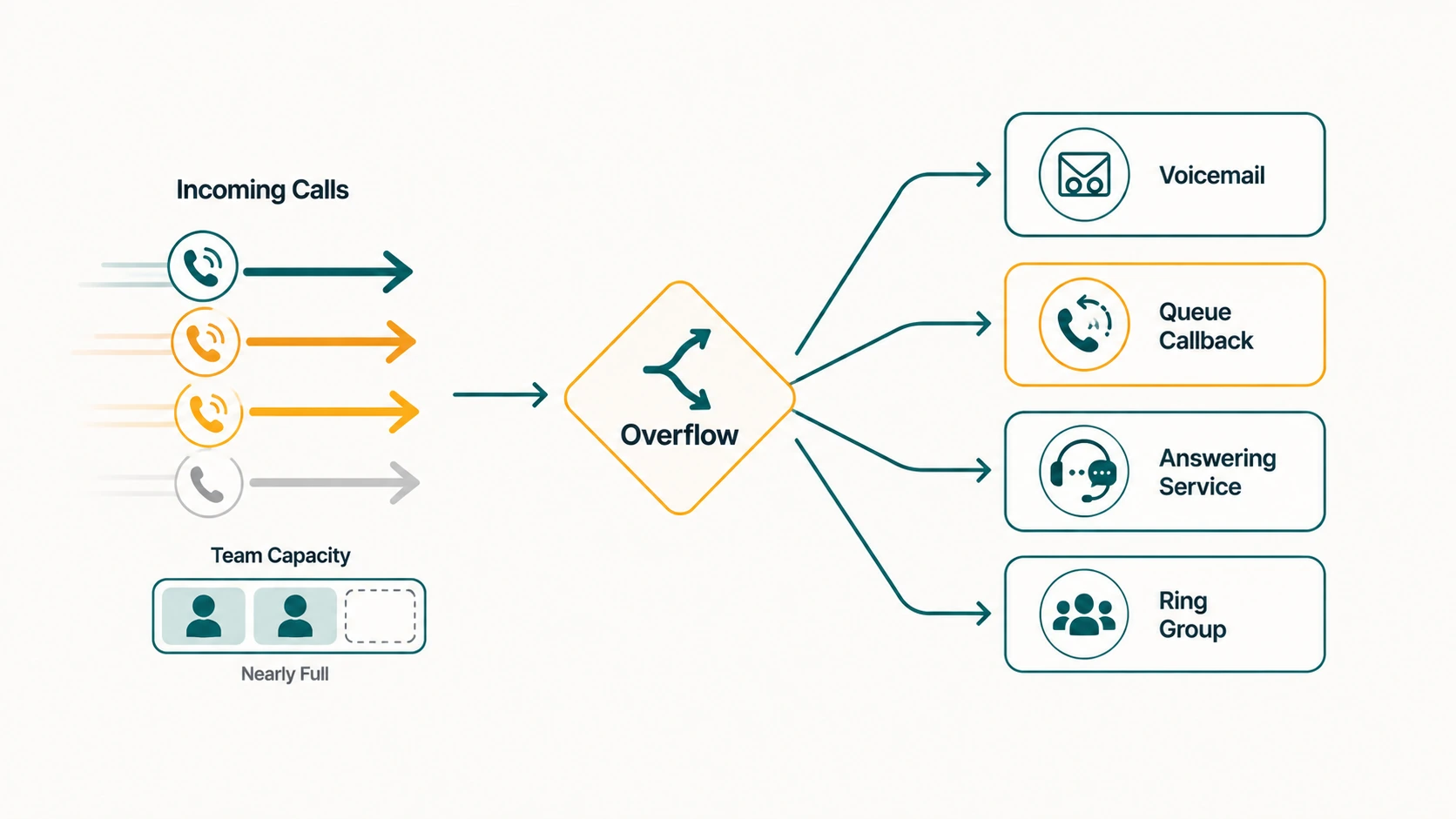
For a small business, call overflow is not an abstract contact-center metric. It is a concrete problem: more calls arrive than your team can answer, and some of those calls go unanswered. Every unanswered call is a caller who may not try again.
The right response to overflow depends on why it is happening and how often. A small team during a predictable lunch hour crunch needs different tools than a business experiencing seasonal demand spikes or sudden growth. This article covers the causes of overflow in small businesses, the practical options available, and how to think through which combination fits your situation.
What is call overflow in a small business context? Call overflow occurs when incoming call volume exceeds what the available team can handle — resulting in calls that ring through to no one, hit a busy signal, or enter a queue that eventually times out. In a small business, overflow is typically caused by a small team size, predictable peak-hour spikes, lunch or break coverage gaps, seasonal demand, or simultaneous unexpected call volume. The goal is to ensure every caller reaches a meaningful outcome — not necessarily a live person, but at minimum a path that captures their intent and creates a follow-up action.
Why Small Businesses Experience Overflow
Call volume is rarely perfectly flat. Even a business with adequate overall staffing can experience overflow from:
- Simultaneous arrivals. Three people can call in the same 90-second window on a slow day. With one person answering phones, two of those calls ring unanswered.
- Predictable peak hours. Many businesses see consistent volume spikes in the morning, at lunch, or at end of day. A team staffed for average volume will be overwhelmed during peaks.
- Lunch and break gaps. If the person answering phones steps away, even a single call can become an overflow event.
- Seasonal demand. Accounting firms in tax season, HVAC companies in summer, retailers in December. Predictable surges that exceed normal capacity.
- After-hours calls. Callers who call outside business hours create overflow not because the team is busy, but because no one is there. (This is covered in detail in our guide on after-hours routing.)
- Team member absence. A sick day or vacation day reduces the effective team size and can push a team that was handling calls adequately into overflow territory.
Option 1: Overflow Queues and Ring Groups
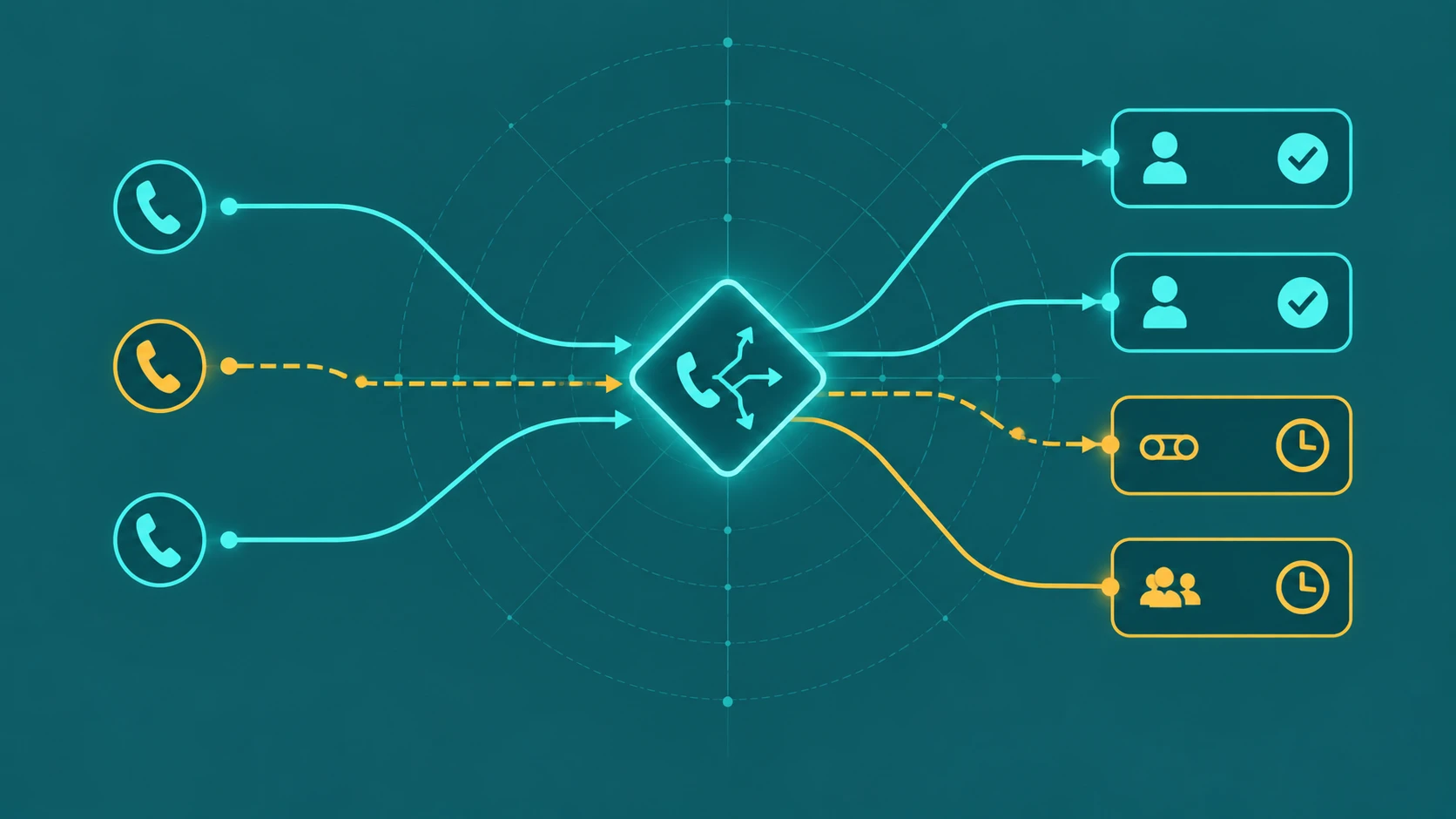
If your phone system supports call queues, the most systematic approach to overflow is to configure a secondary path for calls that cannot be handled by the primary team.
An overflow queue is a backup queue that receives calls when the primary queue is full or when a caller has waited longer than the configured timeout. The overflow queue might be staffed by more generalist team members — people who don't normally answer phones but can handle basic inquiries when volume demands it.
A ring group is a simpler alternative: calls ring simultaneously to a group of phones, and whoever picks up first handles the call. Ring groups don't manage position or wait time, but they are quick to configure and work well for small teams where everyone can plausibly handle any incoming call.
Our guide on call queue overflow explains how overflow routing works and what triggers it.
Option 2: Voicemail With a Clear Call-Back Commitment
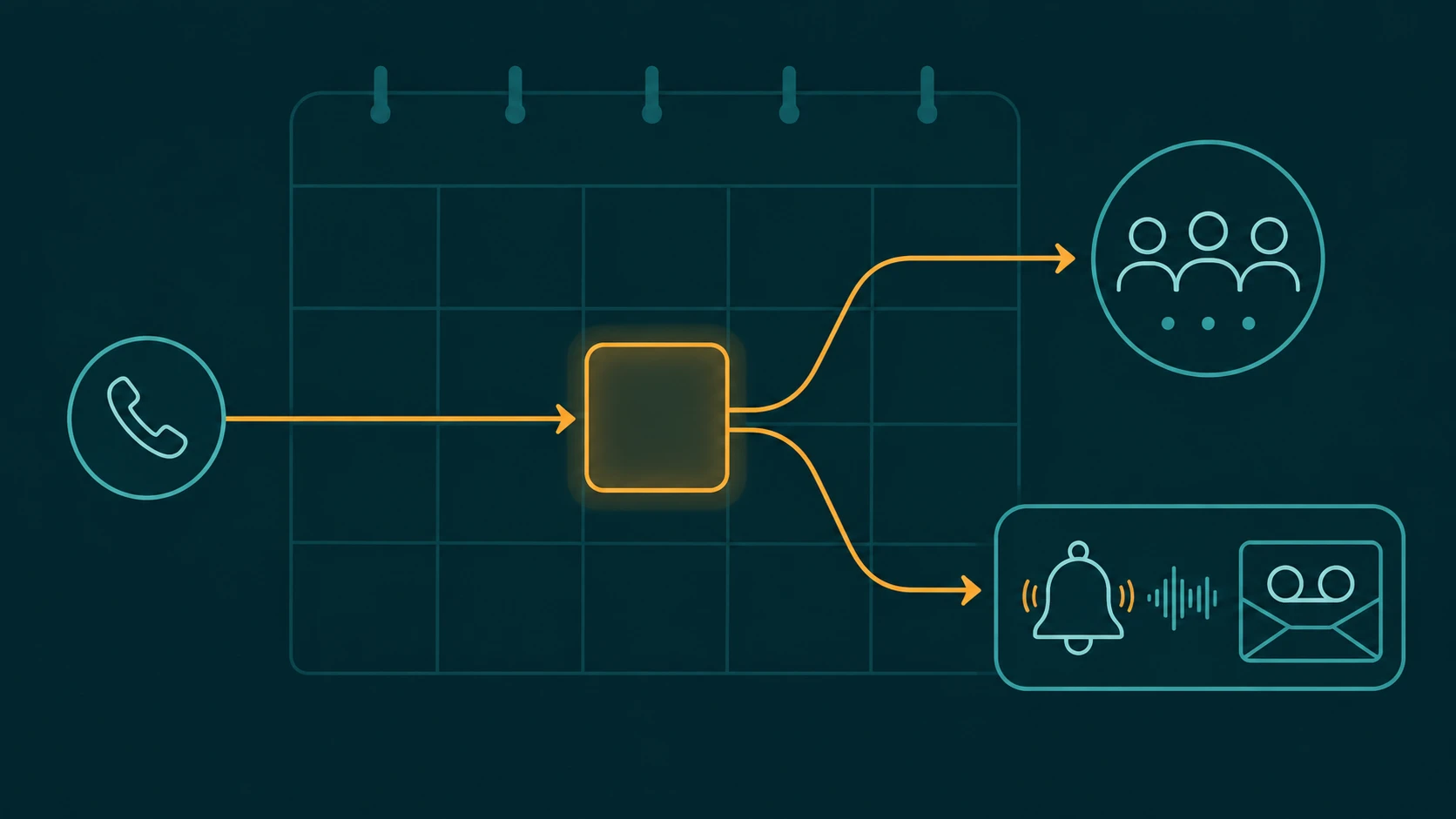
Voicemail gets a bad reputation because it is often handled poorly — unmonitored boxes, vague greetings, slow or no return calls. Done right, voicemail is a legitimate overflow tool for small businesses.
The critical elements of effective overflow voicemail are:
- A specific, current greeting that sets an accurate return-call expectation ("We return all messages within two business hours").
- A monitored voicemail box with a named owner or team responsible for returns.
- A process for returning calls — not just checking them.
- Voicemail-to-email or transcript notifications so messages aren't discovered an hour later.
Voicemail is appropriate for callers with non-urgent inquiries. It is a poor overflow destination for time-sensitive sales leads, emergency service calls, or any situation where the caller is unlikely to leave a message and wait.
Option 3: Queue Callback
Some business phone platforms allow callers waiting in queue to request a callback instead of holding. The caller hangs up, their number is recorded, and the system calls them back when an agent is available.
For small businesses that experience moderate overflow with peaks followed by available capacity, callback can be a practical middle ground — the caller doesn't hold indefinitely, and the team makes return calls during quieter periods rather than during the rush.
The key requirement: the team must actually be able to make those callbacks within a reasonable window. A callback queue that backs up to a four-hour wait is not a good caller experience. See our guide on queue callback for a full explanation of how this works and where it has limitations.
Option 4: External Answering Service
An overflow answering service steps in when your team cannot answer — taking messages, providing scripted answers to common questions, scheduling appointments, or qualifying leads. The service answers on behalf of your business, using your greeting and your protocols.
Answering services range from traditional call centers staffed by human agents to fully AI-driven systems. Human answering services generally offer better handling of complex or sensitive calls; AI-based services offer lower cost and 24/7 availability. A hybrid — AI for initial response and human escalation for complex cases — is a common configuration for businesses that need coverage without the cost of full-time staffing.
The practical requirement for using an external answering service effectively: the service needs up-to-date information about your business, products, pricing, availability, and escalation protocols. A poorly briefed answering service creates more confusion than a well-designed voicemail.
Option 5: AI Receptionist
AI receptionist technology can answer calls conversationally when your team is unavailable — understanding what the caller needs, capturing their information, answering common questions, and routing or scheduling appropriately. Unlike a traditional IVR, an AI receptionist handles natural-language responses rather than requiring callers to navigate numbered menus.
For small businesses experiencing overflow primarily during predictable windows — evenings, weekends, lunch hours — an AI receptionist can provide effective coverage without on-call staffing costs. The key limitation is that AI receptionists cannot yet handle every call type with the judgment and flexibility of an experienced human — complex complaints, unusual requests, or emotionally difficult calls generally require human escalation. Our guide on AI receptionists covers the capabilities and limitations in detail.
Option 6: Flexible Internal Coverage
Before routing overflow to external services, it is worth examining whether the team has untapped internal capacity. In small businesses, the person "responsible for phones" is often the only person answering — even when other team members could field basic calls.
Options worth considering:
- Adding secondary team members to a ring group so overflow calls ring to multiple people simultaneously.
- Staggering lunch breaks so at least one person is always available during the lunch-hour peak.
- Routing calls to remote employees who can handle calls from home during peak periods.
- Designating a "backup caller" role during predictably busy periods — a team member who shifts to phone coverage when volume spikes.
Monitoring Overflow: Know Before It Gets Chronic
Overflow handled by voicemail or an answering service is not a problem solved — it is a signal about capacity. If your team is regularly routing 30% of calls to voicemail because no one is available, that is a staffing or coverage problem, not a routing problem. Routing tools manage the overflow symptom; addressing the underlying cause requires examining staffing levels, call volume patterns, and team availability.
Most business phone platforms provide basic reporting on call volume, answered versus missed calls, and voicemail events. Reviewing this data at least monthly helps small business owners identify whether overflow is occasional or structural. See our guide on call center metrics and KPIs for how to interpret what these numbers actually mean.
Which Overflow Approach Fits Which Business?
| Overflow cause | Practical first option | When to escalate |
|---|---|---|
| Occasional simultaneous calls | Ring group; voicemail fallback | If voicemail volume grows week over week |
| Predictable lunch-hour peak | Stagger breaks; add ring group member | If internal coverage isn't feasible |
| After-hours calls | Voicemail or AI receptionist | If after-hours calls are high-value leads |
| Seasonal volume spike | Temporary external answering service | If spike duration warrants temporary hire |
| Structural understaffing | Address staffing; routing buys time only | When overflow volume consistently exceeds 20% of calls |
Frequently Asked Questions
Is it better to let calls ring through unanswered or send them to voicemail?
Voicemail is almost always preferable to ringing indefinitely. A call that rings without answer gives the caller no information and no recourse. A voicemail greeting — even a simple one — tells the caller they have reached the right business, sets an expectation, and invites action. That said, the voicemail box must be monitored and calls must be returned.
Can a small business use call queues without a dedicated contact center platform?
Yes. Many UCaaS and business phone platforms — designed specifically for small and mid-size businesses — include call queue functionality without requiring an enterprise contact center license. Queue configuration, agent assignment, and overflow routing are available in most modern cloud phone systems.
What happens to a caller when they hit an overflow voicemail during business hours?
The caller experience depends entirely on the voicemail greeting. If the greeting sounds like a generic after-hours message, the caller may think they have called at the wrong time. During-hours overflow voicemail greetings should be distinct: "You've reached our team — all of our staff are currently assisting other callers. Please leave your name and number and we'll return your call as soon as possible."
How do I know if my small business needs an answering service or an AI receptionist?
The decision typically comes down to call complexity and cost. If overflow calls are mostly routine — hours inquiries, appointment scheduling, basic questions — an AI receptionist can handle them effectively at lower cost than a human service. If overflow calls frequently involve judgment, empathy, or complex information (complaints, medical questions, legal matters), a human answering service provides better quality. A hybrid approach — AI for initial response, human escalation — is increasingly common.