
Wholesale VoIP is the carrier-layer voice infrastructure that sits beneath retail phone services. When a business subscribes to a cloud phone system, the provider that delivers that service is almost certainly purchasing voice capacity from a wholesale layer first. Resellers, BPOs, call center operators, and high-volume enterprises increasingly bypass the retail layer entirely — buying voice termination and origination directly at wholesale rates and connecting it to their own SIP infrastructure.
This guide covers the wholesale VoIP ecosystem: who the participants are, how calls actually move from origin to destination, and the distinction between origination and termination. Route types, quality metrics, rate decks, and provider evaluation are covered in the wholesale voice termination guide linked below.
Wholesale VoIP, defined: The bulk purchase and resale of voice termination and origination capacity between carriers, interconnect providers, and high-volume customers — using VoIP (Voice over IP) as the transport layer. Rather than paying per-line retail rates, wholesale buyers purchase large volumes of voice minutes at per-minute or per-channel rates, connect via SIP trunking, and manage their own call routing. The wholesale layer exists between the PSTN (public switched telephone network) and retail VoIP services.
The Wholesale VoIP Ecosystem
Understanding wholesale VoIP means understanding the layers of the voice ecosystem and where each participant sits.
Tier 1 carriers
Tier 1 carriers own physical network infrastructure — international cable systems, switching centers, and direct connections to national PSTN networks. They exchange traffic with each other without paying transit fees (settlement-free peering). Examples include AT&T, Lumen (CenturyLink), Telia, and Deutsche Telekom. Most wholesale VoIP originates upstream from Tier 1 infrastructure, though buyers rarely connect directly to Tier 1 carriers unless their volume justifies the commercial relationship.
Tier 2 and Tier 3 providers
Tier 2 providers purchase transit capacity from Tier 1 carriers and resell it — either directly to large enterprises and carriers, or to Tier 3 resellers who sell at even smaller volumes. Most wholesale VoIP providers occupy the Tier 2 or upper Tier 3 layer: they have direct interconnects with multiple upstream carriers, operate route aggregation and monitoring infrastructure, and provide commercial terms and technical support that direct Tier 1 relationships do not typically offer at moderate volume levels.
Who buys wholesale VoIP
The buyers at the wholesale layer are typically:
- VoIP resellers and UCaaS providers — purchasing termination and origination to deliver to their own end customers
- BPOs and call centers — buying outbound termination at scale for high-volume dialer campaigns
- Contact center software platforms — embedding wholesale carrier capacity into their hosted contact center products
- Enterprises with on-premise or self-managed PBX/SIP infrastructure — connecting their internal telephony to the PSTN via wholesale SIP trunking
- Carriers and MVNOs — purchasing wholesale voice to fill gaps in their own network coverage, particularly for international destinations
Origination vs Termination
These two terms describe the direction of a call in relation to the PSTN.
Voice termination
Termination is the delivery of an outbound call to its destination. When your customer service agent calls a prospect at a phone number, the call must be "terminated" to that number — meaning it must reach the carrier that owns that number and be connected to the called device. Wholesale voice termination is what makes this possible at scale: the wholesale provider accepts the outbound SIP call from your platform, routes it through their carrier interconnects, and delivers it to the destination PSTN.
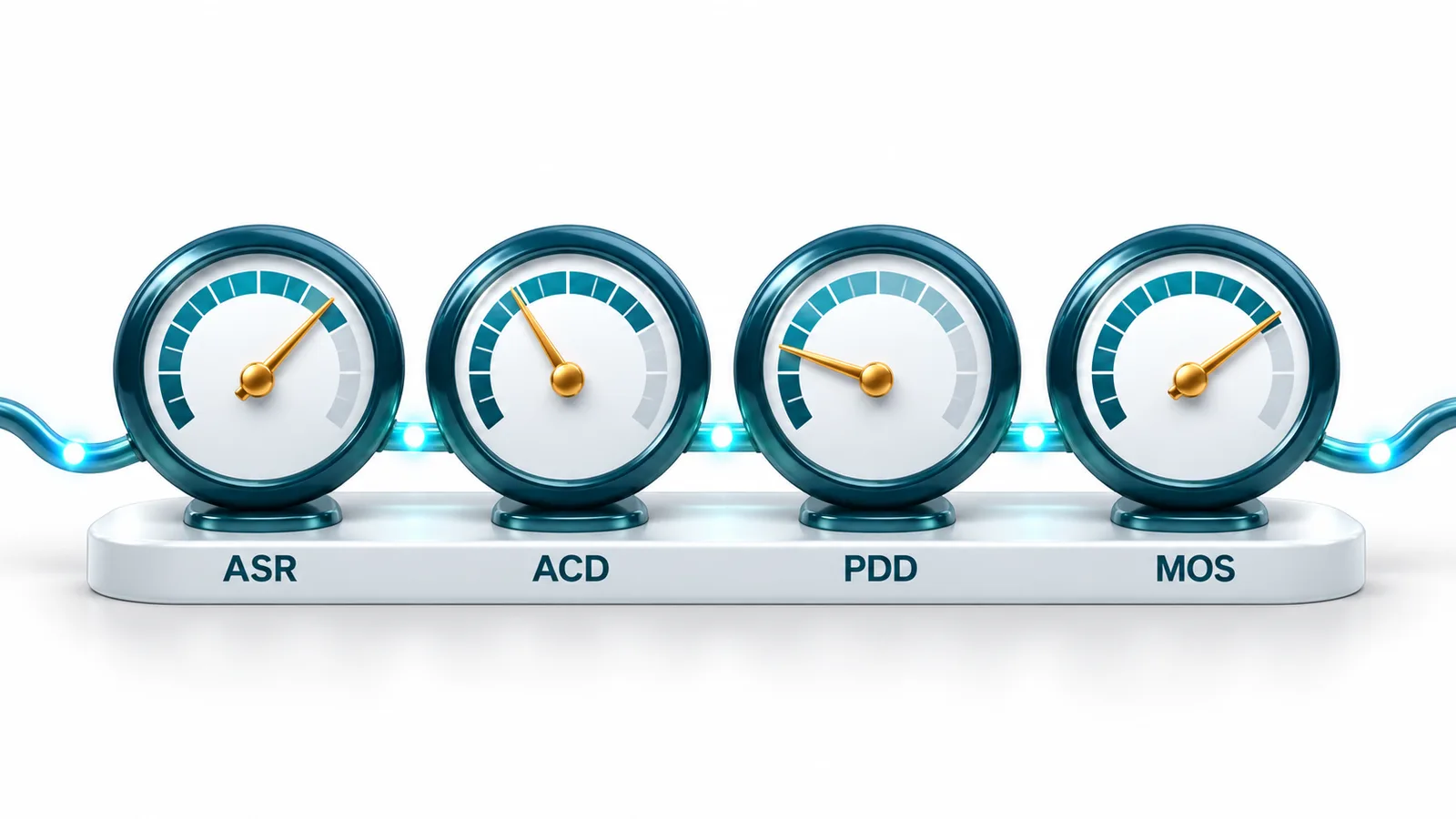
Termination is the primary service in outbound call center operations. Large BPOs and predictive-dialer-based operations consume enormous volumes of outbound termination minutes. Rate per minute, answer rate (ASR), and route quality are the key variables. For outbound call center termination specifically, see our CC routes guide — call center traffic has distinct requirements that standard A-Z termination is not optimized for.
Voice origination
Origination is the inbound direction: calls arriving from the PSTN to your platform. When a customer dials your business phone number, that call originates from the PSTN and must be delivered to your SIP infrastructure. Wholesale origination providers supply DID (Direct Inward Dialing) numbers — individual phone numbers assigned to your platform — and deliver inbound calls to your SIP endpoint. Number porting, geographic coverage (which area codes are available), and inbound SLA are the key evaluation dimensions for origination.
How they relate
Most wholesale providers offer both services, though the route quality, pricing model, and provider selection criteria differ meaningfully between origination and termination. A provider optimized for outbound call-center termination to North America may not be the right choice for global origination with DID coverage in 80 countries. Treat them as separate buying decisions even when purchasing from the same provider.
How Calls Move Through the Wholesale Layer
A wholesale VoIP call path starts at the originating platform (a softphone, a predictive dialer, a PBX) and ends at the destination device. Between those two points, several handoffs happen:
- The originating platform sends a SIP INVITE to the wholesale provider's SBC (Session Border Controller). SIP is the signaling protocol that establishes, manages, and terminates calls; the SBC is the security and translation layer at the edge of the wholesale network.
- The wholesale provider's routing engine selects a path for the call based on destination number, configured routing policy, and real-time route quality data. This step — route selection — is where most of the commercial and technical differentiation between wholesale providers lives.
- The call is handed off to an upstream carrier or direct interconnect that can reach the destination PSTN. In some cases this is a single hop; in others the call passes through two or more carrier interconnects.
- The call reaches the destination carrier, which delivers it to the called number.
- Once the called party answers, RTP (Real-time Transport Protocol) carries the actual voice media between the originating endpoint and the destination. Voice packets travel independently of the SIP signaling path and must meet latency, jitter, and packet-loss thresholds to produce acceptable call quality.
For a detailed walkthrough of the SIP/RTP infrastructure layer, see our SIP trunking guide.
Wholesale VoIP vs Retail VoIP
| Dimension | Wholesale VoIP | Retail VoIP |
|---|---|---|
| Who buys it | Carriers, resellers, BPOs, enterprises with SIP infrastructure | End-user businesses and individuals |
| Pricing unit | Per-minute rate; rate deck with per-destination pricing | Per-seat or per-user monthly subscription |
| Connectivity | Direct SIP trunk to buyer's infrastructure | Vendor-managed app or hosted phone system |
| Volume minimum | Typically requires committed or minimum monthly volume | No minimum — pay per seat |
| Technical requirement | Buyer manages SIP configuration, SBC, routing logic | Vendor manages all infrastructure; buyer configures features |
| Routing control | Buyer selects providers, manages redundancy, monitors quality | Vendor-controlled; buyer has no visibility into carrier path |
| Best for | High call volume, cost-sensitive operations, resellers, carriers | Businesses that want a managed phone system without infrastructure management |
Route types, quality metrics, rate decks, and how to evaluate a provider are covered in the wholesale voice termination guide. Wholesale text messaging is a separate product with its own fees and registration; the wholesale SMS termination and 10DLC guide covers it.
The SIP Infrastructure Layer
Wholesale VoIP is delivered over SIP trunking. Understanding the infrastructure requirements is necessary before evaluating wholesale providers, because the technical prerequisites determine whether a commercial relationship can actually function.
The buyer needs: a SIP-capable platform (a PBX, contact center software, softswitch, or dialer), an SBC or SIP-aware firewall for security and signaling translation, and adequate internet connectivity (sufficient bandwidth for the expected concurrent channel count, with QoS configured to prioritize RTP voice traffic). The wholesale provider needs: the buyer's SIP endpoint address, authentication credentials (IP authentication or SIP digest), codec preferences, and an understanding of the traffic pattern (origination vs termination, geographic destinations, expected CPS).
For technical setup detail, see our SIP trunking guide and SIP trunk capacity planning.
Wholesale VoIP Use Cases
Outbound call center operations
BPOs and in-house call centers running predictive dialer campaigns represent the largest volume segment of wholesale VoIP. These operations buy high-CPS-capable CC routes for USA/Canada termination, manage per-destination rate decks to minimize cost per conversation, and require real-time ASR monitoring to catch route quality degradation before it affects campaign performance. See EaseDial CC routes and the CC routes guide.
Global A-Z termination for international voice
Enterprises with international customer bases and VoIP resellers serving international customers buy A-Z termination for per-destination global coverage. Rate deck composition, coverage depth in key regions (Middle East, Africa, Southeast Asia), and billing increment policy are the primary evaluation variables. See EaseDial A-Z termination.
SIP trunking for enterprise PBX
Enterprises connecting an existing PBX or unified communications platform to the PSTN buy wholesale SIP trunks rather than maintaining legacy ISDN/PRI circuits. The SIP trunk provides both inbound DID numbers (origination) and outbound termination. Cost per minute, concurrent channel capacity, and geographic number availability drive provider selection.
VoIP resellers and white-label providers
Businesses that resell telephony services to their own customer base buy wholesale termination and origination to embed in their product. Margin management, rate deck automation, and multi-tenant provisioning capability are the key requirements here — addressed further in the upcoming wholesale VoIP reseller guide.
Implementation Considerations
Moving to wholesale VoIP requires more technical readiness than subscribing to a retail phone system. These are the practical prerequisites:
- SIP-capable platform. Your PBX, contact center software, or dialer must support SIP trunking. Most modern platforms do; legacy TDM-based systems require an adaptation layer.
- SBC or SIP-aware firewall. An SBC (Session Border Controller) handles SIP normalization, security, NAT traversal, and protocol translation. Without one, wholesale SIP connections are difficult to secure and troubleshoot reliably.
- Internet connectivity quality. VoIP quality depends on low packet loss (<1%), low jitter (<30ms), and round-trip latency under 150ms. Wholesale termination at high concurrent channel counts requires adequate bandwidth with QoS policies that prioritize RTP traffic.
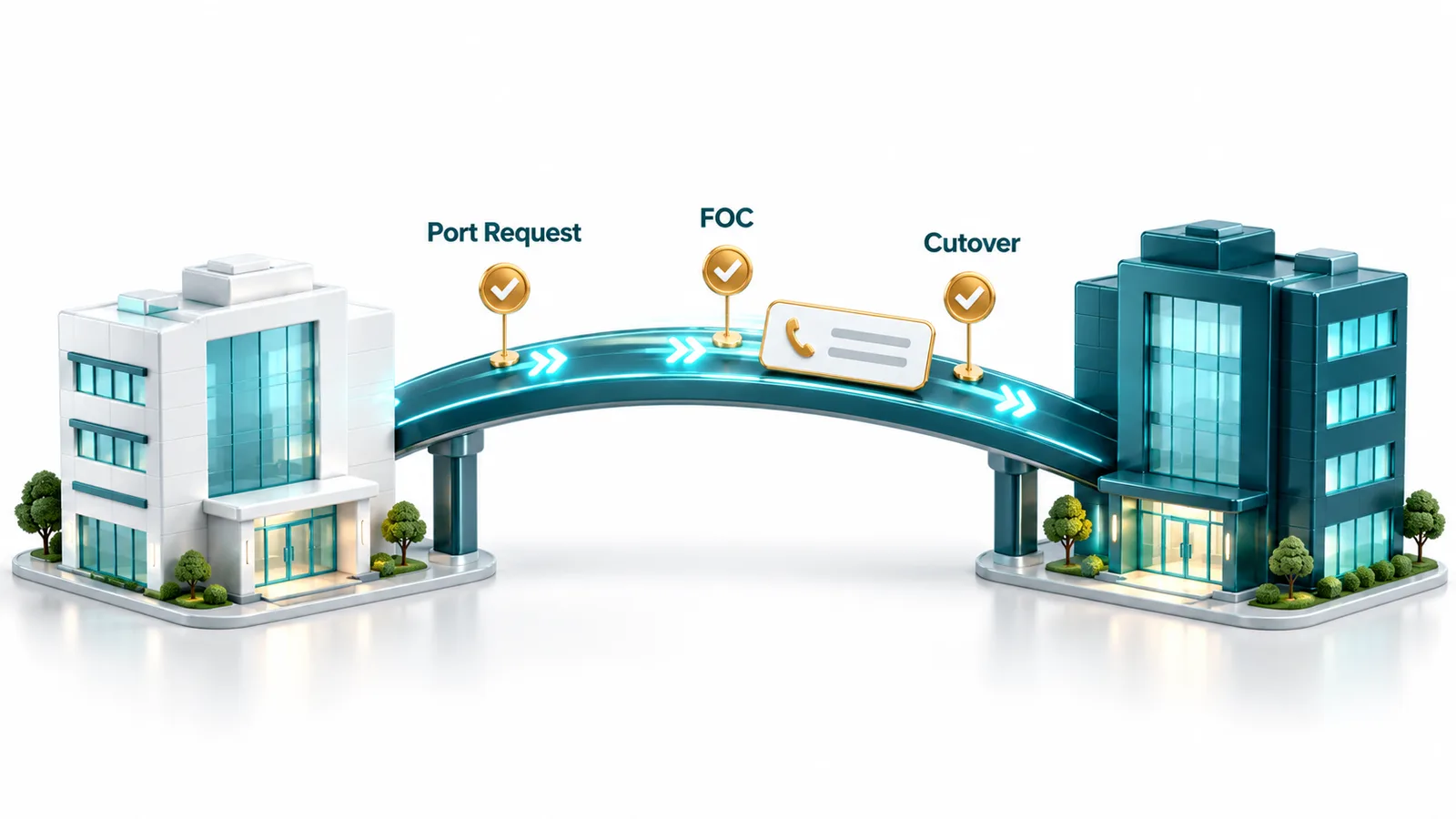
- DID inventory management. Origination requires managing a pool of phone numbers. Number porting from a prior provider takes time and coordination; provisioning new DIDs requires selecting area codes and managing assignment to platforms or agents.
- STIR/SHAKEN attestation. For US outbound calls, STIR/SHAKEN caller ID authentication affects answer rates. Confirm your wholesale provider's attestation capability and your platform's support for proper originating attestation before go-live.
- DNC compliance for outbound campaigns. Pre-scrubbing lead lists against the national DNC registry and maintaining an internal DNC list are legal requirements for telemarketing. This is an operational obligation, not something the wholesale carrier handles. For more on regulatory obligations, see predictive dialer compliance.